



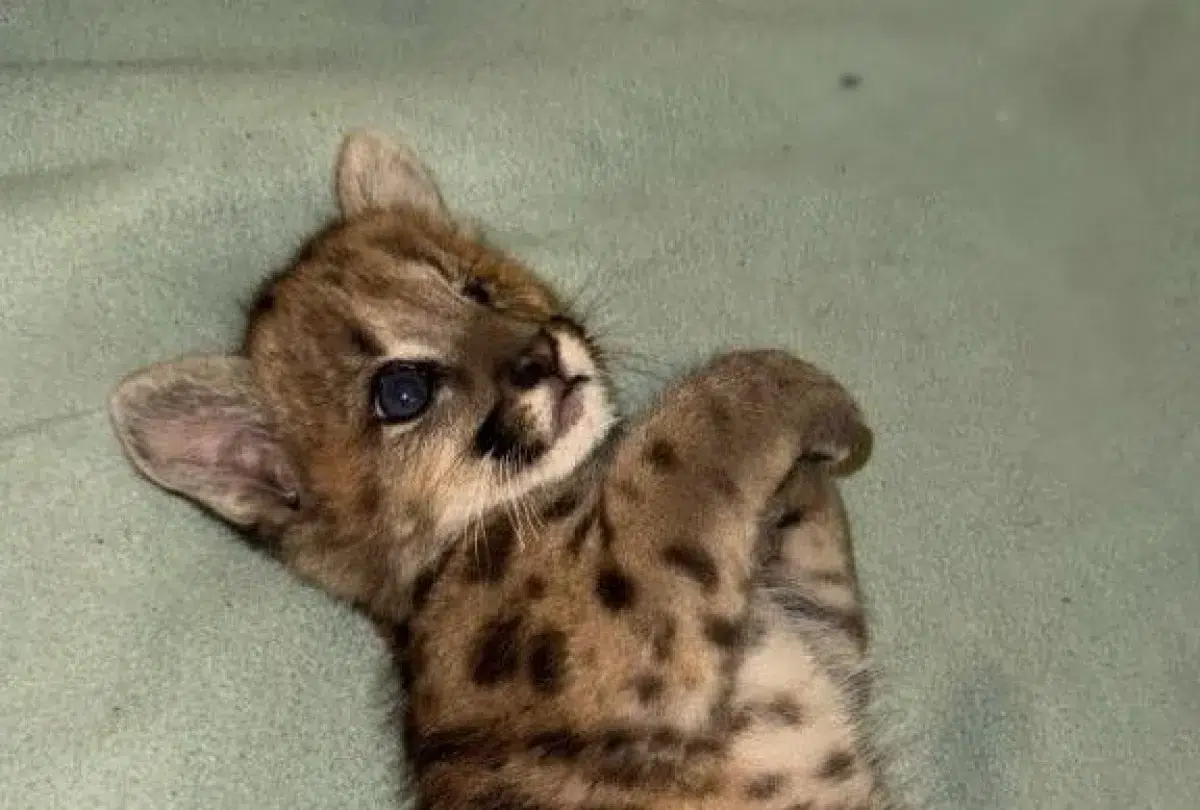
The puma cub was found on April 2nd on National Route 40, between Bariloche and Villa La Angostura. A local resident detected a female that had been run over along with three lifeless cubs, but discovered that a fourth cub still showed vital signs.
Thanks to his quick intervention, the animal received shelter and initial assistance, which allowed for the activation of a joint operation between specialists and conservation personnel.
Intensive Care
The first weeks were critical: the cub had been born prematurely and survived the impact suffered by the mother. Veterinarian Sergio Sánchez led the initial intensive care, with specialized feeding and constant monitoring. Subsequently, the Nahuel Huapi National Park assumed comprehensive monitoring, coordinating technical evaluations to determine the best destination for the specimen.
During recovery, the animal presented a severe eye infection. Veterinary ophthalmology specialist María Graciela Beveraggi intervened in the treatment, managing to stabilize the injury and improve its general condition.
Transfer to Fundación Bubalcó
After more than a month of care, the decision was made to transfer the cub to the Fundación Bubalcó, in Río Negro, an institution specialized in native fauna. The operation was coordinated by Mariano Dalla Cia, Axel Lehr, and Hernán Pastore, with authorization from the Río Negro Wildlife Directorate.
Currently, the cub remains stable and under permanent veterinary monitoring, especially due to the eye injury.
Challenges for Reintegration
Specialists warn that the early loss of the mother represents a significant challenge for reintegration into the wild. A puma cub needs to learn:
- Hunting techniques.
- Territorial recognition.
- Defense mechanisms.
These learnings depend on the bond with the mother. Additionally, human contact during recovery conditions the possibilities of safe reintroduction. Therefore, institutions like Bubalcó play a key role in ensuring long-term care for specimens that cannot immediately return to their habitat.
Impact of Roadkill in Patagonia
The case brought attention back to the impact of wildlife roadkill on routes that cross natural areas. National Parks reminded the need to:
- Drive with extreme caution.
- Respect maximum speed limits.
- Pay attention in areas with a habitual presence of native fauna.
These incidents represent one of the main threats to numerous species and also pose risks to people traveling through the region.
The transfer of the puma cub to Fundación Bubalcó reflects the importance of coordinated work between locals, veterinarians, and conservation organizations. Although its reintegration into the wild will be difficult, its survival is a symbol of hope and a reminder of the need to protect wildlife from the dangers of human activity.



