



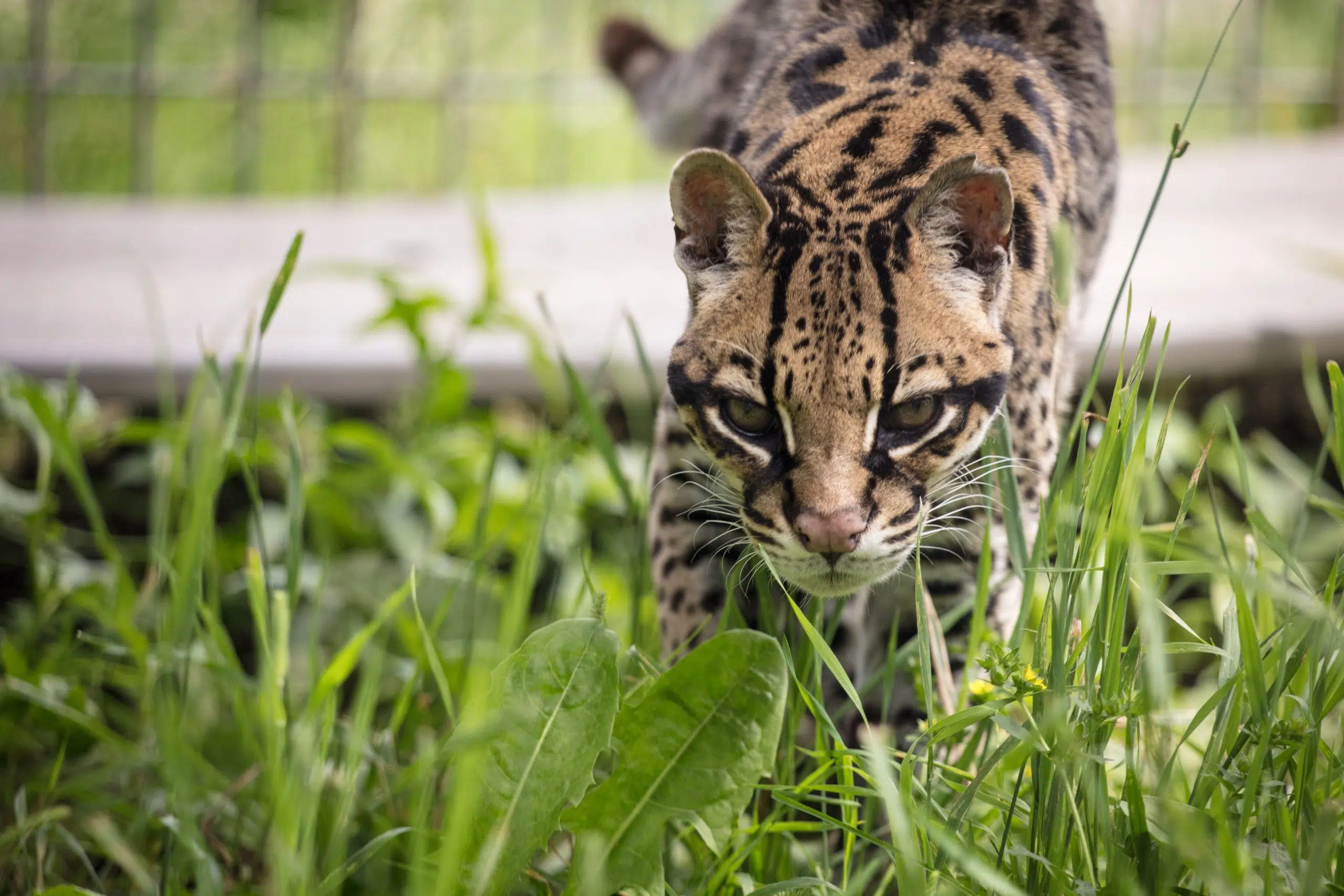
Rio, an ocelot living at the The Wildcat Sanctuary in Minnesota, has become the oldest under human care. She will turn 27 years old at the end of May, an age considered exceptional for this species.
The sanctuary’s founder, Tammy Thies, highlighted that reaching that age “is something almost unheard of for an ocelot.” Rio spent much of her life at a breeding center of the Species Survival Plan in Texas, and for the past two years, she has enjoyed an environment adapted to her needs in Minnesota.
A peaceful life in the sanctuary
In her new home, Rio can safely climb platforms and rest in hammocks. According to Thies:
“It’s incredible to see a 27-year-old ocelot climb confidently or curl up in a hammock. Cats like Rio demonstrate that, with proper care, wild animals can thrive into old age.”
The case highlights the importance of animal welfare and rescue spaces for species that can no longer live in the wild.
Situation of ocelots in the United States
According to the Center for Biological Diversity, there are fewer than 100 specimens left in the U.S., mainly in southeastern Texas and southern Arizona. Habitat loss is the main threat. Outside the country, ocelots inhabit Central America, South America, and some Caribbean islands.
Characteristics of the ocelot
- Unique appearance: golden or grayish coat with black spots in rosettes and stripes, unique to each individual.
- Size and weight: between 70 and 100 cm in length and up to 18 kg.
- Nocturnal habits: solitary, territorial, and opportunistic hunters.
- Adaptive skills: excellent swimmers and climbers, capable of living in rainforests, scrublands, and semi-arid areas.
- Diet: small mammals, birds, reptiles, and fish.
- Reproduction: low reproductive rates, with a gestation period of 70 to 85 days and litters of one or two cubs.
Ecological importance
The ocelot is an indicator of ecological health: its presence signals functional and biodiverse ecosystems. Additionally, it acts as a top predator in areas where the jaguar is absent, regulating prey populations and maintaining natural balance.
Main threats
- Habitat loss due to deforestation and agricultural expansion.
- Landscape fragmentation due to roads and urbanization.
- Poaching, despite legal restrictions.
Conservation actions
- Protection of natural areas and biological corridors.
- Wildlife crossings to reduce roadkill.
- Environmental education to raise awareness about their ecological role.
- Strengthening rescue and breeding programs in captivity.
Rio’s birthday not only celebrates the longevity of an exceptional individual but also reminds us of the importance of conserving the ocelot (Leopardus pardalis), an emblematic feline of the Americas. Its preservation involves protecting jungles and forests, ensuring biodiversity, and maintaining the ecological balance of ecosystems.


