



Scientists recorded for the first time orcas and white-sided dolphins hunting together. The discovery occurred in the waters of the Canadian Pacific, near Vancouver Island. The observation redefines the way interactions between large marine mammals are understood.
Although both species had already been seen in the same areas, there was no evidence of cooperation. The new study confirmed coordinated behaviors during food searching. The sharing of the spoils between different species was also detected.
This behavior suggests a more complex relationship than simple coexistence. The collaboration points to shared benefits in a demanding marine environment. The ocean continues to show ecological dynamics that are still little known.

Technology at the service of marine science
The research was conducted during 2020 with the support of drones and tracking devices. Tags were placed on the animals to record movements and sounds. This allowed the reconstruction of interactions in three dimensions.
Aerial and underwater images revealed synchronized dives. Vocalizations associated with feeding were also recorded. The data showed deliberate course changes to follow the dolphins.
On at least 25 occasions, the orcas changed their trajectory. They did so after encountering groups of dolphins in full activity. This pattern reinforces the hypothesis of intentional cooperation.
Chinook salmon as a shared target
Chinook salmon was identified as the central prey of this alliance. It is a large and energetic fish, key in the orcas’ diet. For the dolphins, it is too large to capture on their own.
Orcas would take advantage of the dolphins’ echolocation ability. By remaining silent, they could better detect salmon at depth. This reduces the energy expenditure during hunting.
On several occasions, the orcas shared salmon remains. The dolphins fed on previously shredded fragments. The exchange confirms a mutual benefit between both species.
An ecological alliance with advantages for both
The cooperation offers protection and food to the dolphins. The presence of orcas reduces the risk from other predators. Additionally, they access a resource they otherwise could not exploit.
For the orcas, the dolphins act as efficient scouts. Their acute echolocation improves prey detection. This increases hunting success in a changing ocean.
The observed behavior suggests an adaptive strategy. Both species optimize resources in a pressured ecosystem. The alliance reinforces the importance of conserving these populations.
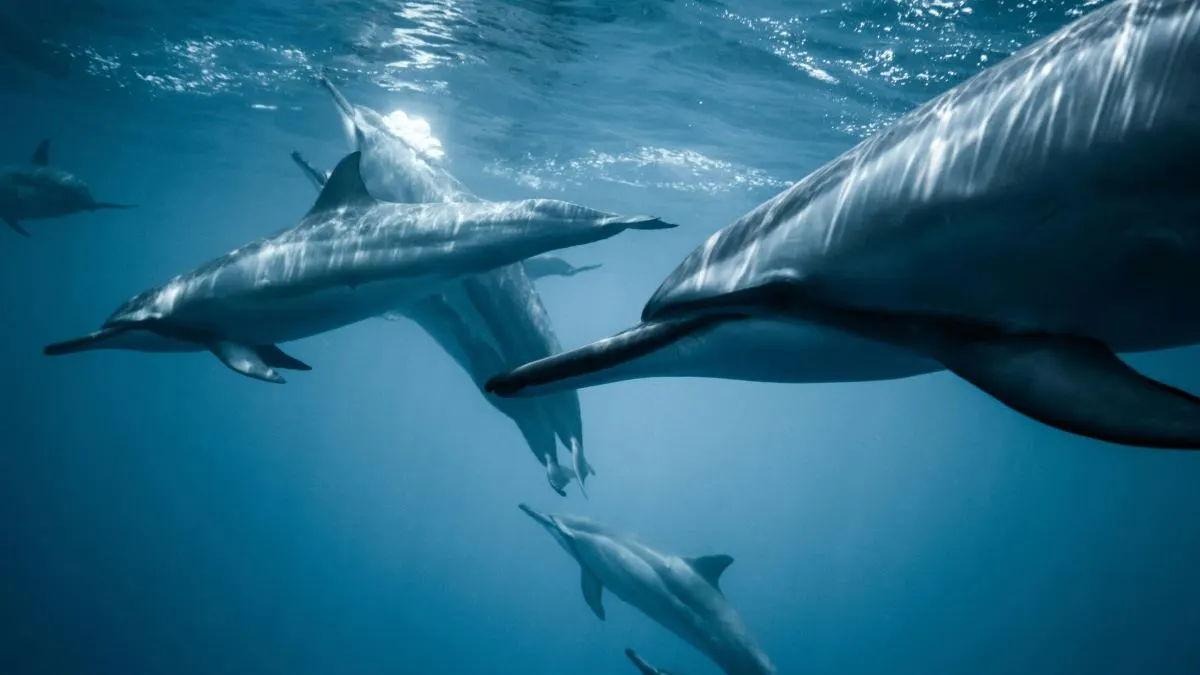
Typical behavior of orcas and white-sided dolphins
Orcas usually hunt in stable family groups. They coordinate attacks and share prey within their pod. They are top predators with complex and learned strategies.
White-sided dolphins are highly social and active. They move in large groups and use constant echolocation. Their diet is based on small fish and squid.
Typically, both species hunt independently. Interactions were usually interpreted as neutral or competitive. The recorded cooperation breaks with that traditional pattern.
An ecological message from the ocean’s depths
The finding demonstrates that biodiversity still holds surprises. Relationships between species can be more flexible than expected. Understanding them is key to protecting marine ecosystems.
The health of the Pacific Ocean depends on these interactions. The decline of salmon would affect the entire food web. Conserving species and habitats is an environmental urgency.
This alliance between orcas and dolphins expands the scientific perspective. It also reinforces the need for integral marine management. The ocean continues to teach how cooperation sustains life.



