



A Chinese citizen living in Brooklyn, United States, was involved in an attempt of international wildlife trafficking. He wanted to smuggle protected turtles valued at over $1.4 million dollars from the United States to Hong Kong.
He had around 850 specimens in boxes falsely labeled as “plastic animal toys.” He was captured and prosecuted in a federal court in New York. How were the animals and how did they manage to detect him.
Attempt of International Wildlife Trafficking: Carrying Over 800 Turtles
The accused, Wei Qiang Lin, pleaded guilty this Monday in a federal court in New York. He was trying to export more than 220 packages containing around 850 specimens of Eastern Box Turtles and Three-Toed Box Turtles, as reported by the United States Department of Justice.
Authorities intercepted the shipment during a border inspection. They found the reptiles tied and wrapped inside knotted socks and then placed in shipping boxes.
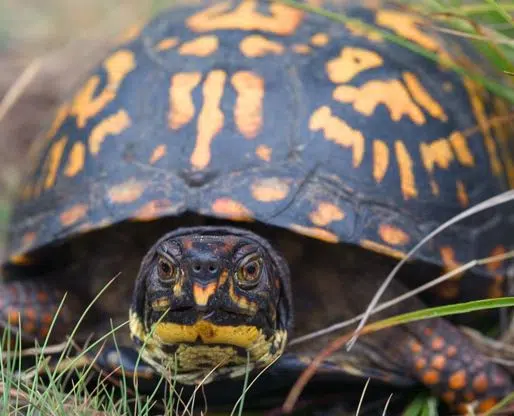
According to prosecutors, these species have colorful markings and are highly sought after in the pet market both in the U.S. and abroad, especially in China and Hong Kong. Both are protected by the Convention on International Trade in Endangered Species of Wild Fauna and Flora (CITES).
More Endangered Species, Investigation Data
The investigation revealed that Lin also shipped other 11 packages with reptiles, including venomous snakes, which worsens the case.
The accused faces a maximum penalty of five years in prison for this and will receive his sentence on December 23rd.
Alarming Numbers of International Wildlife Trafficking
Internationally, the illegal trade of wildlife and flora is valued between $10 and $23 billion dollars annually. It is estimated that over 100 million plants and animals are trafficked internationally.
Just in the European Union (EU), nearly 5200 seizures involving more than 1 million specimens, including 600,000 live animals and 10,000 plants protected by CITES, were recorded in 2023.
Regarding species, pangolins are considered the most trafficked mammals in the world: around 100,000 individuals per year are sent to countries such as China and Vietnam. But exotic species like European eels, medicinal plants, birds, reptiles, and corals are often targeted and highly sought after.
Generally, regulatory gaps are exploited, especially for species not included in CITES, limiting their control in regions like the EU.



