



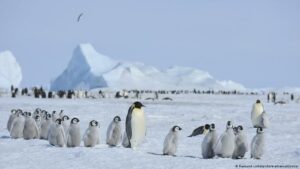
The population of emperor penguins in Antarctica suffered an alarming 22% drop in just 15 years. This decline, mainly attributed to global warming, jeopardizes the survival of one of the most emblematic species of the icy continent.
The sea ice, crucial for their reproduction, has become increasingly fragile and unstable. In recent years, several colonies lost all their chicks due to early ice collapse, preventing the chicks from developing the necessary feathers to withstand the ocean.
Scientists observed these losses in key regions such as the Antarctic Peninsula and the Weddell and Bellingshausen Seas. The scenario is much more serious than previous models suggested, which estimated a drop of less than 10% in the last decade.
In addition to ice retreat, penguins face more intense rainfall and the advance of predators into their habitats, all phenomena exacerbated by climate change.
A Warning from the Southern World
The emperor penguin, with an estimated 250,000 breeding pairs, depends on climatic balance to survive. If greenhouse gas emissions continue unabated, it is projected that the species could be on the brink of extinction before the end of this century.
The new study warns that these losses may be just the beginning and urges a review of prediction models with more updated data. Migration to colder regions could be a temporary solution, although it does not guarantee long-term survival.
Although the outlook is critical, there is still room for action. Global emission reductions and protection of the Antarctic ecosystem are key steps to prevent emperor penguins from disappearing from the map. The battle against climate change is also a race to save this species.
Conservation Status of the Emperor Penguin
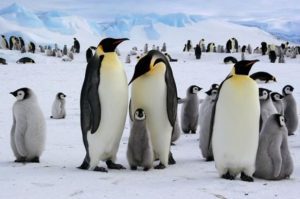
The emperor penguin (Aptenodytes forsteri), an iconic species of Antarctica, was recently classified as “vulnerable” on the International Union for Conservation of Nature (IUCN) Red List. This category indicates that the species faces a high risk of extinction in the wild if urgent measures are not taken.
The main factor threatening their survival is climate change, which directly affects the sea ice where these birds reproduce, incubate their eggs, and raise their chicks. The loss or premature weakening of this ice compromises their life cycles and led, in some years, to the total loss of chicks in several colonies.
In addition to habitat degradation, emperor penguins face risks such as decreased food due to alterations in the marine food chain. Although not directly affected by human activities such as hunting or industrial fishing, their future depends on determined and sustained global climate action.



