



In Chubut, conservation has ceased to be a static project to become a traveling experience. Through a traveling exhibition that has already passed through the Legislature in Rawson and Rada Tilly, the province is socializing its recent law protecting seven marine species, declared Natural Monuments.
But the goal is not to repeat the decree: it is to transform it into an experience, bringing the sea closer to those who have never seen a sea lion, a whale, or a shark in the wild.
Seven protected marine species: science, commitment, and territory
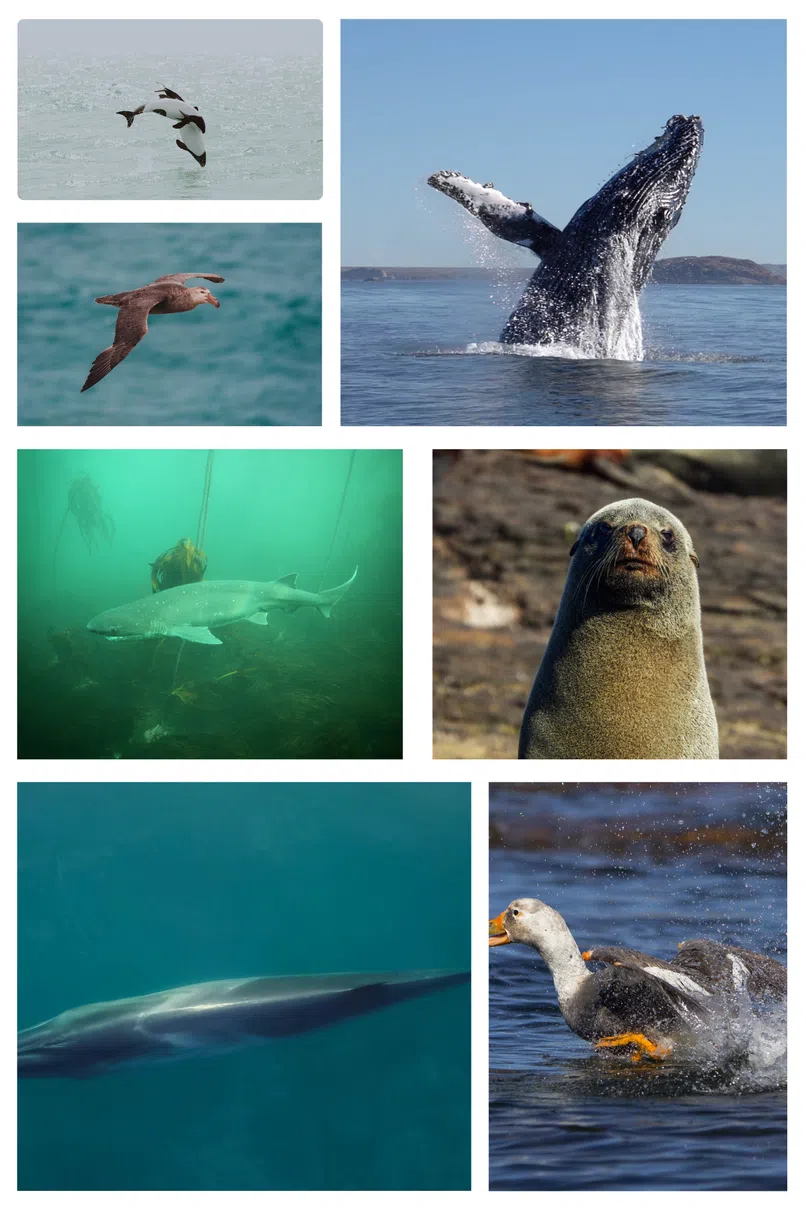
The species included in the law are:
- Humpback Whale
- Sei Whale
- Commerson’s Dolphin
- Spotted Shark
- Southern Giant Petrel
- White-headed Steamer Duck
- South American Fur Seal
“This law is not just symbolic: it implies a real commitment to conservation, environmental education, and community participation,” emphasizes deputy Andrea Aguilera, proponent of the law.
Her team worked alongside Rewilding Argentina and the scientific community to ensure that the selection of species and protection strategies are based on technical evidence, field data, and local knowledge.
Environmental education and youth in action
The exhibition includes informative panels, specialist talks, and a sound experience that allows people to “hear the sea,” creating a sensory connection with coastal ecosystems. The coordinator of Proyecto Patagonia Azul, Mariana Cassini, explains: “We want people to understand why it matters to us that these species are alive and healthy.”
Additionally, the Club del Mar is being promoted, a group of young people from Camarones seeking to expand throughout the province to promote public policies through education and activism. The exhibition also invites local enterprises, such as Habitats del Mar de Comodoro, provincial photographers, and an educational panel that plans to enter schools and cultural centers.
The ocean as natural infrastructure
“We need a healthy ocean to live: to provide work, food, oxygen, and ecosystem services,” states Cassini.
This vision redefines conservation as natural infrastructure that supports local economies, green jobs, and sustainable tourism. Aguilera complements: “To conserve is to project the future. And knowing is the best way to protect.”
The exhibition’s schedule continues with new stops in the province and the expansion plan to other jurisdictions, including Buenos Aires.
What’s next: management plans and territorial articulation
The Secretariat of Environment must design the management plans to operationalize the law: regulation of vessel traffic, best practices for watching, scientific monitoring, and coordination with municipalities and coastal communities.
Politics, science, and youth are already sitting at the same table. Now, the challenge is to bring conservation to the territory, to classrooms, docks, fairs, and coastal stations, even in windy winters.



