



This week, the transfer of dolphins from the former Aquarium of Mar del Plata to a oceanarium in Egypt generated outrage among animal rights organizations.
The ten specimens were sent to Hurghada, in the Red Sea, in an operation that moved the animals from one situation of captivity to another.
The animal liberation movement Voicot expressed its rejection of the transfer.
According to the organization, the dolphins went “from a situation of confinement, exploitation and captivity, to another”.
The entity questioned the owner of the Mar del Plata Aquarium, Eduardo Albor Villanueva, who is also CEO of The Dolphin Company.
This company operates 33 dolphinariums, oceanariums, and water parks with marine animals around the world.
Criticism of the animal exploitation system
“The owner of the Aquarium of Mar del Plata never tires of profiting from the captivity and exploitation of hundreds of wonderful animals,” lamented Voicot on social media.
The organization denounced a double standard in handling these cases. When it is demanded that animals be transferred to sanctuaries, “a thousand and one bureaucracies and impediments appear,” they criticized.
However, when it comes to profiting from the animals, “they are dispatched quickly with absolute ease and complicity of all the sectors involved,” the entity warned.
Voicot concluded that “the speciesist and mercantilist system shows its disdain for animals, considered manipulable objects for profit purposes.”
Details of the dolphin transfer operation
The ten dolphins —Zaiko, Lara, Olivia, Isis, Aramis, Callie, Moro, Ares, Juno, and Mako— left Mar del Plata during the early morning in a special logistical operation.
The transfer of dolphins included two main stages:
- Land transport from Mar del Plata to the Ezeiza airport
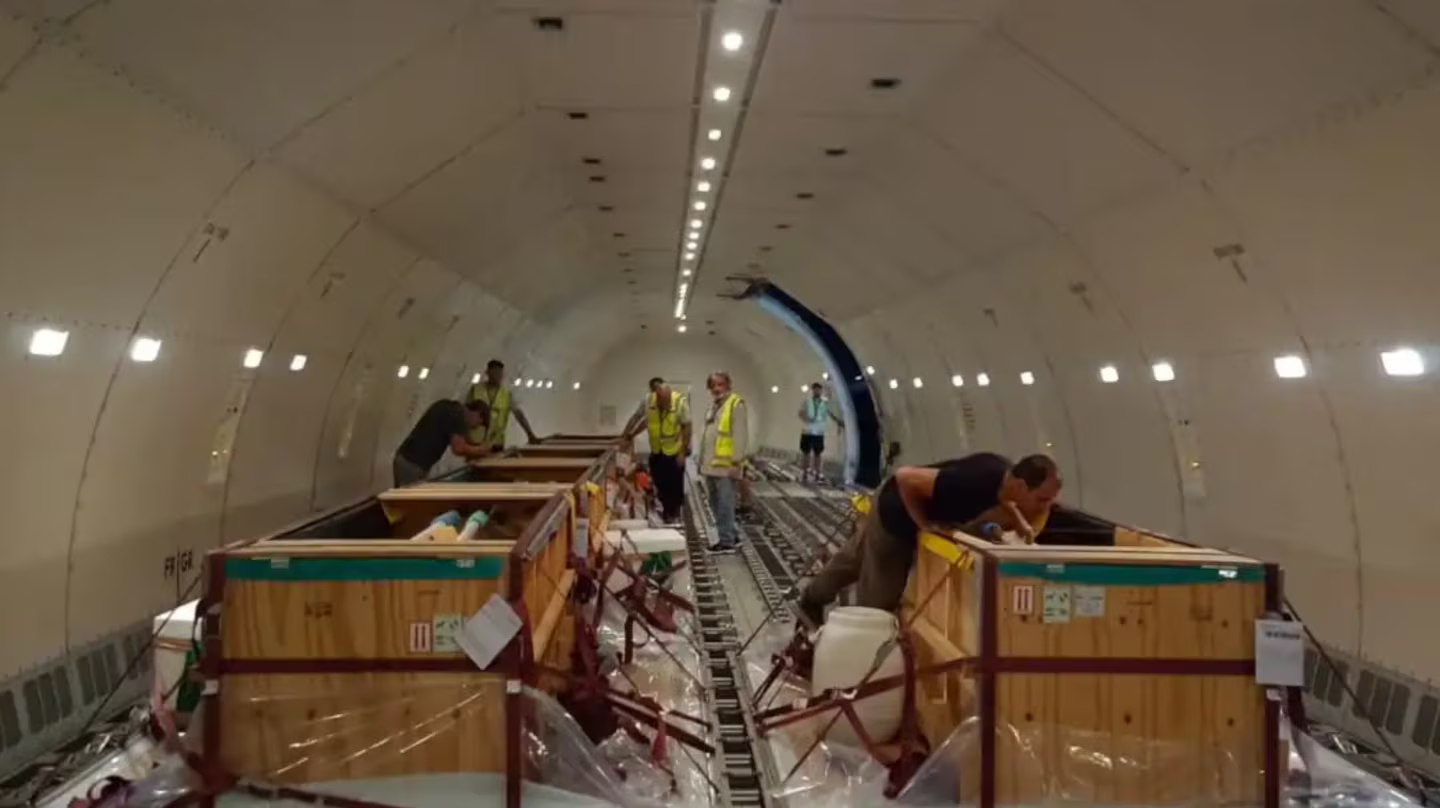
- Air travel on a specially equipped Qatar Airways aircraft
- Stops every 20 minutes during the land journey to check the condition of the specimens
- Accompaniment by teams of veterinarians, biologists, and caregivers
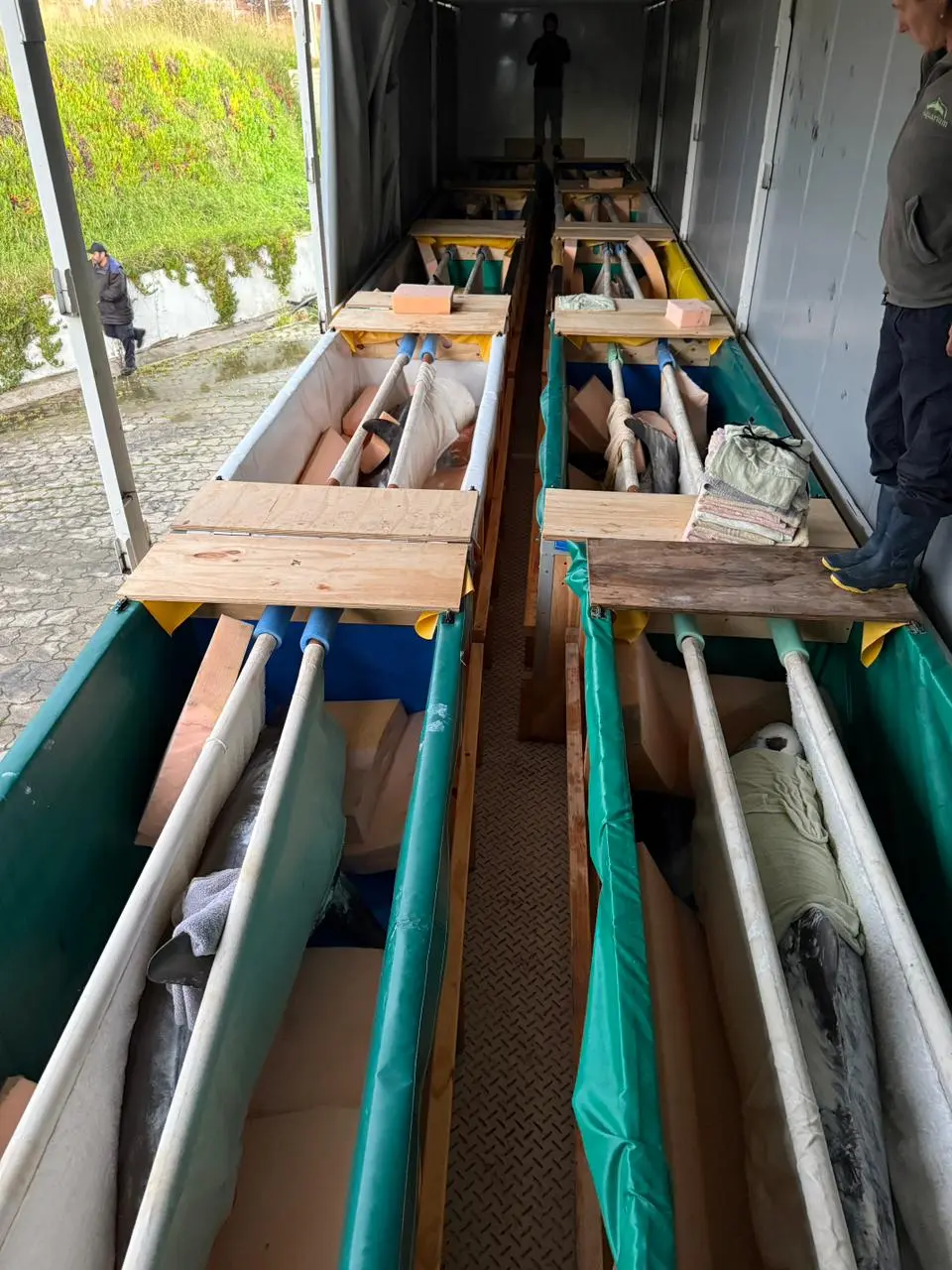
“The dolphins arrived at their destination Hurghada in the Red Sea, in excellent condition, due to the good medical-veterinary conditions they were in at the Aquarium,” reported Servicios Logísticos Asociados (SLA) SRL.
The animals traveled in special containers designed to ensure their well-being, according to the company.
The Director of Operations of SLA, Ignacio Nieto, reported that they had to “moisten them with vaseline and cream.”
Each box had two pipes and a stretcher-type canvas for them to travel comfortably, in addition to foam rubber on the head and fins.
The final destination of the dolphins and their conditions
All the dolphins were born in captivity and, for that reason, could not be released into their natural habitat.
The animals are now in an oceanarium inaugurated in 2015 in Hurghada, which houses 1,200 animals of nearly a hundred species.
Three Argentine caregivers will remain in Egypt for at least three months to ensure the dolphins adapt to the new environment.
According to sources from the former Aquarium, the new space presents similar conditions to those they had in Mar del Plata.



