



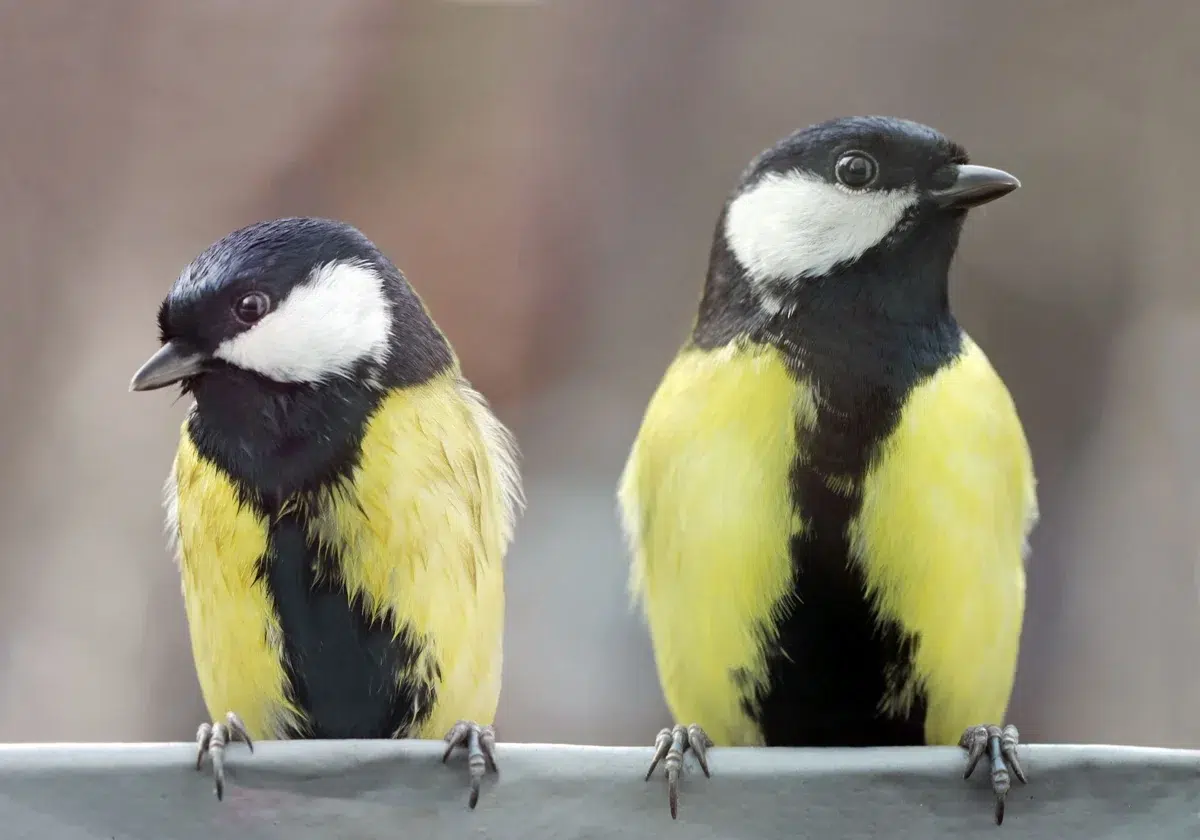
In a discovery that expands the understanding of animal social dynamics, researchers from the universities of Oxford and Leeds demonstrated that Great Tits (Parus major) exhibit behaviors indicative of divorce long before the breeding season.
The study, published in the journal Proceedings of the Royal Society B, reveals that social interactions during winter can anticipate which pairs will stay together and which will separate in the following spring.
Monogamy and complex social decisions
In monogamous species, such as the Great Tit, mate selection is a determining factor for successful reproduction.
While previous research had explored the causes of avian divorce, this study focused on how daily social bonds outside the breeding season can predict a future separation.
Wytham Woods: the natural laboratory of Great Tits
The study was based on the wild population of Great Tits in Wytham Woods, one of the most monitored in the world.
Thanks to decades of monitoring, researchers were able to analyze social patterns with robust quantitative data, using feeders equipped with RFID technology that automatically recorded the presence of birds through electronic tags.
Signs of distancing in winter
The results showed that pairs that divorced in spring already showed less social interaction during winter. These birds:
- Visited feeders at different times
- Socialized with other individuals instead of their reproductive partner
- Displayed weaker and less persistent bonds
In contrast, faithful pairs strengthened their bond over time, sharing more moments and spaces.
Divorce as a gradual social process
“Bird relationships are not static. We found clear signs in the winter months that predict the likelihood of divorce in spring,” explained Adelaide Daisy Abraham, lead researcher of the study.
Divorce in Great Tits seems to be an accumulative social process, rather than an abrupt decision, offering a new perspective on the social life of wild birds.
Technology and behavior: an alliance to understand animal bonds
The smart feeders recorded thousands of individual interactions, allowing researchers to compare social patterns with data from previous and subsequent breeding pairings.
This methodology provides a unique window into the life cycle of social relationships in wild animals.
Implications for future research
By identifying early indicators of separation, scientists can now investigate the factors influencing bond breakdown and their effects on reproduction, survival, and social structure.
This approach could be applied to other species that form stable partnerships, expanding the field of social ethology.



