



In the southwestern region of Chaco, an area with ideal conditions for poultry development, a new production model is gaining ground. The National Institute of Agricultural Technology (INTA) Las Breñas is promoting a program that transforms the way of egg production, prioritizing animal welfare and sustainability.
This project proposes a transition to cage-free systems, where hens can move freely. The initiative responds to a global trend: increasingly conscious consumers demand ethical, healthy and traceable food from its source.
The proposed model not only improves the living conditions of the birds, but also enhances the profitability of the enterprises. Local producers supported by INTA have reported improvements in the laying rate, increasing from 76% to 88%, representing a tangible economic advantage.
Furthermore, eggs produced in cage-free systems have a distinct nutritional value. This is due to both responsible management and the incorporation of natural pigments and nutrients, enhancing their internal structure and final quality.
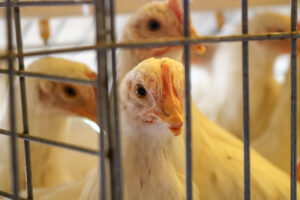 Egg production in Chaco seeks to prioritize animal welfare and sustainability. Photo: Sinergia Animal.
Regenerative Poultry Farming and Shared Knowledge for Animal Welfare
One of the pillars of the program is technical training. Through practical training sessions, INTA provides key tools on management, biosafety, nutrition, lighting, facilities, and animal health. This knowledge transfer enables producers to adjust their methods and increase their efficiency.
To ensure the success of the proposal, demonstrative modules were set up at the Las Breñas Agricultural Experimental Station. Optimal conditions are recreated there for producers to observe, evaluate, and apply to their own farms, reducing errors and optimizing resources.
Currently, seven producers from different locations in Chaco are applying the model. With high laying genetic lines and seasonal planning, they are already projecting an increase in production for spring, aiming to cover a greater portion of the local demand with a quality product and environmental commitment.
What Traditional Eggs Conceal
Behind the traditional egg production system lies one of the cruelest forms of animal exploitation. Laying hens are kept in battery cages, where they cannot stretch their wings or express natural behaviors, leading to high levels of stress and suffering.
In addition to overcrowding, the birds undergo routine mutilations such as beak trimming to prevent fights resulting from extreme confinement. In many cases, the environment lacks natural light, adequate ventilation, and basic hygiene conditions, also affecting consumer health.
Although widely spread, this model is beginning to be rejected by informed social sectors. Alternative systems like those promoted by INTA not only eliminate these cruel practices, but also enable the production of healthier eggs, safe and respectful of life.
 Egg production
Towards an Ethical and Sustainable Production
INTA’s model in southwestern Chaco marks a paradigm shift. It integrates profitability with ethics, and technology with environmental respect. Through alliances with small and medium producers, a strong network is built to boost local development.
The increasing demand for food with ethical and environmental traceability turns this experience into a strategic opportunity. Choosing free-range hens is not only a compassionate gesture but also a sustainable investment with positive impacts on the community, the environment, and the regional economy.
Thus, Chaco’s eggs are not just born from a hen: they also stem from a new way of understanding production, where life, care, and knowledge share the same nest.



