



The elephant seals arrived at the coasts of Chubut to begin the breeding season, but the presence of sport fishermen could become a problem, as it may cause them stress, abandonment of pups, or dangerous displacements for the animals.
According to WCS Argentina, the total population of elephant seals older than one year decreased by 61%. In fact, the colony of Península Valdés, historically healthy, was reclassified as “Endangered”, following the outbreak of avian flu (H5N1) that affected the species in October 2023.
In just one year, the adult females decreased by 60%, while the population of alpha males fell by 43%, not to mention that the annual production of pups dropped from 14,427 to 5,677.
In this scenario, the NGO “Sin azul no hay verde” recommends keeping more than 30 meters away, not throwing stones or provoking their displacement. It is also advised to keep dogs away from the elephant seals and not to stand between the animals and the sea.
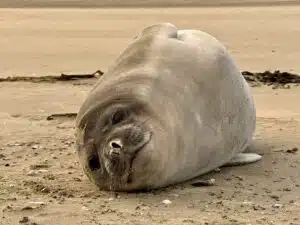
Characteristics of Elephant Seals
The elephant seals are the largest pinnipeds on the planet and are divided into two species: the northern (Mirounga angustirostris), which inhabits the coasts of the North Pacific, and the southern (Mirounga leonina), which is distributed in the South Atlantic and subantarctic islands. Males can exceed 4 meters in length and weigh more than 3 tons, while females are considerably smaller.
Their name comes from the large flexible trunk that adult males develop, used to emit powerful vocalizations during the breeding season. They spend much of the year at sea, where they dive to depths of more than 1,500 meters and remain submerged for up to two hours, making them exceptional swimmers and divers.
These mammals feed mainly on fish, squid, and crustaceans, playing an important role in the balance of marine food chains. On land, they form large colonies on coastal beaches or islands, where they breed and molt once a year, in a process known as “molting.”

Threats to Their Survival
Although their populations have recovered since the commercial hunting of the 19th century, the elephant seals still face various threats linked to human activity. Climate change alters ocean currents and food availability, affecting their migratory routes and reproductive capacity.
The accidental captures in industrial fishing nets are another growing problem, as the animals become entangled and die from suffocation. Added to this is the marine pollution from plastics and chemicals, which harm their health and reduce habitat quality.
In the subantarctic coasts, the melting ice and increased tourism in breeding areas increase stress and competition for space. The conservation of these species requires a comprehensive approach that combines research, fishing regulation, and effective protection of the marine areas where they rest and feed.



