



Researchers from Conicet and the National University of La Plata published two studies confirming the presence of all types of waste in Argentine fauna. It is evident that waste in fauna is a growing problem.
The findings include everything from bags and threads in bird nests, to microplastics in anchovies consumed by swallow-tailed gulls, evidencing the presence of waste in fauna.
Argentina generates about 1.1 million tons of plastic waste per year, according to World Bank data.
And that waste is already part of the day-to-day life of local fauna, both on land and at sea.
Alert for plastics in nests of Buenos Aires birds
A scientific team conducted surveys in the district of Punta Indio, Buenos Aires province, between October 2022 and January 2024.
There, they located and examined nests of 30 bird species.
The researchers detected that 95 of the 884 nests analyzed contained some type of plastic, that is, 17.7% of the total.
The species that most used plastics in their nests were the great kiskadee and the caracara.
Additionally, they also found waste in nests of the chimango and the fork-tailed flycatcher.
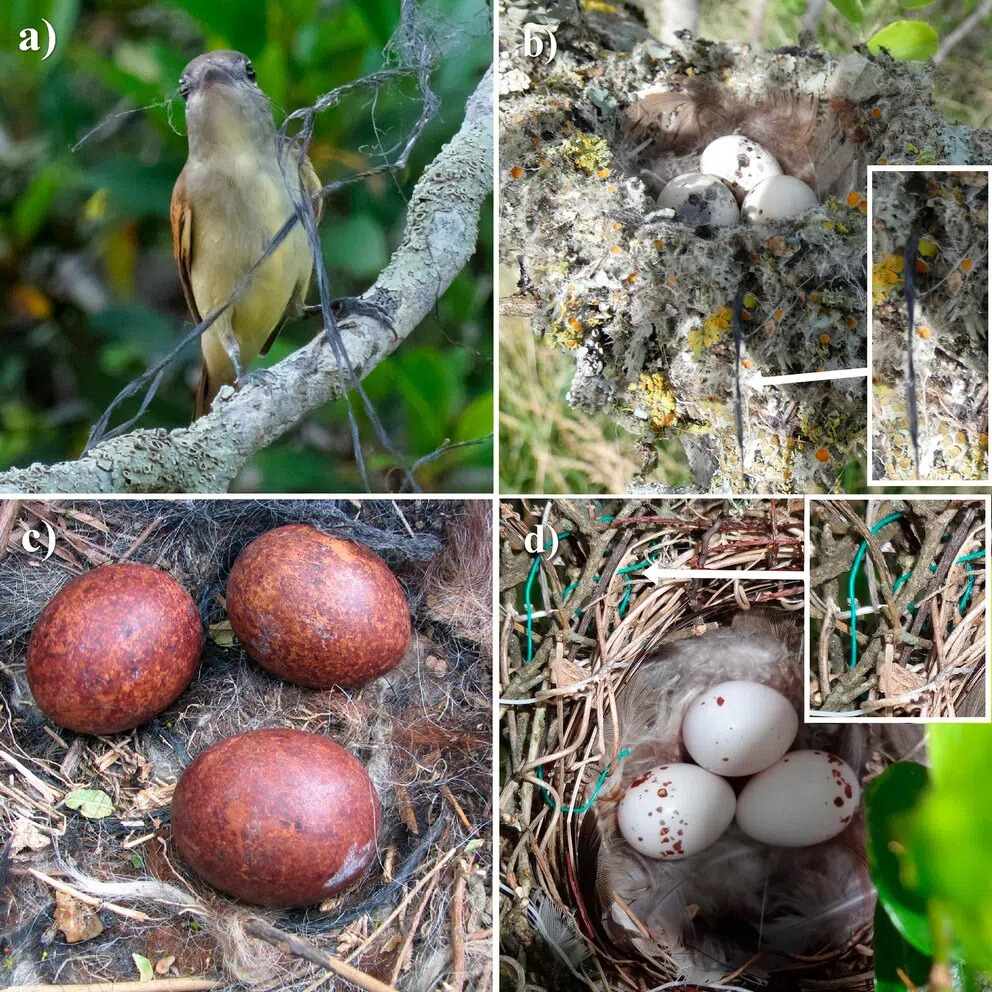
The identified plastic remains include threads and polyethylene bags.
The researchers reported different damages associated with plastic: a dead juvenile great kiskadee, injuries in chicks, and strangulation of an adult of the tufted tit-spinetail bird.
The study was published in the journal El Hornero, edited by Aves Argentinas.
Luciano Segura and Martín Colombo, from the Dr. Raúl Ringuelet Institute of Limnology, Virginia Monges, from the Center for Parasitological and Vector Studies (CEPAVE), and Ana Chiramberro, from the Entomology Division of the La Plata Museum, participated.
Microplastics in the marine food chain
Another group of researchers recorded the presence of microplastics in anchovies and their transfer to seabirds on the Argentine coast.
The work was published in the journal Environmental Pollution.
The specialists observed that more than 40% of the fish examined had plastic particles in their digestive system.
“This finding is proof that the microplastics available in aquatic environments can be ingested by fish and then transferred along the food chain to birds“, explained Dr. Andrés Ibañez, a Conicet researcher at the La Plata Museum.
The survey was conducted in the Rincón de Ajó Natural Reserve, in Bahía Samborombón, Buenos Aires.
There, they analyzed 120 anchovies from 39 regurgitated samples of swallow-tailed gulls.
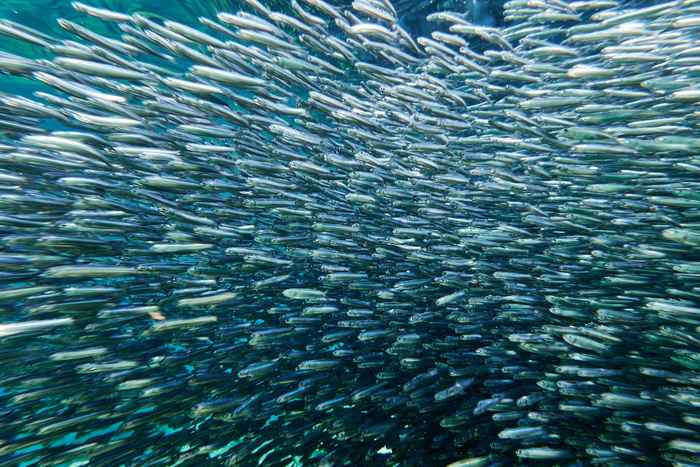
The microplastics are particles of between 1 micrometer and 5 millimeters: these are formed by the fragmentation of larger plastics from urban, industrial, and agricultural waste.
“Anchovies are fish from the Río de la Plata estuary, which feed by filtering water and trap particles and small organisms. During this process, the fish ingest microplastics they find along with their usual food or by mistake“, noted Ibañez.
The study revealed that 40.83% of the anchovies contained plastic fragments, mainly in the form of fibers.
Additionally, the contamination chain continues when birds, while feeding, directly incorporate these microplastics.
The work was carried out by Dr. Ibañez along with Micaela Carrillo, with the collaboration of technical staff and park rangers from the Ministry of Environment of the Province of Buenos Aires.
Faced with this threat, the researchers recommended constant monitoring and policies to reduce plastic waste to stop the accumulation of these pollutants in Argentine fauna. Waste in fauna is a problem that requires immediate attention.



