



The Natural Reserve of Fuente de Piedra Lagoon, in Málaga, Spain, was the scene of an important environmental event. More than 22,700 chicks of the greater flamingo were born this year, the highest number since records began. As part of the conservation actions, about 600 chicks were banded on a day that brought together around 400 volunteers.
Bandaging is a scientific tool that allows precise knowledge of the migration patterns, reproduction, and habitat use of flamingos in the Mediterranean and northwestern Africa. This information is crucial for designing protection plans in a context of wetland loss and climate change.
However, handling during these operations can lead to complications. Some specimens showed capture myopathy, a metabolic disease that affects the muscles due to stress and physical exertion. Fifteen flamingos were transferred to the Zoo Conservation Center in Córdoba to receive specialized care.
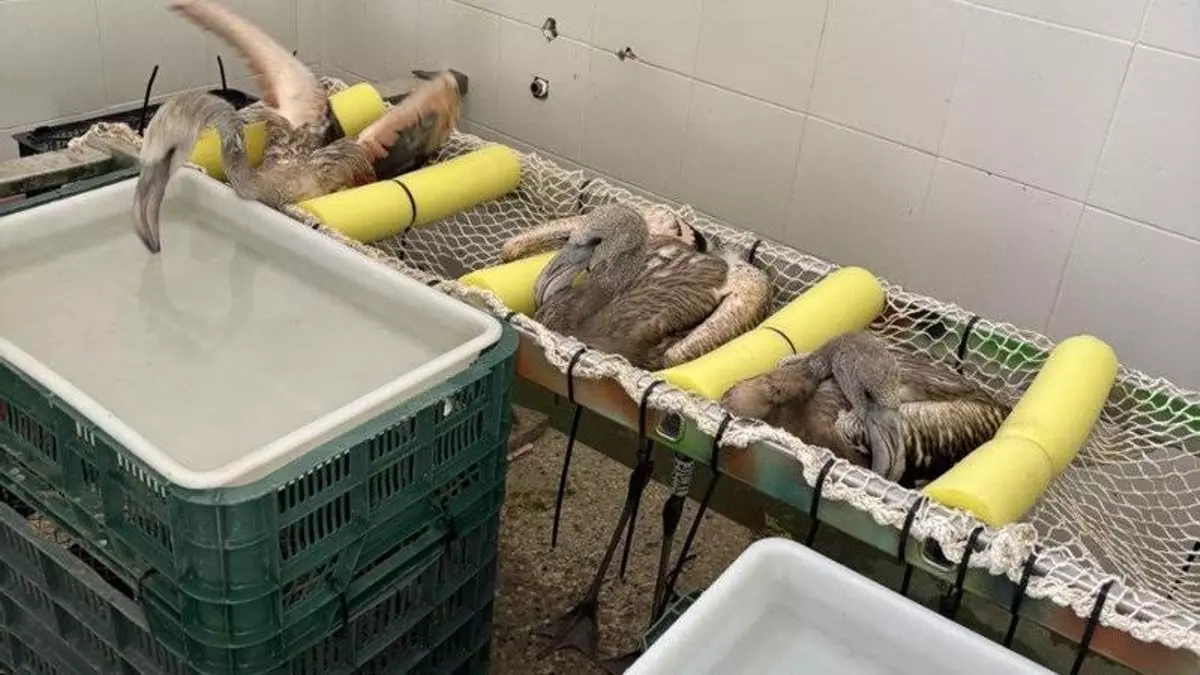
There, veterinary teams apply rehabilitation therapies and nutritional support. The process includes harnesses designed to keep the birds standing, physiotherapy routines, and swimming that strengthen their muscles and allow for their recovery before being released back into their natural habitat.
The rehabilitation process step by step
The recovery of affected flamingos requires an intensive plan:
- Initial physical support: sling harnesses support the bird and prevent further muscle wear and tear.
- Regular rehabilitation: with controlled movements, flamingos are periodically stood up to stimulate muscle regeneration.
- Nutritional therapy: supplements are incorporated to increase energy and accelerate physical recovery.
- Water exercises: swimming strengthens limbs thanks to the natural resistance of water, promoting mobility.
- Continuous monitoring: each specimen is constantly evaluated until reaching an optimal state for return to the lagoon.
Once rehabilitated, the flamingos are released in Fuente de Piedra, where they reintegrate into their colony. This process ensures the survival of individuals and strengthens the global population of the species.
The role of the greater flamingo worldwide and the global challenges of its conservation
The greater flamingo (Phoenicopterus roseus) is one of the most emblematic birds of wetlands. Its presence is an indicator of the good ecological status of these ecosystems, as it depends on shallow, salty waters rich in food.
Currently, the species is distributed in Europe, Africa, and Asia, with prominent colonies in the Mediterranean. Although not classified as an endangered species, it faces increasing threats related to the degradation of wetlands, pollution, and disruption of migratory routes.
The massive banding in Fuente de Piedra not only provides scientific information but also strengthens international cooperation. The data obtained allows tracking flamingo movements between countries and designing joint conservation strategies.
Flamingos also play a social and cultural role. They are part of the ecotourism attraction in many regions, boosting local economies and raising environmental awareness. However, their future depends on the balance between the conservation of wetlands and the pressure of human development.
The experience in Málaga is an example of how science, citizenship, and institutions can come together to ensure the protection of a species that, beyond its beauty, represents the health of ecosystems essential for the planet.



