



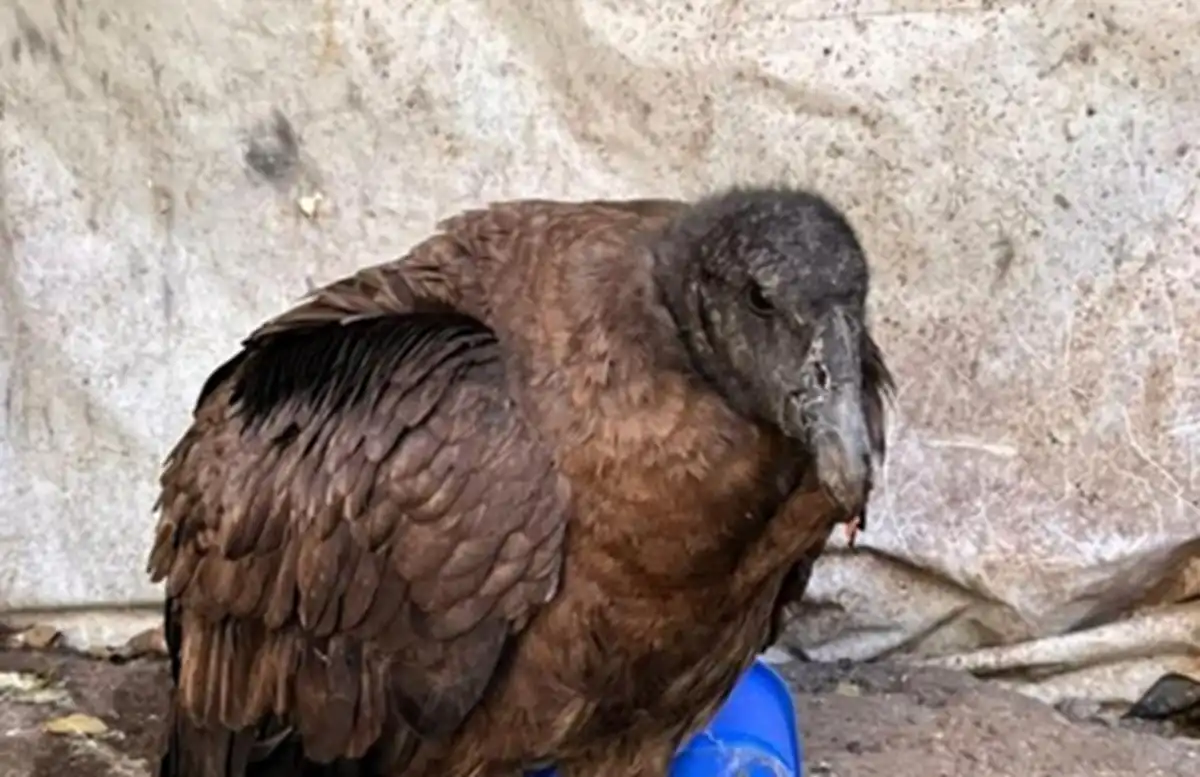
A resident of the locality of Chuscha, Trancas department (Tucumán), found a juvenile Andean condor in an evident state of decline and unable to fly.
After immediately notifying the Police, the bird was taken to the local police station and the provincial Directorate of Flora, Wildlife and Soils (Dffsys) was involved.
Rescue and Transfer Operation
The technical team of the Wildlife Division conducted an initial clinical evaluation and then transferred the specimen to the Horco Molle Experimental Reserve, where the necessary management and rehabilitation measures were defined to ensure its well-being.
There, it will receive specialized veterinary care, with the goal of recovering its flight ability and reintegrating it into the natural environment under safe conditions.
Ecological Role of the Andean Condor
The Andean condor (Vultur gryphus) is a key species in mountain ecosystems:
- Scavenger bird: accelerates the decomposition of dead animals.
- Natural “cleaner”: prevents the spread of diseases.
- Environmental balance: maintains the health of the food chain in mountainous areas.
Its presence is essential for the functioning of high-altitude ecosystems, where it plays a role in sanitary and ecological control.
Conservation Status and Threats
In Argentina, the Andean condor is categorized as “Threatened”. Its main threats come from human actions:
- Illegal use of toxic baits causing mass poisonings.
- Direct persecution, stemming from myths and cultural prejudices.
- Lead contamination, resulting from hunting with ammunition.
These practices compromise its long-term survival and have reduced its populations in several provinces.
Conservation Programs
Argentina is a leader in the protection of this species thanks to the Andean Condor Conservation Program (PCCA), which works on:
- Rescue and rehabilitation of injured or poisoned specimens.
- Reintegration into safe natural areas.
- Environmental education to reduce persecution.
- International cooperation with Andean countries to protect biological corridors.
In Tucumán, successful releases have been carried out, such as at Cerro El Pelao in Tafí del Valle, where rehabilitated condors returned to fly freely.
Natural and Cultural Heritage
The Andean condor is not only vital for ecological balance but also a cultural symbol of indigenous peoples and the identity of the Andes.
Its conservation represents a commitment to biodiversity and the natural heritage of the region.
Legal Framework and Citizen Participation
In Tucumán, the Provincial Law No. 6,292 prohibits the aggression, capture, possession, and sale of wildlife.
- For complaints or information, you can write to the email: [email protected].
- Citizen collaboration is key: notifying authorities of animals at risk can save lives, as happened with this juvenile specimen.
The rescue of the juvenile Andean condor in Tucumán is an example of institutional and citizen commitment to the conservation of an emblematic species.
Its protection not only preserves natural heritage but also ensures the balance of mountain ecosystems against growing threats. Each rescue and rehabilitation action is another step towards the survival of this majestic bird in the skies of the Andes.



