



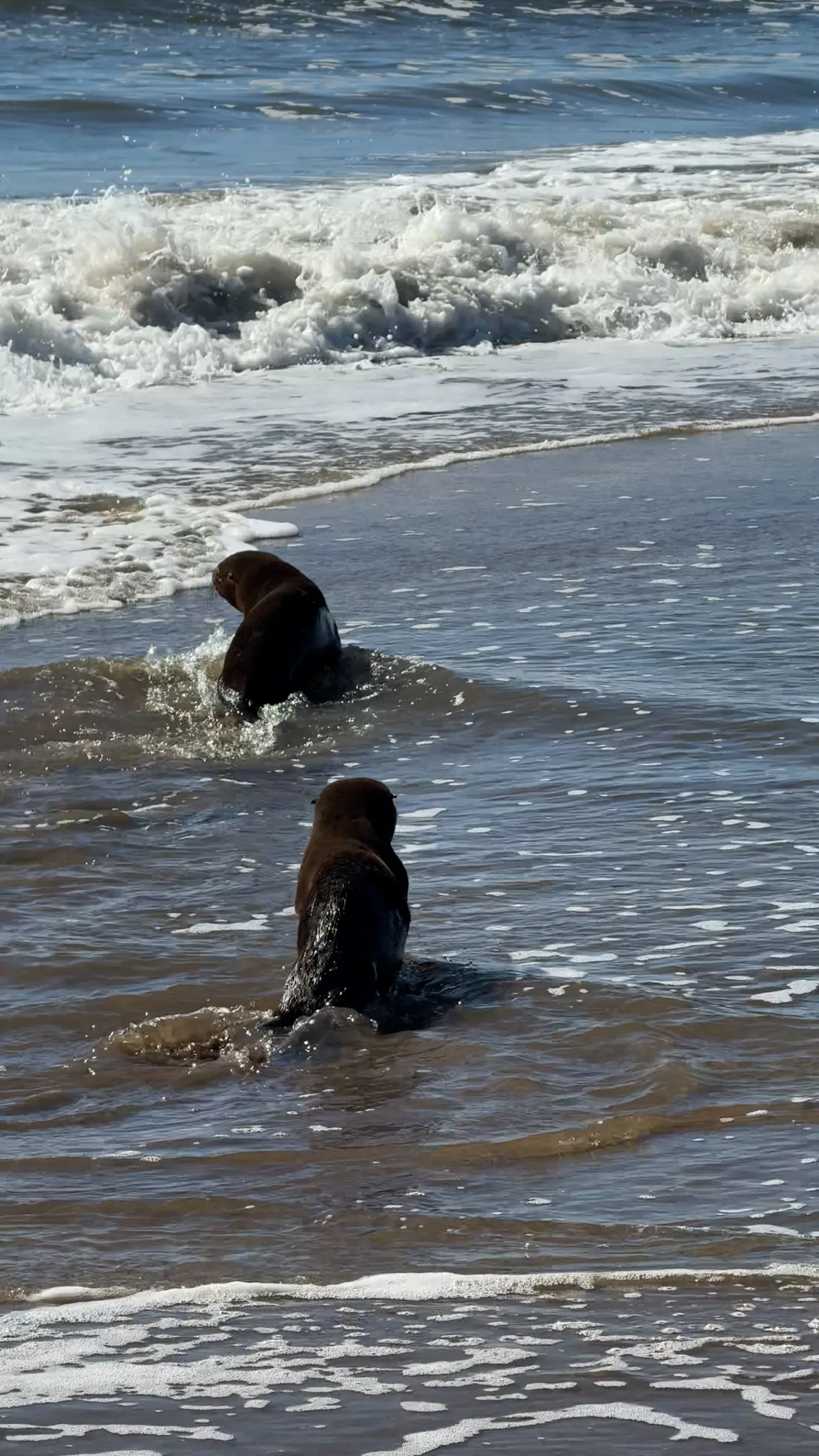
After the permanent closure of the Aquarium of Mar del Plata, four sea lions began a new chapter at Mundo Marino in San Clemente del Tuyú. These are Ciro, Joaco, Naza, and Mía, specimens that were part of the historic aquatic park located next to the Punta Mogotes Lighthouse.
The transfer was part of the relocation operation arranged after the closure of the Mar del Plata site, which for more than three decades operated as one of the most well-known oceanariums in the country.
The relocation of the animals was carried out under strict veterinary and environmental protocols, aiming to minimize stress and ensure adequate conditions during the journey to the coast of Partido de La Costa.
A process of adaptation supervised by specialists
According to Mundo Marino, the four sea lions have begun to adapt favorably to the new environment. The specimens remain under constant observation by veterinarians and specialists in marine fauna.
The process includes health checks, behavior monitoring, and a progressive integration into the new spaces specially prepared for their accommodation. Additionally, professionals evaluate their diet, rest, and response to the habitat change daily.
The animals had lived for years at the Aquarium of Mar del Plata and were part of the educational and recreational activities of the establishment. However, after the closure of the complex, a reorganization began to determine the fate of the species that remained there.
Meanwhile, the transfer of Ciro, Joaco, Naza, and Mía became one of the first visible movements within the process of relocating marine fauna initiated after the park’s closure.
The closure of the Aquarium and the debate on animals in captivity
The disappearance of the Aquarium of Mar del Plata reignited discussions related to the role of oceanariums and aquariums in the conservation of marine species. For years, these spaces combined recreational activities with educational programs, rescue, and rehabilitation of fauna.
However, various environmental sectors have long questioned the maintenance of marine animals in captivity, especially in shows or exhibitions far from their natural conditions.
Meanwhile, specialists emphasize that some centers play important roles in rescue, veterinary recovery, and conservation of injured species or those affected by marine pollution and bycatch.
The debate also involves cultural changes in how societies understand the relationship between entertainment, biodiversity, and animal welfare. More and more countries are moving towards stricter regulations on the exhibition of marine mammals in recreational spaces.
The reasons behind the closure of the Aquarium of Mar del Plata
The closure of the Aquarium was mainly linked to the expiration of the lease of the land where the complex operated, located in a strategic coastal area of Mar del Plata.
Additionally, in recent years, this type of establishment faced increasing economic difficulties due to the high maintenance costs, veterinary care, and infrastructure adaptation for marine species.
This was compounded by a progressive decline in the number of visitors and a transformation in social demands related to animal welfare and entertainment activities with captive fauna.
In various countries, traditional oceanariums have begun to shift towards models more oriented to rehabilitation, scientific research, and environmental education. This transition has also begun to impact Argentina, where the closure of the Mar del Plata Aquarium symbolizes a change of era in the relationship between coastal cities and marine animals.
Meanwhile, environmental organizations argue that the future of these spaces will depend on their ability to prioritize conservation, rescue, and protection of marine ecosystems increasingly threatened by pollution, overfishing, and climate change.



