



What is the drain fly and where to find it?
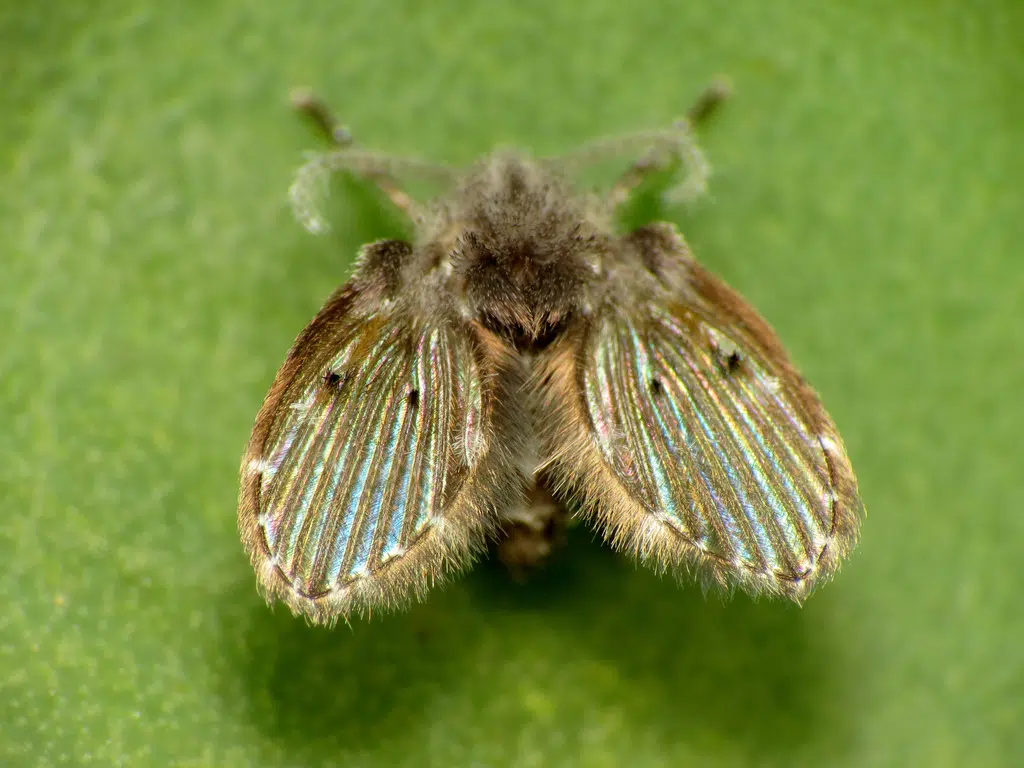
Also known by names such as urinary fly or moth fly, the drain fly encompasses several species of small insects ().
These flies are characterized by their dark coloration and a hairy appearance. They tend to multiply in humid environments where waste or organic matter in a state of decomposition accumulates, such as floor drains, sewers, drains, septic tanks, or other cavities that receive constant contributions of moist material.
The survival and reproduction of the drain fly depend on humidity, which is why they commonly proliferate in places like bathrooms, kitchens, and changing rooms with showers, especially when sanitation and drainage systems have deficiencies in their operation.
In their adult stage, these flies usually perch at rest on walls or ceilings. They are not good fliers, so their movement is limited to short distances and generally only occurs when they feel threatened or disturbed.
This insect undergoes a complete metamorphosis that includes the egg, larva, pupa, and adult stages. The female lays her eggs, which are tiny in size (approximately 0.2 mm), directly in stagnant water or in areas that remain constantly moist.
Larvae require specific conditions
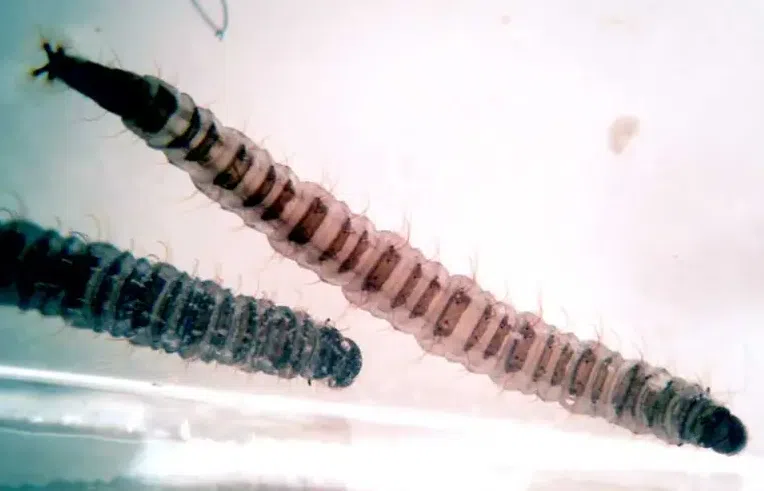
The larvae require small accumulations of dirty water for their development. In these places, they feed on organic matter, bacteria, algae, and fungi for a period ranging from one to two weeks before transitioning to the pupal stage.
It is important to note that a minimal amount of water, such as that present in the slime formed by decomposing organic matter, is sufficient to maintain the necessary moisture for larval development.
The larvae of the most common species, such as or, have an almost transparent appearance. They are distinguished by a black-colored head and a respiratory siphon on their rear end, which is always kept raised and is equipped with four hair-covered appendages.
Before becoming pupae, the larvae go through three molts, progressively increasing in size from 1 to 9 mm over a period that varies depending on the environmental conditions.
The pupal stage is mobile; during this time, which does not exceed two days, the pupa moves in search of drier areas. Once their development is complete, the pupal skin opens to give way to the adults, who tend to gather in nearby dry areas to their place of origin.
The complete duration of the drain fly’s life cycle generally ranges from 7 to 30 days, with temperature being the main factor influencing this period. High temperatures accelerate reproduction, while if the thermometer drops below 6ºC, the life cycle does not complete.
Signs of a drain fly infestation
This insect does not bite or transmit diseases. However, because it frequents unhygienic environments such as drains and sewers, a severe infestation can become a hygiene problem, as well as a nuisance, especially in sensitive places like food establishments or health centers.
Visible signs of an infestation include observing adult specimens perched on walls and ceilings. On some occasions, it is also possible to notice the presence of larvae, which move with a serpentine swimming motion in stagnant water.
The constant and abundant presence of drain flies in a home or commercial establishment for several days is usually indicative of an established breeding site. It is essential to locate and eradicate this source, as otherwise, insecticide treatments directed only at adults will be ineffective.

Strategies for controlling the drain fly
Preventing infestations involves monitoring areas with a higher probability of becoming breeding grounds, such as drains. The use of adhesive traps can be very helpful in detecting problematic areas to implement corrective measures in time.
If a considerable number of flies are observed, a detailed inspection of the sanitation system is advisable. This review should rule out issues such as faults, leaks from wastewater, dry traps (without water), or deficient drainage systems.
The main


