



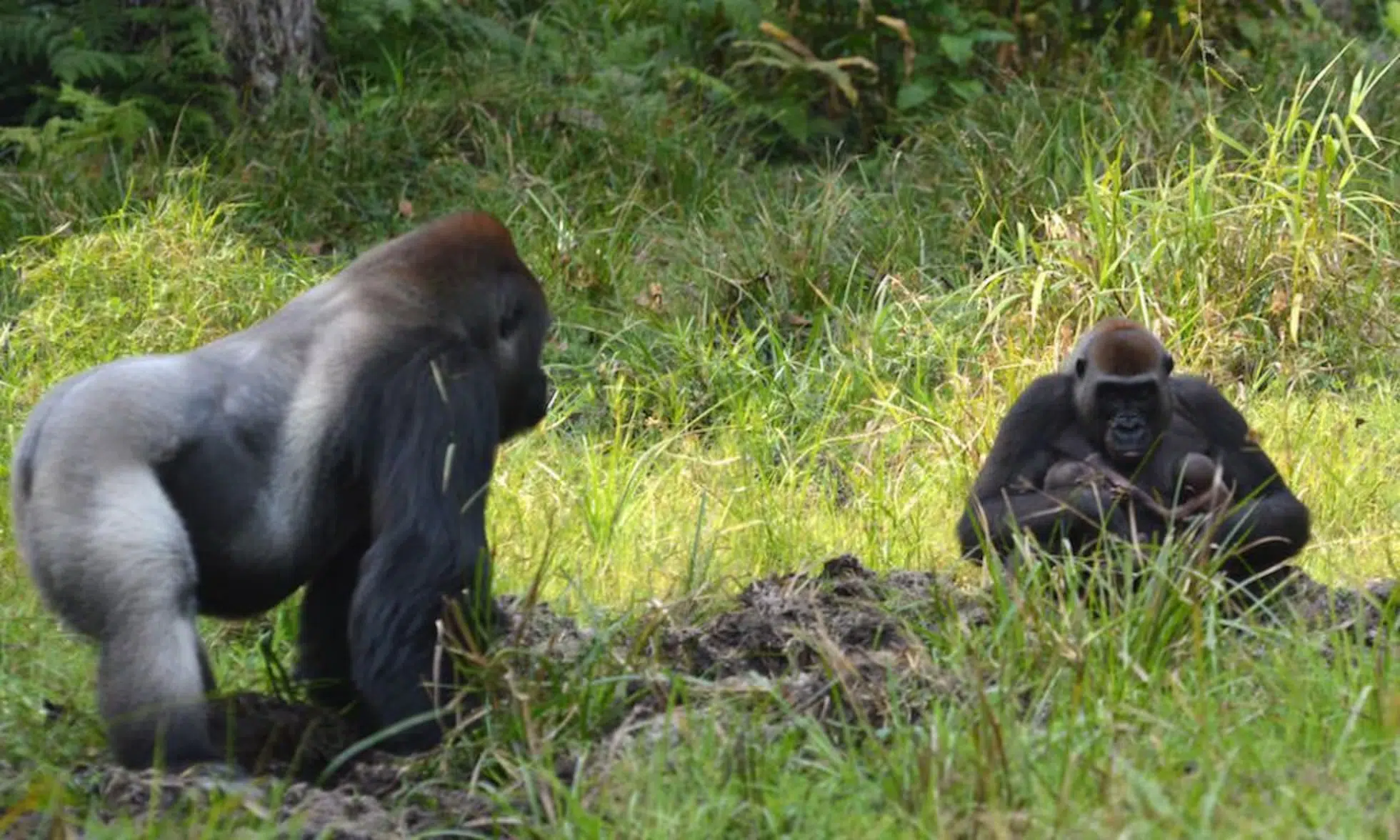
The Virunga National Park, in eastern Congo, announced the birth of mountain gorilla twins, an event considered “important” for this endangered subspecies.
The mother, Mafuko, 22 years old, gave birth to two males on January 3. According to the official statement, both babies were observed in good health.
Virunga, with more than 7,770 km² of area, is Africa’s oldest national park and is home to many of the world’s last mountain gorillas. However, much of its territory is under the control of armed groups, which accelerates forest loss and hinders conservation efforts.
The challenge of raising twins
The park highlighted that caring for twins is a challenge, especially in the first months when the infants rely completely on their mother for transportation and feeding. Mafuko had already had seven offspring, including a pair of twins who died shortly after birth in 2016.
Currently, Mafuko is part of the Bageni family, the largest in the park, with 59 members. Her history is marked by violence: in 2007, her mother was killed by armed individuals, leading her to change groups.
Ecological importance
Mountain gorillas play vital roles in African forest ecosystems:
- Ecosystem engineers: by feeding on vegetation, they disperse seeds and maintain forest structure.
- Health indicators: their well-being reflects the state of forests, which provide water and food to human communities.
Social and economic importance
- Sustainable tourism: responsible ecotourism generates jobs and income, encouraging the protection of gorillas and their habitats.
- Resource source: the forests that house them provide water, food, and medicines to millions of people in Central Africa.
- Research and awareness: their study increases knowledge about primates and biodiversity.
Evolutionary and ethical importance
- Close cousins: they share almost 98% of human DNA, offering unique insights into our biology and emotions.
- Intrinsic value: as an intelligent and charismatic species, they have the right to exist independently of their utility to humans.
Main threats
Mountain gorillas face multiple risks:
- Habitat loss and fragmentation due to agricultural expansion and armed conflicts.
- Poaching for meat, traditional medicines, and illegal trade.
- Diseases transmitted by humans, especially tourists.
- Political instability, which hinders conservation efforts.
The birth of twins in Virunga is a symbol of hope for a species struggling to survive amidst war and deforestation.
Each new life reinforces the need to protect mountain gorillas, not only for their ecological and economic value but also for their evolutionary and ethical importance as our closest relatives.

