



The arrival of foreign fishing vessels in the South Atlantic waters began to accelerate in December.
It is expected that by the end of the month, around 400 vessels will gather at the edge of Argentina’s Exclusive Economic Zone (EEZ). Of that number, about 360 units belong to China’s distant fishing fleet, identified for years as one of the main actors in the marine depredation in the region.
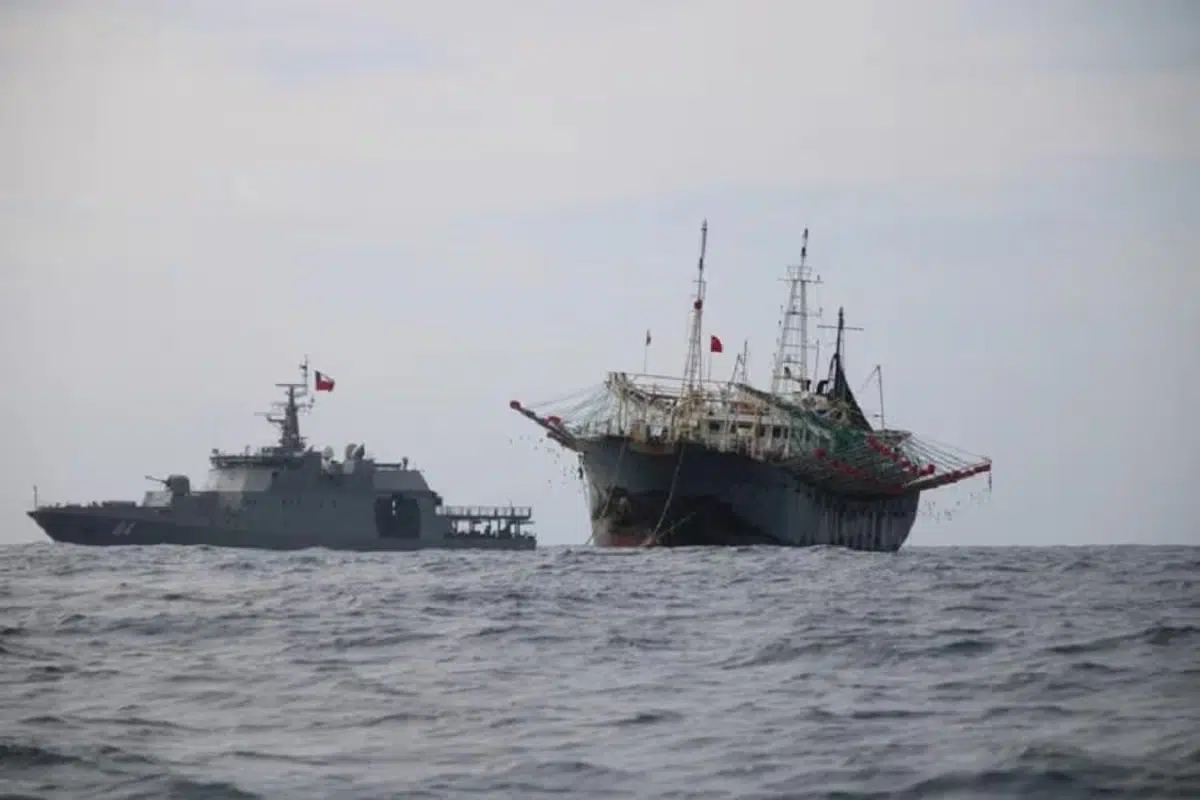
To monitor the movement of these ships, the Argentine Navy is conducting the surveillance and control operation “Mare Nostrum VI”, which has already detected illegal fishing activity within the EEZ this month.
The squid fishing season and pressure on the ecosystem
According to the Navy, this time of year sees a significant increase in the arrival of ships “mainly from the Indo-Pacific and the Galapagos Islands, attracted by the squid fishing season.”
The high fishing activity season extends from December 2025 to mid-2026, with the presence of more than 400 vessels, mostly under the Chinese flag, but also from Spain, Portugal, Russia, and Vanuatu.
On December 4, the ocean patrol vessel ARA Almirante Storni, in coordination with a P-3 Orion Naval Aviation aircraft, detected a foreign ship fishing within the EEZ. The anomaly was reported to the National Fisheries Subsecretariat for appropriate actions to be initiated.
Reports of unauthorized prospecting
Environmental organizations have pointed out that Chinese vessels are conducting mapping and prospecting studies without official approval on the Argentine continental shelf.
The fishing vessel Lu Qing Yuan Yu 205 was reported for performing slow and straight maneuvers off the coast of Buenos Aires, compatible with biological and geological studies. The Circle of Environmental Policies, through Milko Schvartzman, shared details of the vessel’s trajectory, which had already been accused of carrying out similar tasks in January 2023.
These mapping movements can have different intentions: studying the chemical characteristics of the sea, identifying target fishing species, exploring marine genetic resources, or analyzing the composition of the continental shelf’s bottom.
Labor abuses and killing of vulnerable fauna
An investigation by the Environmental Justice Foundation (EJF) exposed that the Chinese fleet not only depletes marine resources but also engages in labor abuses and human rights violations.
The report revealed that between 2019 and 2024, the fishing hours of Chinese vessels in the region increased by 85%, even when landings showed alarming signs of decline.
The exploitation of this illegal fishery is virtually uncontrolled. In 2023, it represented 12.2% of the world’s squid catch, with unregulated high seas fishing pressure four times greater than in regulated Argentine waters.
Interviews with Indonesian and Filipino crew members revealed violence, intimidation, excessive working hours, and wage deductions. Almost two-thirds of Chinese squid fishing vessels are linked to deaths or physical assaults on board. Additionally, illegal attacks on vulnerable fauna, such as shark finning and the deliberate killing of South American sea lions, were reported.
The massive presence of the foreign fishing fleet in the South Atlantic, led by China, exposes the fragility of control mechanisms and the urgency to strengthen the defense of Argentine marine resources. The combination of illegal fishing, unauthorized prospecting, and labor abuses creates a critical scenario that threatens both biodiversity and national sovereignty.

