



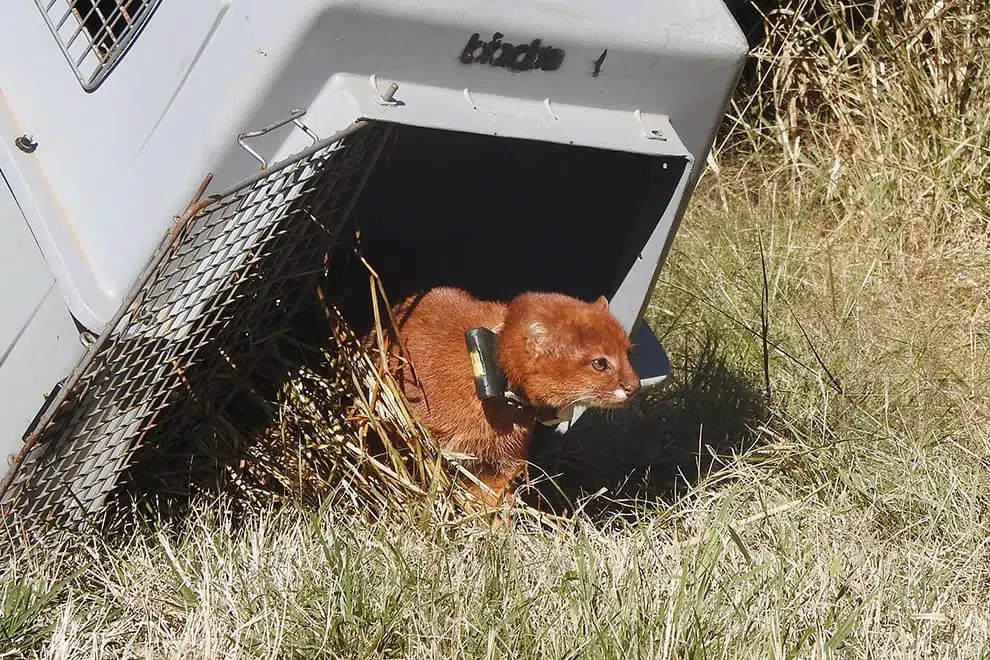
A new conservation operation allowed a jaguarundi and a capybara to return to their natural environment in a rural area of Altos de Chipión, in the department of San Justo, more than 200 kilometers from the city of Córdoba. The release was carried out by agents of the Environmental Police of Córdoba along with the technical team of the Biodiversity Park.
The reintroduction represents an important step for the recovery of wildlife, especially in the case of the feline, which was equipped with a satellite tracking collar to monitor its movements and behavior once reintroduced into the wild.
This is the first jaguarundi specimen monitored using this technology in the wild, a tool that will allow us to obtain valuable information to strengthen future conservation actions.
Scientific monitoring will provide new data on the species
The monitoring will be conducted by the research team of the Institute of Animal Diversity and Ecology (IDEA-Conicet), part of the Applied Zoology Center of the Faculty of Exact, Physical and Natural Sciences of the National University of Córdoba.
Specialists aim to understand aspects related to movements, habitat use, feeding, and reproductive behavior of these small felines, information considered fundamental for designing management and conservation strategies.
Additionally, the data obtained will help to better understand the ecological needs of the species and will contribute to protecting other specimens that inhabit different natural environments in the country.
A long rehabilitation process before returning to the wild
The jaguarundi was rescued in August 2025 in Villa Concepción del Tío, when it was just a month and a half old. Having been prematurely separated from its mother, it required an extensive assisted rearing process.
For several months, the technical team of the rescue center worked to ensure the feline developed behaviors typical of wildlife without becoming dependent on humans. Among the skills learned were techniques for climbing, stalking, sheltering, and capturing prey.
Once it was confirmed that the specimen met the necessary physical and behavioral conditions, specialists determined it was ready to return to the wild. The release also coincided with the onset of its sexual maturity, a key stage for promoting its future reproduction in the wild.
The jaguarundi, an essential feline for ecosystem balance
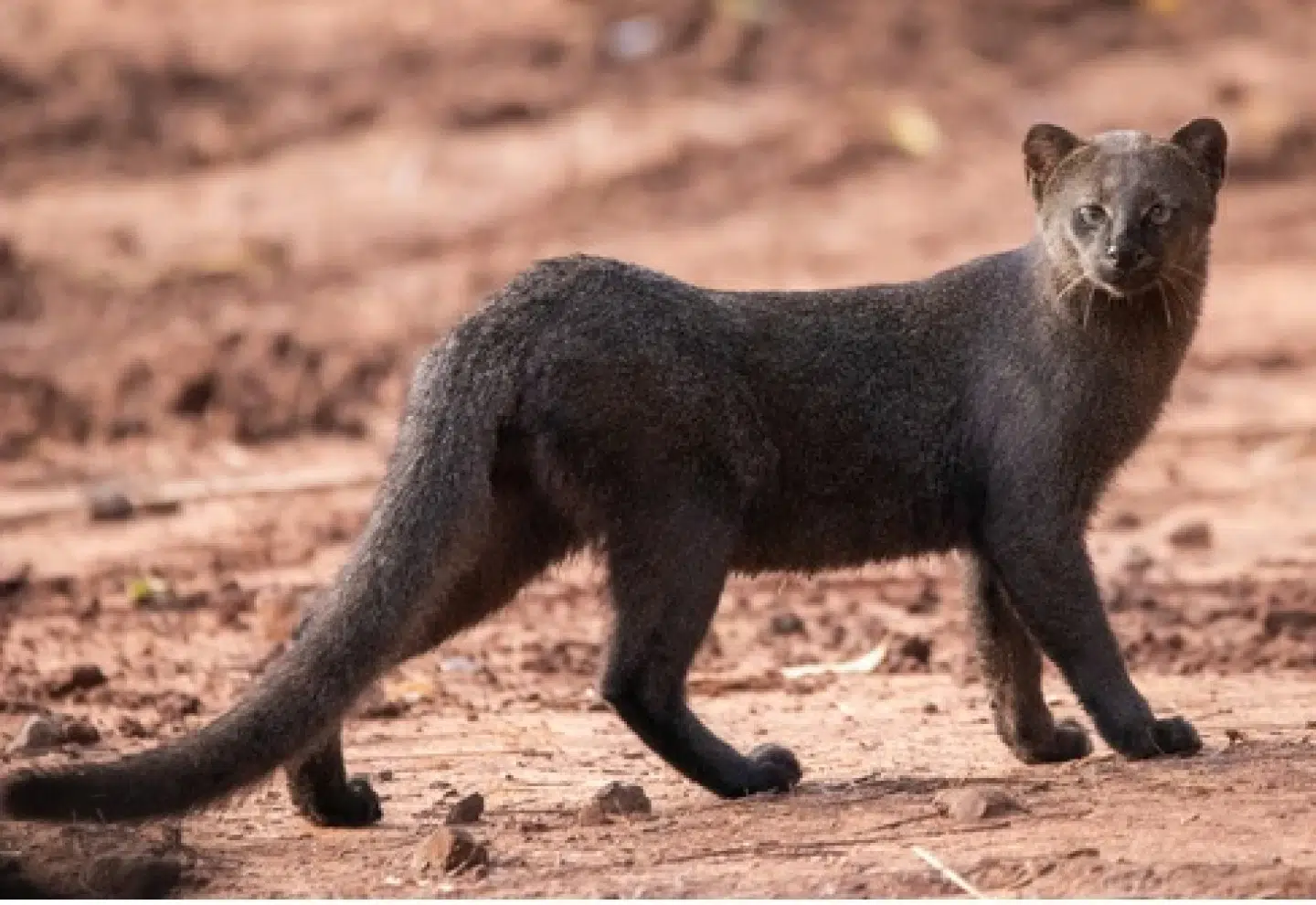
The jaguarundi (Herpailurus yagouaroundi) is one of the least known wild felines in America. It inhabits various environments, from forests and woodlands to grasslands and wetlands, where it plays a fundamental ecological role by controlling populations of small mammals, birds, reptiles, and other animals.
The species exhibits three main coloration patterns, including the reddish hue observed in the specimen released in Altos de Chipión. In natural conditions, the young remain with their mother for about a year and a half, during which they learn essential survival skills.
The conservation of the jaguarundi faces various challenges, such as habitat loss, fragmentation of natural environments, and conflicts with human activities. Therefore, rescue, rehabilitation, scientific monitoring, and release programs are essential tools to strengthen their populations and preserve the biodiversity of the ecosystems they inhabit.



