



With his pointed ears, amber eyes, and speckled fur, **Mitsuo** is a **red lynx (Lynx rufus)** weighing 11.3 kilos who now lives at **Selva Teenek**, a wildlife rescue and rehabilitation center located in the **Huasteca Potosina**.
His story reflects the risks of **wildlife trafficking** and the importance of having specialized spaces for their care.
Capture, mutilation, and delivery: the beginning of a story marked by mistreatment
It is believed that Mitsuo was born in the **Tamuín-Ébano** region, in central Mexico.
He was captured during his first year of life by people who tried to **keep him as a pet**, even going so far as to **extract his fangs**, which almost caused him to bleed to death.
He was later **given to a military officer**, who handed him over to **PROFEPA** in December 2018.
Selva Teenek: a refuge for Mexican wildlife species
Mitsuo was transferred to **Selva Teenek**, a **Wildlife Management Unit (UMA)** authorized by **SEMARNAT**, which has been caring for the six wild felines of Mexico since 2016:
- Jaguar (Panthera onca)
- Puma (Puma concolor)
- Ocelot (Leopardus pardalis)
- Margay (Leopardus wiedii)
- Jaguarundi (Herpailurus yagouaroundi)
- Red Lynx (Lynx rufus)
Today, Mitsuo is one of the **42 permanent residents** of the center, which also houses **anteaters, deer, owls, and pijije ducks**, among other species.
Red lynx trafficking: a persistent threat
Although the red lynx is not classified as an **endangered species**, its **sale as a pet** is a common practice.
In the last 10 years, specimens have been seized in **Puebla, Sinaloa, Michoacán, Mexico City, Baja California, Jalisco, Guerrero, Sonora, and Durango**, among other states.
Campaigns like **#YourHomeIsNotTheirHome**, launched by PROFEPA in 2024, seek to **raise awareness about the harm of domesticating wildlife**.
Zora: the lynx that could not return to the wild
In August 2024, **Zora**, a red lynx cub, was **rescued by Balam Foundation** after being offered as a domestic cat on social media.
Although attempts were made to rehabilitate her for release, she **did not show wild behavior** and developed **skin cancer**. She was moved to León for treatment, but passed away in July 2025 after **humanitarian euthanasia**.
“Nature is wise… and we understood that prolonging her struggle was prolonging her suffering,” communicated Selva Teenek.
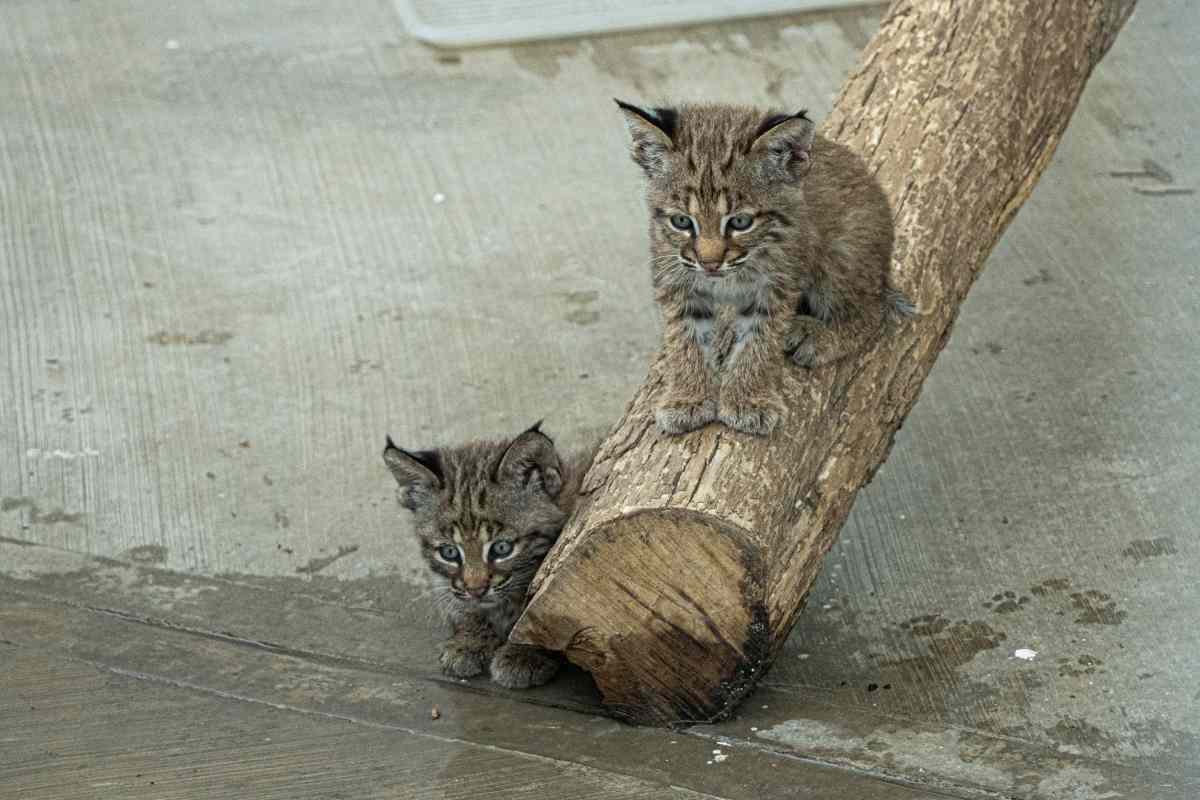
New lynxes in rehabilitation: hope amid trafficking
In June 2025, three newly born lynxes were **abducted from their den** in **Rioverde, San Luis Potosí**, with the intention of selling them as pets.
The **municipal police** identified the responsible individual and handed them over to **PROFEPA**, who transferred them to **Selva Teenek** due to a lack of government facilities.
Currently:
- They are bottle-fed
- They have already undergone two deworming stages
- Human contact is limited to avoid imprinting
- It is expected that they develop aversion to humans and hunting skills
If they meet the **ethological criteria**, they will be **released between 9 and 12 months of age**.
Rehabilitation with purpose: returning them to the ecosystem
“If the puma or jaguar disappear, there is a very serious imbalance in the ecosystems,” warns **Ena Buenfil**, founder of Selva Teenek.
The release of rehabilitated animals is not only possible but **necessary to restore the natural balance**. To achieve this, the following are evaluated:
- Aversion behaviors towards humans
- Ability to hunt and consume live prey
- Adaptation to biosimulators that recreate their habitat
Environmental education: key to stopping wildlife trafficking
“I don’t know if it’s ignorance or ego, but why do they want to have a lynx as a pet?” questions veterinarian **Alondra Valencia**.
In Mexico, **there is a lack of environmental education** and **awareness about the ecological role of each species**. Conservation depends not only on shelters and authorities but also on **an informed and committed citizenry**.
*Cover photo: Lizeth Ovando*



