



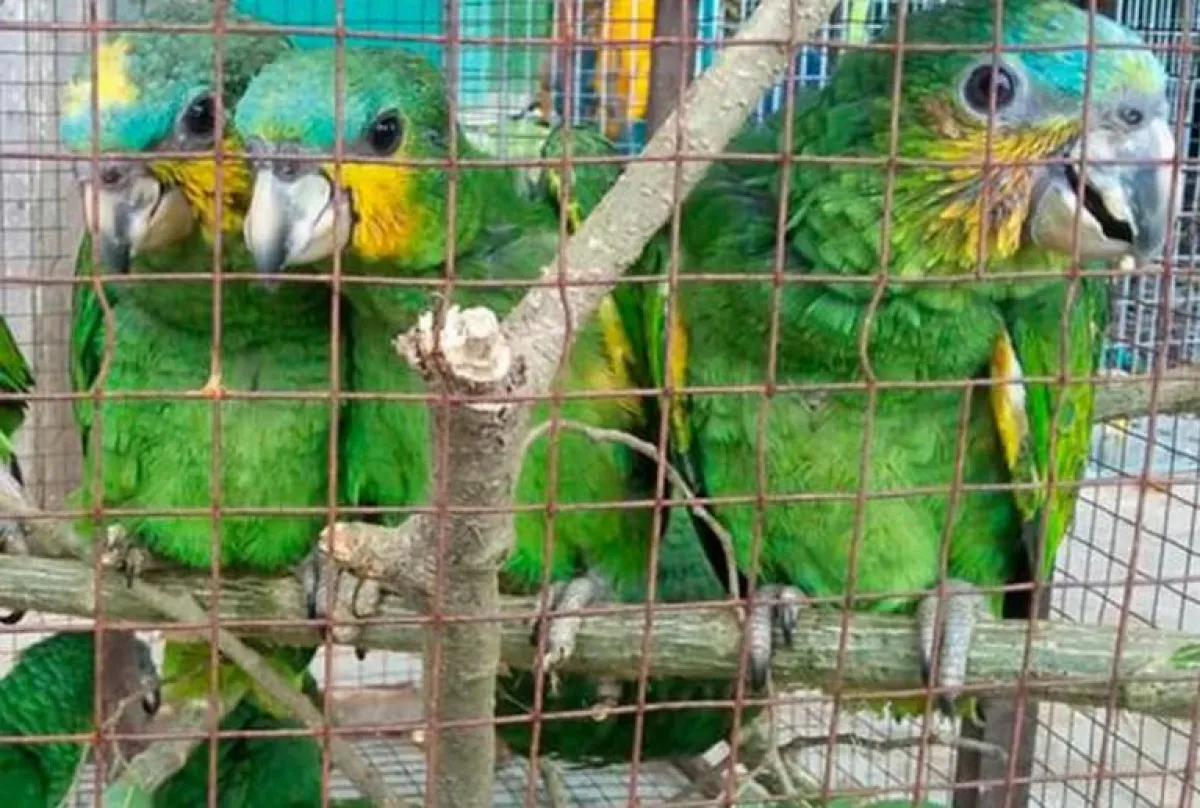
In a joint operation carried out in Santa Rosa de Calamuchita, Córdoba, the Environmental Police and the Rural South Patrol rescued nearly 100 exotic birds in captivity.
Raids were conducted in four private homes, where they found the animals locked in cages.
Exotic birds in captivity: how the operation in Córdoba unfolded
A total of 94 exotic birds were seized, which were found in captivity conditions.
 94 birds were rescued. (Photo: NA).
The recovered species were transferred to the Tatú Carreta Reserve in Casa Grande for their rehabilitation and subsequent release into their natural habitat.
Among the birds, they came across specimens of endangered species, such as the yellow cardinal (Gubematrix cristata). In this case, their population in Córdoba is severely affected.
Furthermore, 17 cages, 12 traps, and a large cage were seized, serving as evidence to demonstrate the magnitude of illegal wildlife trafficking in the region.
The authorities initiated the corresponding actions to apply sanctions for violating current regulations that prohibit the possession, commercialization, and trafficking of wild animals.
The Environmental Police also reminded the community that, if they detect situations that could be harming the environment or natural resources, they can report them by calling 0351-4321286, or via web.
Wildlife trafficking: key data to understand the problem and its magnitude
Wildlife trafficking generates between 15 and 20 billion dollars annually, making it the fourth largest illegal trade in the world.
More than 100 species of birds, 20 of reptiles, and 15 of mammals in Argentina are affected by this trafficking, with around 20 species in threatened categories.
Trafficking is concentrated in regions with high biodiversity, and the captured specimens are transported to major cities with high demand for birds, reptiles, and mammals as pets.
 Wildlife trafficking figures.
The main victims among birds are: Cardinal, red-crested finch, toucan, and talkative parrot. Reptiles: Land, river, and pond turtles. Mammals: Monkeys, felines, and deer. Exotic Species: Bengal tigers, eland antelopes, African ostriches, Fiji iguanas, Lear’s macaws, and cobras.
It is important to note that the wildlife trade is regulated and not prohibited. There are authorized wildlife breeders, controlled by environmental agencies. However, certain species are prohibited from trade and transit.


