



A joint operation between the environmental agencies of San Juan and San Luis allowed the rescue of nine specimens of red-crested cardinal, an emblematic species of the Cuyo region, which had been illegally captured.
The birds were transferred to the Wildlife Conservation Center (CCVS) in La Florida, in the territory of San Luis, where they began their process of rehabilitation and readaptation to the natural environment.
According to the Secretariat of Environment and Sustainable Development of San Juan, the cardinals were victims of poaching and illegal trade, a practice that continues to endanger the native biodiversity.
The government of San Luis highlighted that this action is part of a strategy that prioritizes the protection of wildlife and promotes the restitution of species to their original habitats.
Veterinary evaluation and progressive readaptation
The specialists at CCVS confirmed that the specimens were transferred to San Luis because it is their natural habitat. There, they will remain under health and behavioral observation, in a process that includes quarantine, ecological evaluation, and flight training.
“Many of the cardinals showed signs of habituation to small cages, affecting their musculature and ability to move,” explained the veterinary team.
Therefore, after the quarantine period, they will be transferred to a flight cage, a space designed to measure their wing strength and adaptation capacity, before being definitively released. The goal is for them to regain their natural behaviors and be able to survive in the wild.
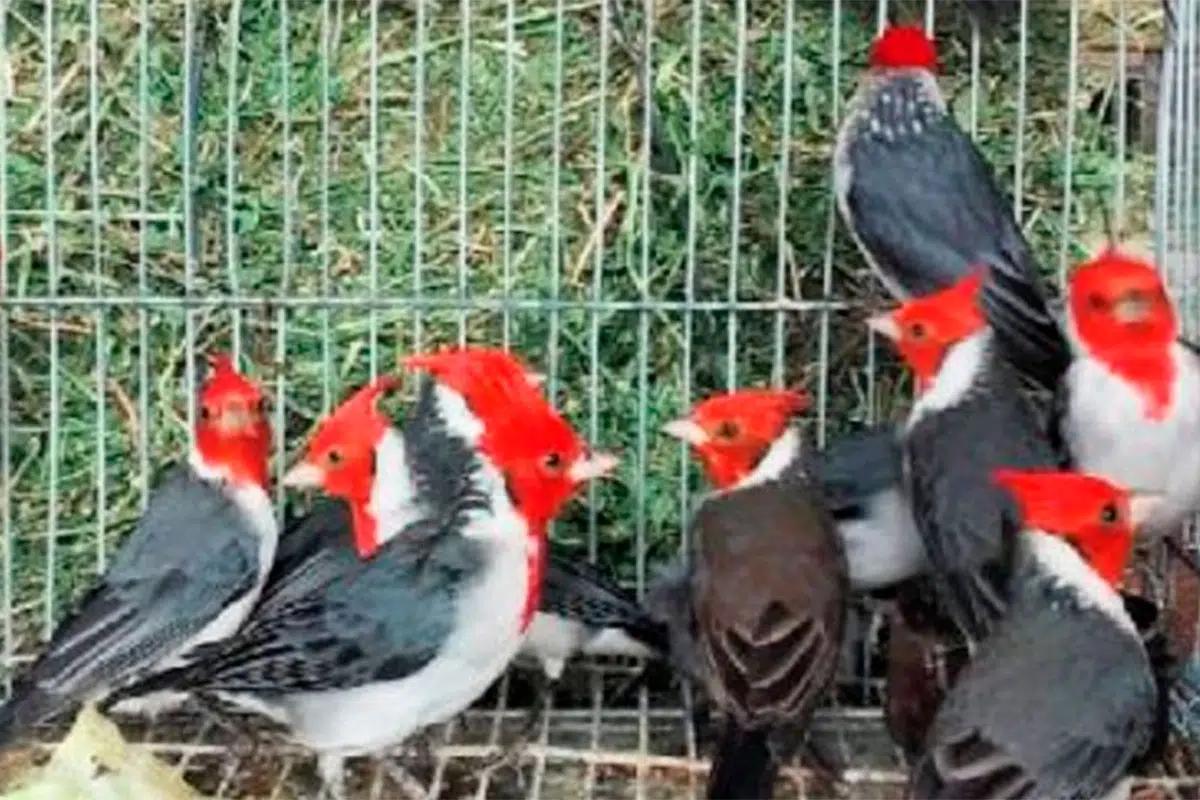 The red-crested cardinals rescued in San Juan were transferred to San Luis.
The red-crested cardinal: regional symbol and victim of trafficking
This species is distinguished by its scarlet crest, its ivory beak, and its dark wings. It inhabits forests, grasslands, and rural areas, where it plays key ecological roles such as seed dispersal and insect control. It feeds on fruits, seeds, and invertebrates, and builds its nests on branches, laying between three and four greenish eggs with brown spots.
The illegal trafficking of wildlife continues to be one of the main threats to native birds in the country. Captured with traps and nets, many die during transport or suffer extreme stress. From the environmental department of San Luis, they emphasized that “wild birds must live in freedom, they are fundamental actors in ecosystem balance.”
Bird trafficking in Argentina: an urgent issue
Here are some considerations about the illegal bird trafficking in Argentina:
- Very high mortality: it is estimated that 9 out of 10 captured animals die before reaching their destination
- Most affected birds: yellow cardinal, red-crested finch, talking parrot, and yellow thrush, among others
- Motivations: ornamental value, attractive singing, collecting, and taxidermy
- Illegal routes: Argentina is an origin and triangulation point for wildlife export
- Health risks: contact with wild animals can lead to emerging diseases
What is being done to combat this issue and how to collaborate?
- Controls and legislation: legal measures and operations at borders are being reinforced
- Educational campaigns: organizations like Aves Argentinas and WCS Argentina promote reporting and respect for wildlife
- Institutional training: security forces and control agents are being trained
- Research and monitoring: routes, species, and pressure areas are being surveyed
- Rescue centers: like the CCVS, play a key role in the rehabilitation and reintegration of animals
How can you help?
- Do not buy wild animals: you perpetuate the cycle of trafficking
- Report: if you see illegal sales, you can do so anonymously
- Observe in the wild: plant native species in your garden and participate in bird watching outings



