



On March 18th, the Entre Ríos Police conducted a raid in the town of Villa Elisa under the framework of the Provincial Hunting Law No. 4841. The operation led to the seizure of 80 wild birds, belonging to more than 27 different species, along with numerous capture devices.
Among the rescued specimens were highlighted yellow cardinals and blue cardinals, species considered a natural monument of Entre Ríos. The yellow cardinal, in particular, is endangered, which worsens the legal situation of those responsible.
Seized Items
Authorities confiscated:
- 36 cages and 11 traps.
- A hoop net and an otter trap.
- 7 large aviaries, rendered unusable on-site due to their size.
The birds were placed under a strict quarantine protocol to assess their health status before a possible release. The seized items were left at the disposal of the General Directorate of Inspection and Natural Resources.
Institutional Coordination
The operation was the result of a joint effort between:
- The Colón Livestock Brigade, under the General Directorate of Rural Crime Prevention.
- The Villa Elisa Police Station.
- The Tekove Mymba Foundation.
The Judiciary played a key role in the speed of the case, with the guarantee judge Dr. Jesús Penayo Amaya issuing the judicial order that allowed the intervention to be completed.
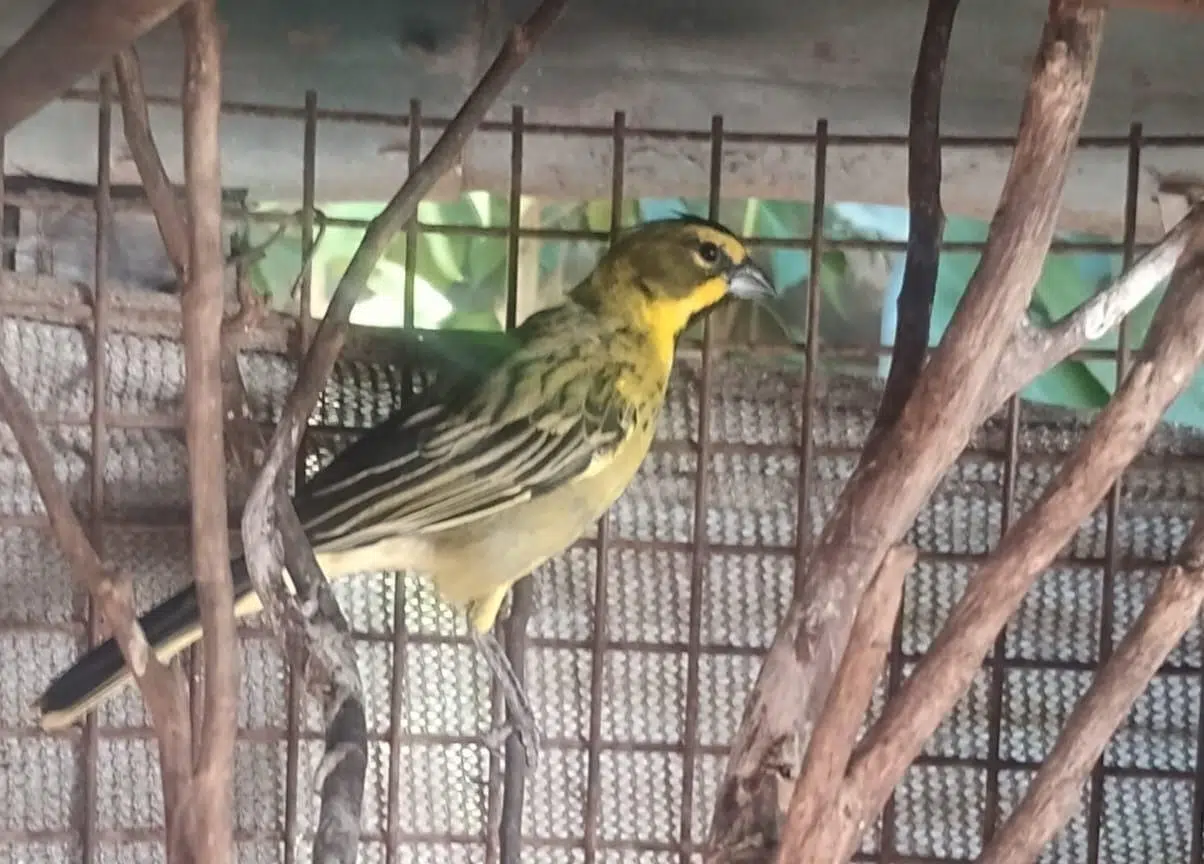
The Bird Trafficking in Argentina
The capture and illegal trade of birds is the second main cause of biodiversity loss in the country:
- Each year, around 150,000 native birds are illegally captured.
- Only 10% survive the process of transport and captivity.
- More than 135 species are affected, including the yellow cardinal, the goldfinch, and the thrush.
Importance of Combating Wildlife Trafficking
- Conservation of biodiversity: extraction disrupts ecosystems and threatens endangered species.
- Animal welfare: most die from suffocation, overcrowding, or mistreatment.
- Public health: illegal trade promotes the transmission of zoonotic diseases.
- Legal framework: the National Law No. 22.421 prohibits the capture and trade of wildlife, punishing animal mistreatment.
- Civic awareness: avoiding the purchase of wild birds is key to breaking the demand cycle that sustains this illicit business.
The operation in Villa Elisa represents a significant advance in the fight against wildlife trafficking in Argentina. The rescue of 80 wild birds, several endangered, highlights the need to strengthen controls, sanction those responsible, and promote civic awareness: birds should live in freedom, not in captivity.



