



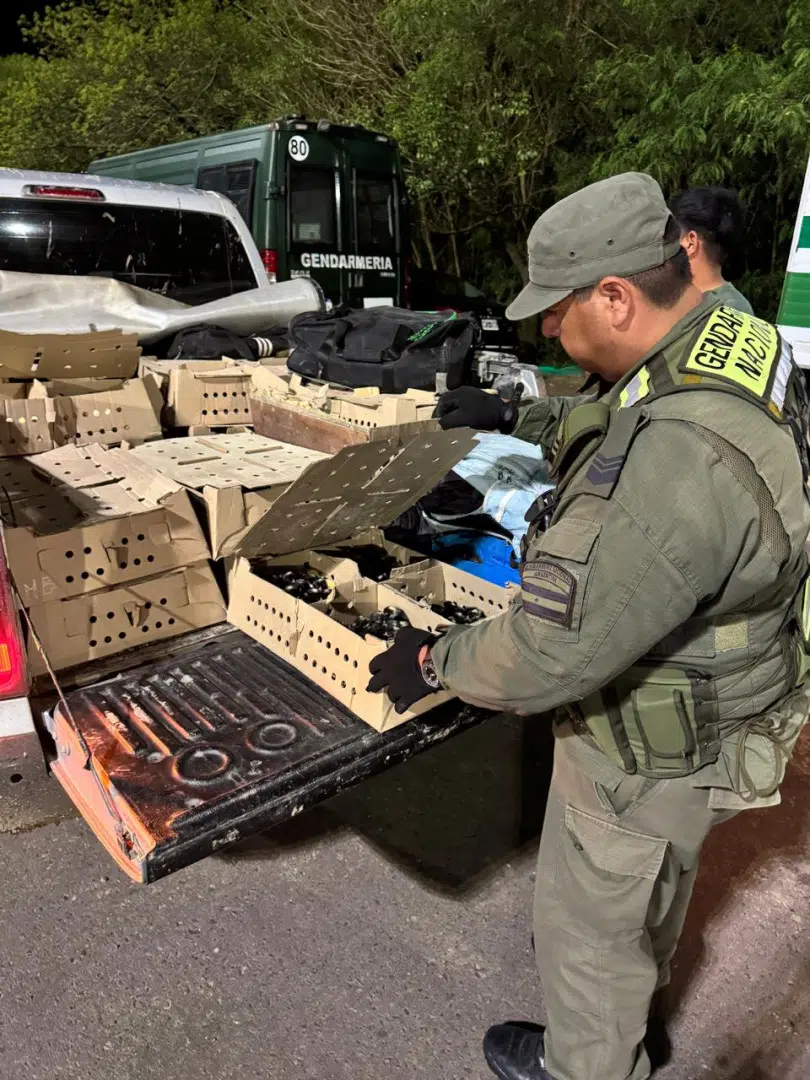
During a routine check on National Route No. 16, at kilometer 60 in Chaco, officers from the “Puente General Belgrano” Fixed Patrol of Squadron 51 “Fontana” of the National Gendarmerie seized 1,900 free-range chicks.
The birds were being transported in a truck without the documentation required by the National Service of Agrifood Health and Quality (SENASA).
The vehicle came from Buenos Aires and was headed to Presidencia Roque Sáenz Peña, without complying with Resolution 356/06, which regulates the transit of live animals in the country.
The birds were confiscated and handed over to the Resistencia delegation of SENASA for sanitary evaluation.
What are free-range chicks and why must their transport be controlled?
Free-range chicks are raised in semi-intensive or outdoor systems, with access to outdoor spaces where they can peck, move freely, and exhibit natural behaviors.
Their diet is based on cereals and grains, with less use of additives, resulting in firmer, tastier meat with lower fat content than industrial chicken.
These birds come from crosses between breeds such as Rhode Island Red, White Plymouth Rock, and Red Cornish, and do not use the broiler breed, typical of intensive production.
Risks of illegal bird trafficking in Argentina
Transporting birds without proper controls poses a sanitary threat, especially due to the risk of spreading diseases like avian influenza.
Moreover, it violates SENASA regulations, hinders traceability of origin, and creates unfair competition against producers who comply with legal requirements.
- Sanitary risks: Possible dissemination of highly pathogenic viruses
- Regulatory infringement: Lack of documentation and official controls
- Market distortion: Harm to formal producers
- Lack of traceability: Difficulty in tracking infection sources
Recent examples of seizures
Checks on national routes reveal a pattern of non-compliance. In August 2025, 181 chickens were seized without documentation in another Gendarmerie operation.
These cases reinforce the need to strengthen route controls, ensure productive traceability, and promote awareness about responsible transport of live animals.
Towards safe and sustainable poultry production
Regulatory compliance is key to protecting public health and animal welfare.
The production of free-range chicks represents a sustainable and ethical alternative within the poultry sector, but its development must be accompanied by rigorous sanitary protocols, authorized transport, and official registration.
Collaboration between security forces, SENASA, and responsible producers is essential to prevent risks and strengthen animal health in Argentina.



