



A group of vegan activists interrupted the traditional Exposición Rural de Palermo, in its 137th edition. The protest took place during a cattle exhibition, when about fifteen people entered the central arena with banners in defense of animal rights and slogans against speciesism.
The private security staff immediately intervened and removed the protesters, while part of the audience booed them. Although no serious incidents were reported, the scene generated tension at one of the most crowded events on the agricultural calendar.
Images of the moment quickly went viral on social media, dividing opinions between those who supported the protest and those who criticized the methodology used by the activists. La Rural thus returned to the center of the debate on the treatment of animals in public shows.
This protest adds to those held in previous editions, where the presence of supporters of animal rights was met with similar reactions from the organization and the public.

Shows and mistreatment: the hidden background
The activists’ complaints are not limited to event interruptions. They denounce that cattle and equestrian exhibitions normalize practices that violate animal rights. In the exhibition arenas, horses, bulls, and other species are subjected to intense training routines, prolonged transportation, and stressful conditions.
The purpose of these shows is to exhibit specimens of high productive or aesthetic value, without considering the impact these processes have on animal welfare. From the use of whips and spurs to hours of forced exposure, the usual practices are questioned by animal welfare organizations.
Furthermore, the objectification of living beings under the logic of the agricultural industry promotes a utilitarian view. Instead of considering animals as sentient beings, they are presented as products or trophies, without respect for their integrity or natural needs.
These events reinforce cultural stereotypes that perpetuate mistreatment, by legitimizing their use for entertainment or business. That is why the protests aim to make visible a reality silenced behind the facade of tradition and custom.
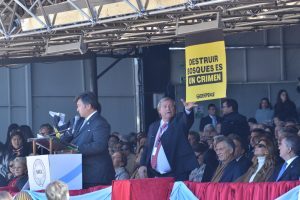 Environmental protests at La Rural are not new.
Animal rights and the need for a change in perspective
Animal shows pose an ethical dilemma increasingly debated worldwide. Although they are legal in many countries, various organizations question their moral legitimacy. Exhibitions and competitions prioritize profit and entertainment over animal welfare.
These practices not only subject animals to stress but also reinforce the idea that they are objects without their own rights. The lack of specific regulations allows, in the name of tradition or culture, the maintenance of handling and exhibition methods that affect the physical and emotional health of animals.
The challenge is to build a society where shows do not involve suffering. Protecting animals means recognizing them as subjects of rights, and this implies rethinking cultural practices that turn them into commodities.
Protests like the one at La Rural open a necessary debate on how modern societies should relate to living beings. It is not just a legal issue, but an ethical responsibility towards the environment and all forms of life.



