



The town of Humboldt, Las Colonias department (Santa Fe), experienced a unique event: the appearance of an adult specimen of Aguará Guazú near the urban area.
The quick notice from the Commune and the intervention of the local police and rural guard allowed the activation of a protection protocol to ensure the integrity of the animal, declared a Provincial Natural Monument by law N° 12.182.
The rescue operation
The specimen was immobilized with special care to avoid stress and transferred to the Puente El Cirilo reserve, on the Las Prusianas stream.
There, it was released in optimal health conditions. According to specialists, it was an animal “passing through” the area, which reinforces the importance of biological corridors that connect natural environments.
Characteristics of the Aguará Guazú
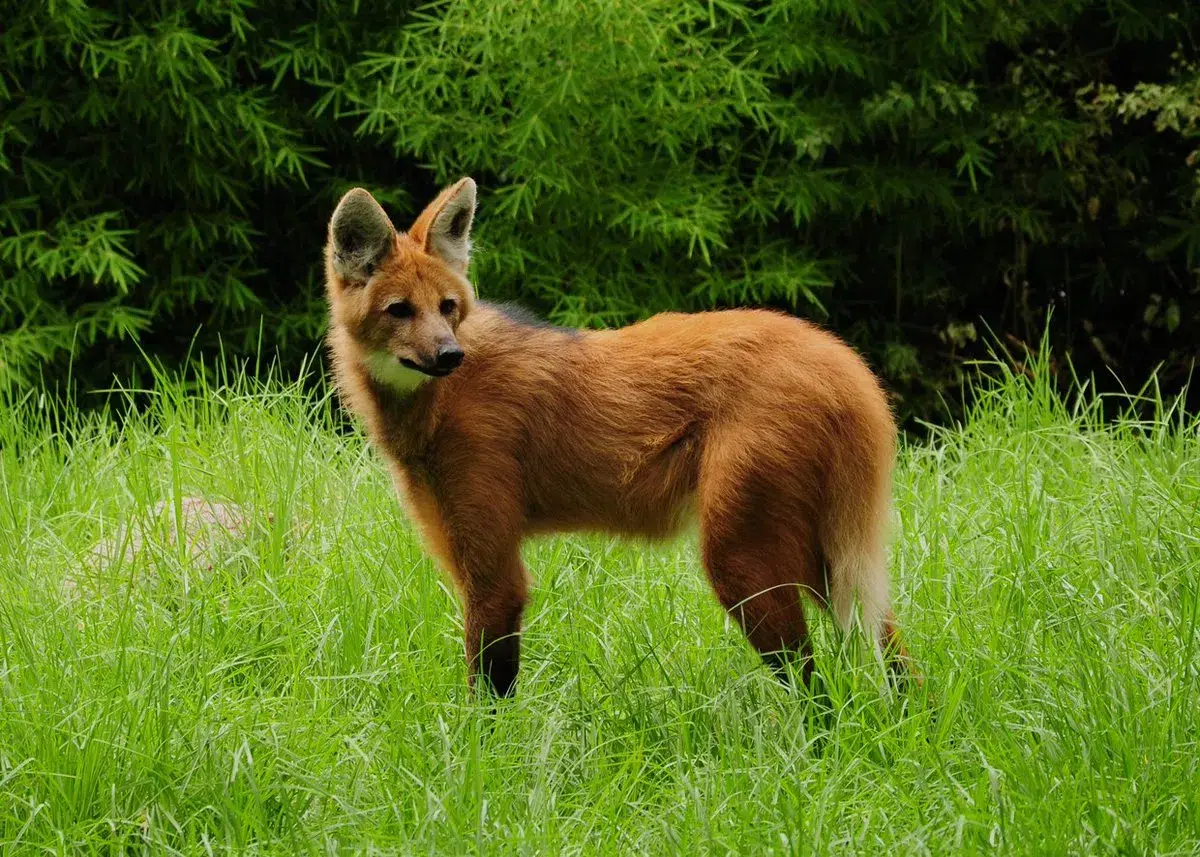
Known in Guarani as “big fox,” the Aguará Guazú is the largest canid in South America.
- Reddish fur and long black legs.
- Dark mane on the back.
- Timid and nocturnal nature, earning it the nickname “ghost of the grasslands”.
Its presence is an indicator of environmental health, as it requires large expanses of grasslands and wetlands with low human pressure to survive.
Threats and conservation status
The Ministry of Environment categorizes it as an endangered species in Argentina. Its main threats include:
- Habitat loss due to agricultural expansion.
- Roadkill.
- Poaching.
- Transmission of diseases from domestic dogs.
Various provinces, such as Santa Fe and Entre Ríos, have declared it a Natural Monument to reinforce its legal protection.
Ecological importance
The Aguará Guazú plays key roles in ecosystems:
- Ecological balance: controls rodent populations and disperses seeds by consuming fruits.
- Environmental indicator: its presence reflects the good health of grasslands and wetlands.
- Umbrella species: protecting it means safeguarding dozens of species that share its habitat.
- Cultural value: it is emblematic of the Argentine Littoral and North, although myths persist that label it as dangerous to livestock.
Awareness and citizen participation
The rescue in Humboldt demonstrates the importance of community collaboration and environmental awareness. The timely notice from the Commune and coordination with rural forces allowed the operation to conclude successfully.
Authorities remind the public that, in the presence of wildlife, they should:
- Not approach or attempt to capture the animal.
- Not feed or disturb it.
- Immediately notify the local police.
The release of the Aguará Guazú in Santa Fe is a positive sign for the conservation of native wildlife and a reminder of the fundamental role played by biological corridors.
Protecting this species means preserving the biodiversity of Argentine grasslands and wetlands, as well as strengthening the relationship between human communities and nature.


