



The Nahuel Huapi National Park continues to strengthen its actions to reduce wildlife roadkill by installing new road signs in strategic sectors. The goal is to alert about the presence of native species and remind the importance of respecting speed limits within the protected area.
These measures aim to promote responsible and attentive driving, avoiding irreparable losses for the park’s biodiversity.
Focus on the huiña cat
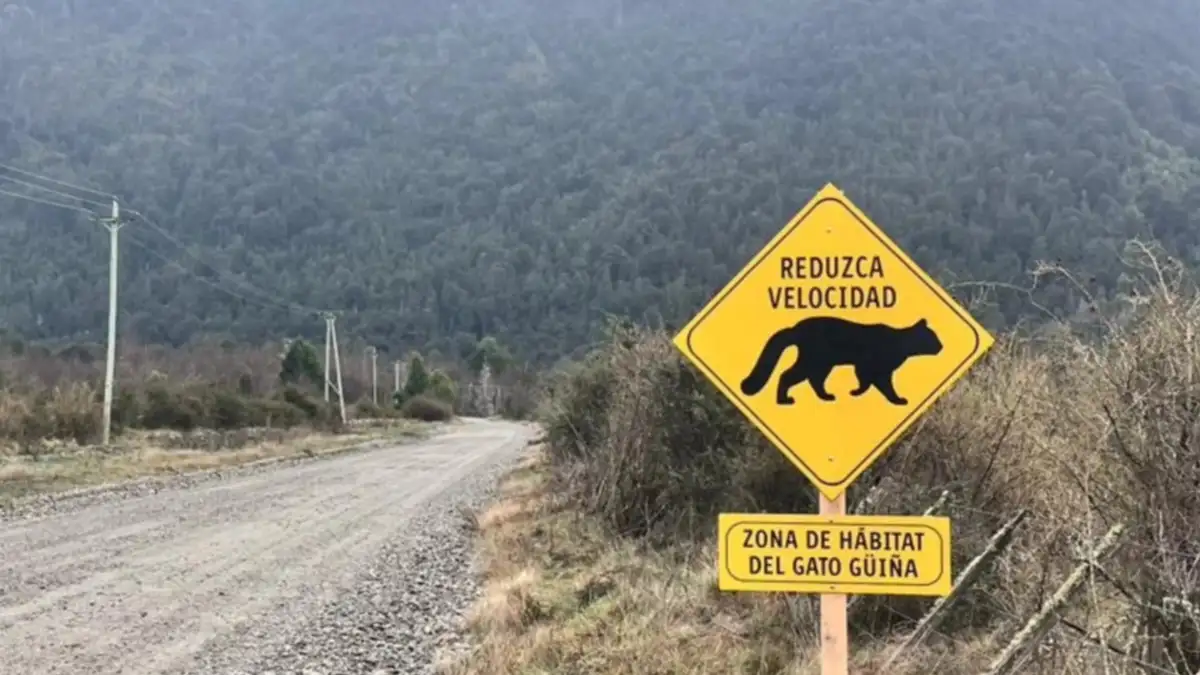
In collaboration with the Ecology and Conservation Group of Patagonian Carnivores (GECCaP), belonging to CONICET and CENAC, five signs were installed specifically dedicated to the huiña cat (Leopardus guigna).
- Three signs were donated by the Guiña Working Group (GWG), a binational group between Chile and Argentina, along with the ConGarra Foundation of Chile, as part of the #Lentoporlafauna campaign.
- The other two were designed by professionals from Nahuel Huapi National Park.
The placement points included national routes 40 and 231 and provincial routes 81 and 83, selected based on records obtained through camera traps that identified areas with a higher presence of the species.
Conservation status of the huiña cat
Wildlife roadkill is a concrete threat. On November 12, the death of a specimen was recorded on the road to the international pass Cardenal Samoré, which raised concern.
- Globally, the huiña cat is classified as of “Least Concern”.
- In Argentina, it is categorized as “Vulnerable”, with scarce and threatened populations.
- Roadkill on routes is one of the main pressures it faces, making it essential to advance preventive measures.
Impact and benefits of signage
The installation of signs not only protects wildlife but also contributes to human road safety. Among the benefits:
- Impact on biodiversity: roadkill is one of the main causes of unnatural mortality in protected areas, even above poaching.
- Road safety: preventing unexpected animal crossings prevents serious accidents.
- Habitat fragmentation: roads act as barriers dividing ecosystems; signage helps mitigate this risk.
- Conservation and awareness: collecting data on roadkill allows for the implementation of measures such as speed reduction and creation of wildlife crossings.
Invitation to visitors
Nahuel Huapi National Park invites those traveling through the area to respect the new signage, reduce speed, and drive with caution. In this way, they contribute to the care of wildlife and the preservation of a unique ecosystem in Patagonia.
The fight against wildlife roadkill is crucial to conserving biodiversity and ensuring responsible coexistence between human development and nature. The initiative in Nahuel Huapi demonstrates the value of international collaboration and the importance of simple yet effective measures to protect vulnerable species like the huiña cat.


