



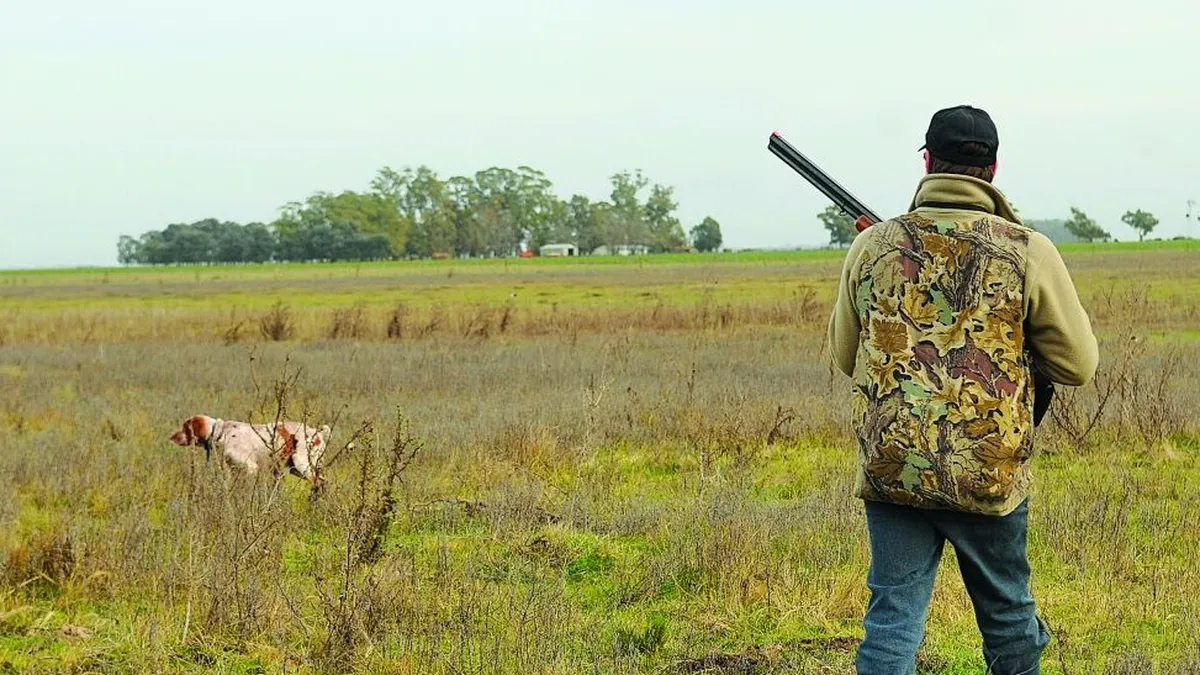
The Secretariat of Environment and Sustainable Development of Salta has officially announced the start of the 2026 season of minor sports hunting, an activity that can be carried out between May 1 and August 16 under a series of specific conditions and restrictions.
The resolution allows the capture of species considered abundant or associated with productive conflicts, including pigeons, partridges, and the European hare. In the latter case, no extraction limits were set, while for other species, daily quotas per hunter were established.
Additionally, the regulation clearly delineates the authorized areas. The activity can only be carried out in private rural areas designated for agricultural activities or located on degraded soils.
The included departments are Rivadavia, Anta, Metán, Rosario de la Frontera, Chicoana, La Viña, Guachipas, Orán, and San Martín, regions where tensions between wildlife conservation and agricultural production have historically been recorded.
Restrictions and controls for sports practice
The regulation establishes that hunting can only be carried out on Fridays, Saturdays, Sundays, and holidays, between 6 a.m. and 8 p.m. Additionally, participants must have a valid license and express authorization from rural property owners.
Furthermore, the presentation of a route sheet certified by the Police will be mandatory. The provincial authorities also demanded compliance with current health protocols due to the avian influenza alert.
On the other hand, practices considered dangerous or unsportsmanlike were prohibited. These include the use of traps, toxic substances, and shooting from moving vehicles.
The regulation also confirmed the total prohibition of big game hunting throughout the province, as well as the inability to carry out hunting activities within natural reserves, urban areas, or sectors near roads and populated centers.
Disadvantages of allowing minor sports hunting
Although the provincial government maintains that the measure seeks to balance conservation and production, environmental specialists warn about possible negative consequences arising from minor sports hunting.
One of the main risks is the alteration of local ecological chains. Even species considered abundant play important roles in seed dispersal, insect control, and balance of rural and wild ecosystems.
Additionally, sustained hunting pressure can cause wildlife displacement, population reductions, and changes in reproductive habits of certain species. This is especially sensitive in regions where ecosystems already face environmental degradation and habitat loss.
Moreover, environmentalists point out that controls are often insufficient in extensive rural areas. As a result, there is concern about possible over-capture, illegal hunting of protected species, and indirect effects on other forms of biodiversity.
They also warn that the normalization of recreational activities related to wildlife can weaken conservation strategies based on sustainable tourism and wildlife observation.

Debate between rural production and environmental conservation
Salta authorities maintain that the regulation aims to organize the activity and reduce damage to agricultural crops caused by certain species. They also emphasize that the permits and restrictions seek to avoid severe impacts on the ecosystem.
However, environmental organizations and academic sectors believe that the solution should focus on non-lethal management methods and comprehensive strategies for coexistence with wildlife.
Among the mentioned alternatives are population control systems, crop protection through physical barriers, and restoration of natural habitats capable of recovering ecological balances.
As the minor hunting season in Salta progresses, the debate remains open between those who prioritize the productive management of the territory and those who advocate for stricter conservation models to protect provincial biodiversity.



