



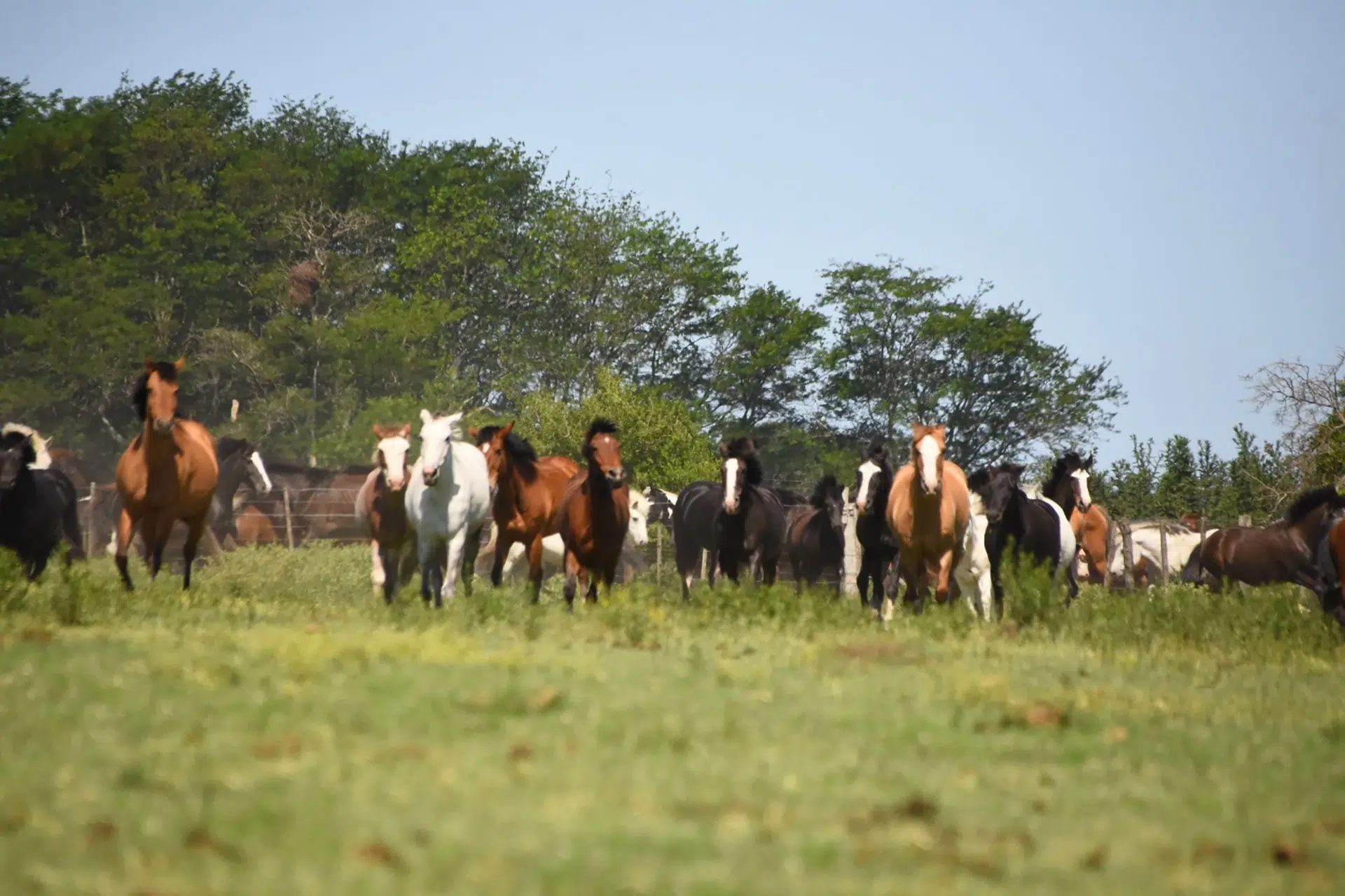
The Animal Abuse Prevention Association (ACMA) has issued a desperate plea due to the urgent need to relocate 130 rescued horses currently living freely in a field in the Buenos Aires city of Castelli.
The lease contract expires at the end of the year, and without renewal, the animals must be relocated before December.
Two fields, one mission: saving lives
Claudia Larese, a member of ACMA’s board of directors, explained that the organization has two rented spaces:
- One for newly rescued horses, which receive urgent veterinary care and daily monitoring. This space houses old or disabled animals.
- Another in Castelli, where horses with medical clearance remain, living freely on several hectares under the care of specialized staff.
The problem lies with this second space, which must be vacated. “They are not renewing our contract, and we need to secure a lease for 100 to 200 hectares in the southern area of the province. The costs in other areas of the suburbs are impossible for the NGO to afford,” Larese noted.
Freedom and permanent care
ACMA’s mission is clear: to ensure that the horses “live in freedom for the rest of their lives”, with permanent care that includes vaccination, deworming, and veterinary care.
“Our mission is to ensure the horses are cared for and attended to because they are not wild horses. Every detail can change everything,” emphasized Larese.
The relocation of the animals involves a great economic and logistical effort, which exacerbates the urgency of finding a new space.
Animal abuse as a social problem
The situation of ACMA highlights the importance of combating animal abuse, a phenomenon that reflects the health of a society and is linked to multiple issues:
Social impact and violence
- Indicator of violence: those who abuse animals often show a lack of empathy towards people and a greater propensity for social violence.
- Domestic violence: animal abuse in homes can be an indicator of family violence towards children and adults.
- Child behavior: children who abuse animals often live in dysfunctional environments, with severe consequences for their emotional development.
Health and public welfare
- Health risk: abused animals in unsanitary conditions can become sources of zoonotic diseases and attract pests.
- Benefits of animals: pets reduce stress, improve cardiovascular health, and support children’s emotional development.
Environment and biodiversity
- Harm to biodiversity: the lack of care for wildlife, combined with pollution and deforestation, threatens species survival.
- Owner responsibility: caring for pets throughout their lives is part of the fight against abuse.
Collective responsibility and social empathy
The fight against animal abuse is a shared responsibility involving individuals, institutions, and governments.
Promoting respect for animals is essential to building a more compassionate, just, and safe society, where violence against living beings is not tolerated.
The case of ACMA and its 130 horses at risk of eviction reflects the need for urgent and supportive actions to ensure the continuity of projects that rescue and care for animals that are victims of cruelty.
At the same time, it reminds us that animal abuse is not an isolated problem, but a phenomenon that impacts public health, social security, and environmental balance.



