



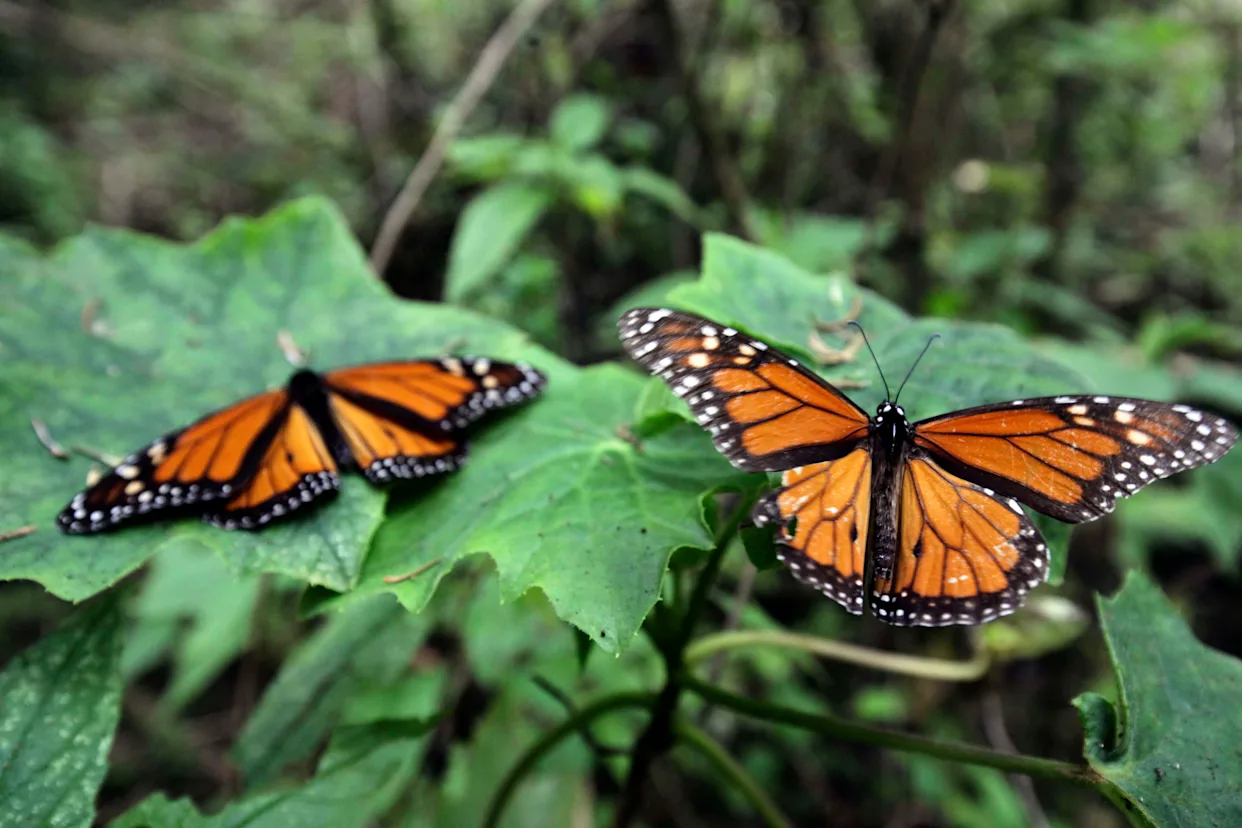
The appearance of the first southern monarch butterfly caterpillars at the “La Delfina” Natural Heritage Interpretation Center marks a significant advancement for urban biodiversity conservation. The sighting occurred within the recently created butterfly and hummingbird garden in Unzué Park, a space designed to promote the development of native pollinator species.
This biological event demonstrates that the restoration of suitable environments can generate quick responses from the local fauna. It also highlights the fundamental role that green spaces designed with ecological criteria play within urbanized areas.
Therefore, the initiative is consolidated as an environmental education tool that seeks to bring the community closer to the importance of conserving species and ecosystems that sustain the natural balance.
A habitat designed for wildlife
The success of the project is closely related to the incorporation of essential plant species for the life cycle of various pollinating insects. Among them, the milkweed or bloodflower (Asclepias curassavica) stands out as an indispensable plant for the survival of the southern monarch butterfly.
Females lay their eggs on this plant species, while the caterpillars feed exclusively on its leaves during the early stages of development. Thus, the plant becomes a vital resource for completing the biological cycle of the species.
Additionally, the milkweed provides natural compounds that the larvae incorporate into their bodies, offering them a chemical defense against potential predators and increasing their chances of survival.
The importance of adding native plants
The technical team at “La Delfina” emphasizes that the conservation of biodiversity does not depend solely on protected areas. It can also be strengthened through small actions carried out in private gardens, schools, and community spaces.
In this regard, they recommend incorporating native species capable of functioning as host plants for butterflies and other beneficial insects. Among them are Asclepias mellodora, Dora (Morrenia odorata), Black Plumerillo (Oxypetalum solanoides), and Tasi (Araujia sericifera).
Furthermore, the use of native vegetation contributes to restoring natural landscapes, improving ecological connectivity, and creating refuges for numerous species that find fewer suitable spaces within cities.

Why is this finding important for the environment?
The presence of southern monarch caterpillars is a positive indicator of the environmental health of the restored ecosystem. Pollinating insects are essential for the reproduction of many wild plants and for the maintenance of biological diversity.
Moreover, urban green corridors allow for the connection of habitat fragments that would otherwise remain isolated. Thanks to this connectivity, different species can move, feed, and reproduce more easily.
On the other hand, the recovery of butterfly populations promotes more stable ecological chains, as these insects participate in multiple natural processes that benefit both the local flora and fauna.
An emblematic species of Argentine ecosystems
The southern monarch butterfly (Danaus erippus) typically inhabits open environments, parks, mountain ranges, and urban areas in various Argentine regions. Its life cycle includes the stages of egg, caterpillar, chrysalis, and adult, completing an extraordinary biological transformation.
Unlike other monarch populations on the continent, this species makes shorter movements to regions with more favorable temperatures during the fall. However, its permanence depends on the existence of suitable vegetation and functional biological corridors.
Although it is not currently classified as endangered, urban expansion and the loss of natural habitats pose significant challenges for its conservation. Therefore, experiences like the one developed in Unzué Park demonstrate that environmental planning can become a key ally in protecting biodiversity and strengthening the relationship between cities and nature.


