



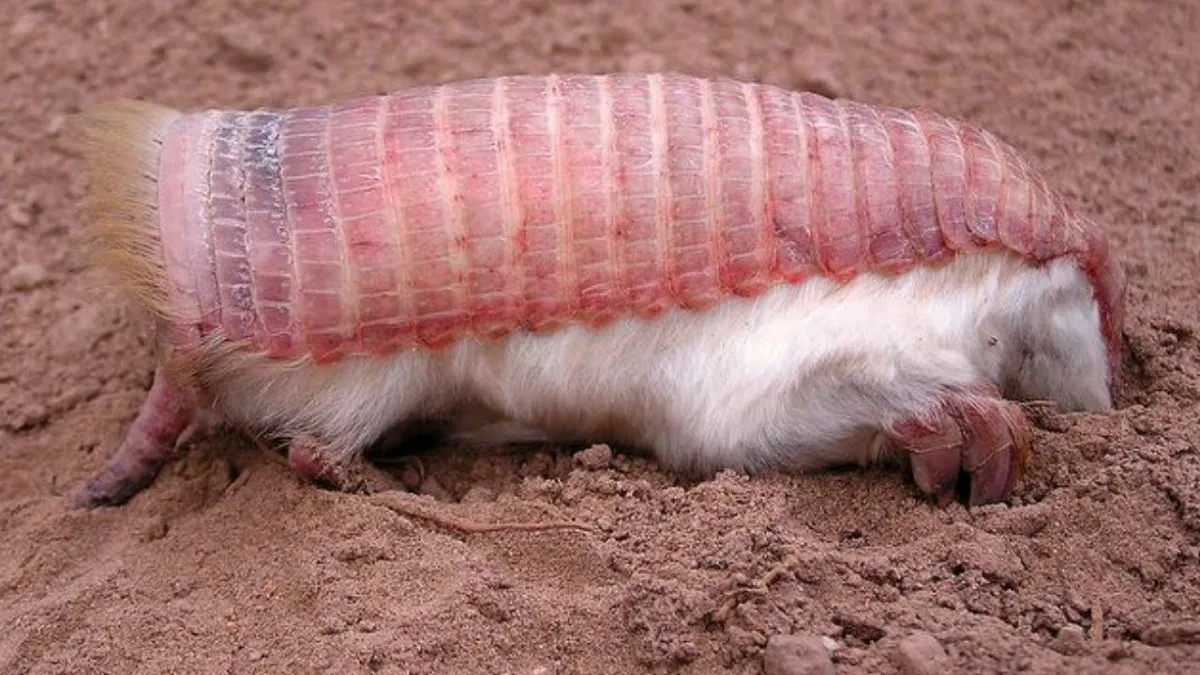
In the Ñacuñán Biosphere Reserve, Santa Rosa (Mendoza), a specimen of the lesser pink fairy armadillo (Chlamyphorus truncatus) was filmed, popularly known as the “pink fairy” for its pale pink shell and its tiny size of between 7 and 11 centimeters.
This armadillo, considered the smallest in the world, is extremely difficult to observe due to its nocturnal and subterranean life, making each record a scientific and ecological event of great value.
A silent engineer of the desert
The pink fairy armadillo fulfills essential functions in the arid ecosystems of the Mendoza desert:
- Soil engineer: by digging, it aerates the soil and improves water infiltration, a critical resource in desert areas.
- Natural controller: its diet based on ants and larvae helps regulate insect populations.
- Environmental indicator: its presence indicates a balanced ecosystem, with healthy soils and low pollution.
Its role makes it a true invisible architect of the desert, capable of sustaining ecological processes that benefit multiple species.
Protection and conservation
In Mendoza, the pink fairy armadillo is declared a Provincial Natural Monument under Law N° 6.599, which implies a special protection regime. This category underscores its critical importance for the conservation of local biodiversity.
However, it faces serious threats:
- Habitat loss due to agricultural expansion and urbanization.
- Illegal hunting and capture.
- Extreme sensitivity to stress: it does not survive in captivity, making its study and conservation difficult.
Research by CONICET Mendoza highlights that understanding its habits is vital to protect the hidden but essential processes of the desert.
Recommendations upon findings
Environmental authorities remind that if someone finds a specimen:
- They should not touch or move it.
- Only observe it from a distance.
- Immediately notify 911 or the competent authorities.
A symbol of protected areas
For Iván Funes Pinter, director of Protected Areas, this record confirms that reserves fulfill their essential function: “Ñacuñán not only conserves landscapes, it conserves complete ecological dynamics that allow the survival of unique species.” The appearance of the pink fairy armadillo is a sign that protected ecosystems work and guarantee real conditions for extremely sensitive species to survive.
The sighting of the pink fairy in Mendoza is encouraging news for science and conservation. This small armadillo, almost invisible to the human eye, is a silent engineer of the desert that maintains soil health and regulates insect populations. Its survival depends on the protection of natural areas and the respect of citizens in every encounter.


