



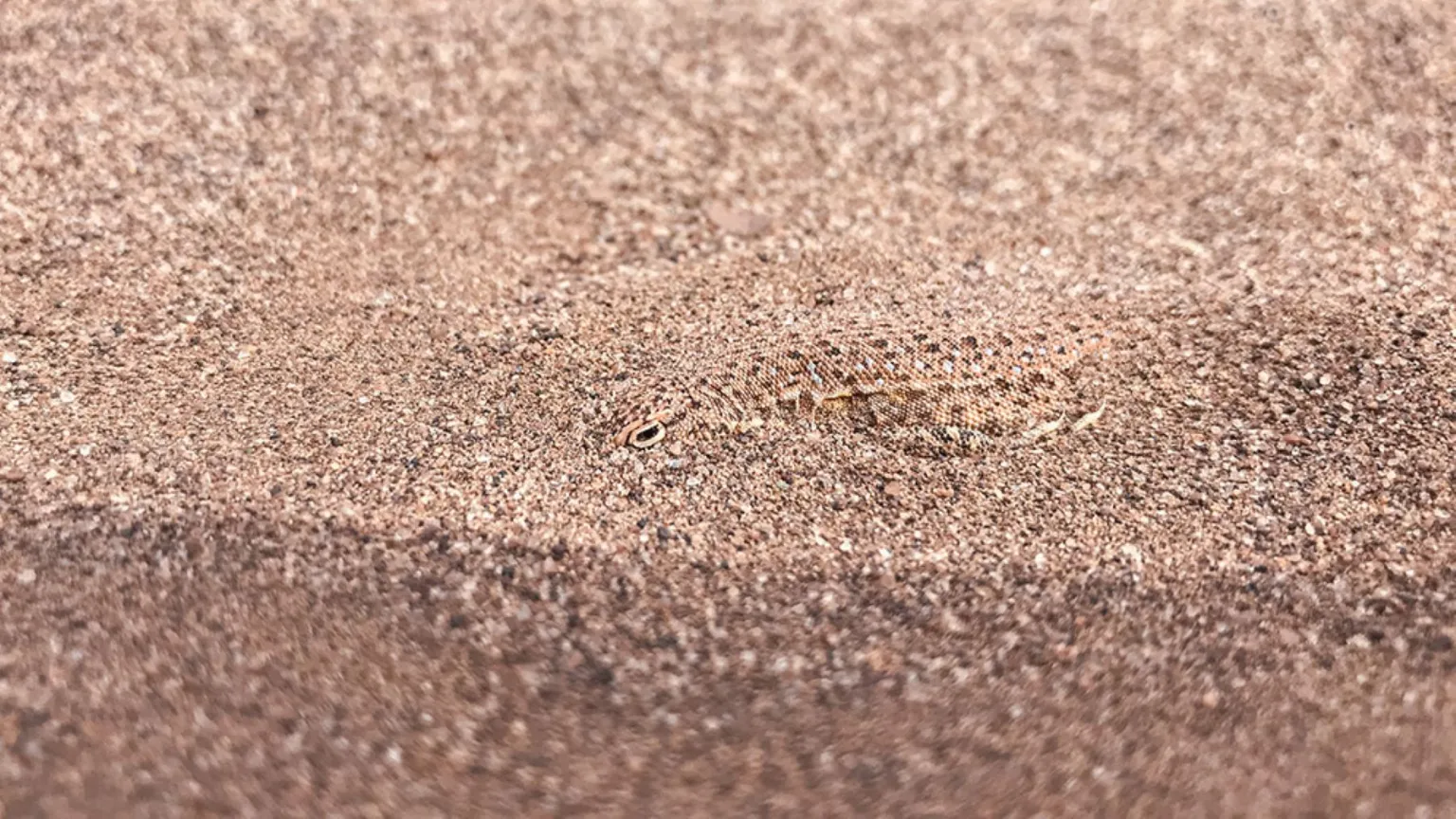
In the warm sands of Bajo de Añelo, in the heart of Neuquén, lives a species of lizard that until recently was completely unknown. This is Liolaemus cuyumhue, a small reptile that not only runs, but also “swims” under the sand to escape predators and extreme heat.
This species, endemic to the Neuquén dune ecosystem, was discovered at the beginning of this century. Its unique morphology and behavior confirmed that it was not just any lizard. With a small population and limited habitat, it was classified in 2014 as “critically endangered.”
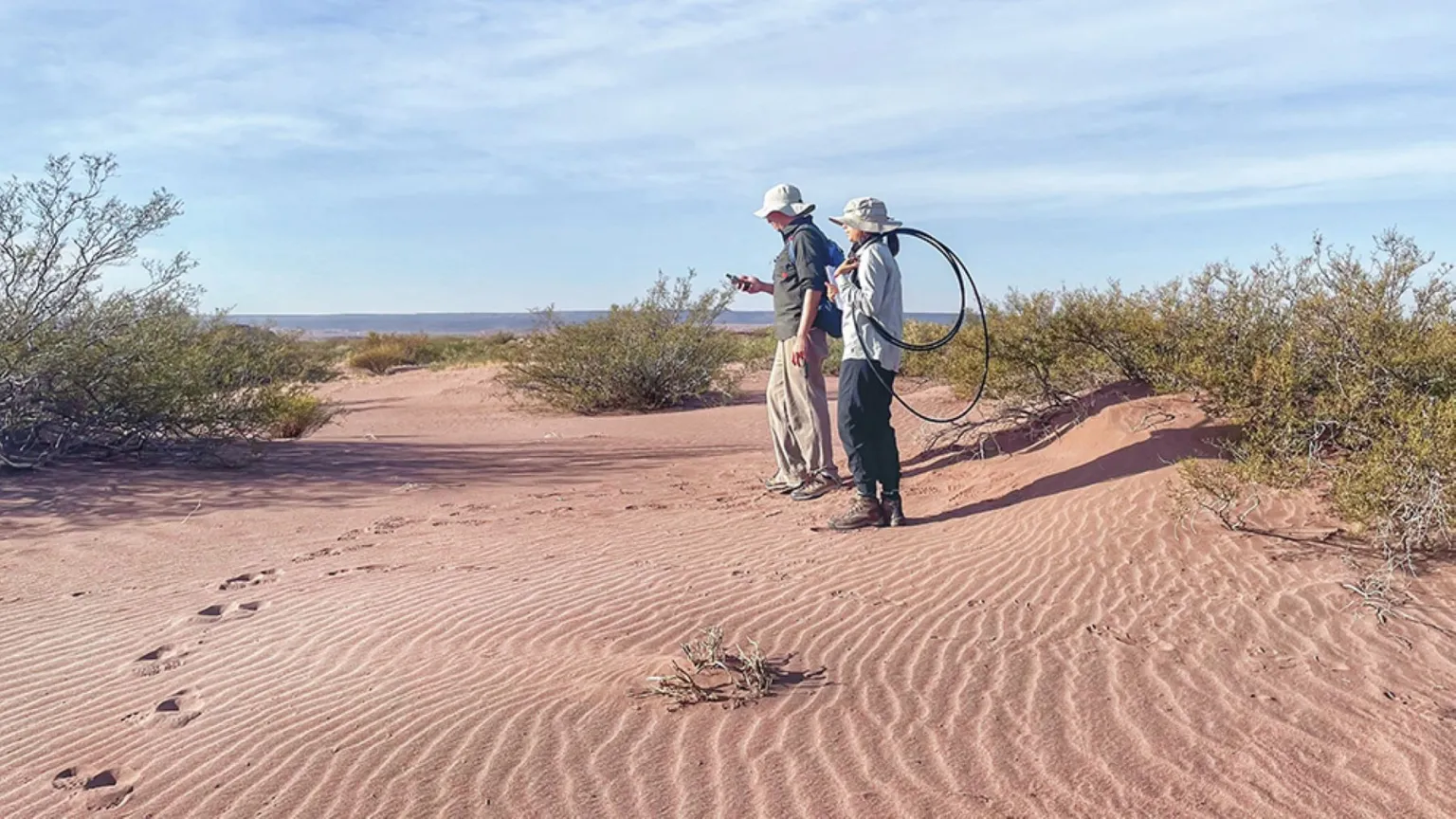
The recent advancement of oil activity in the Vaca Muerta area put this fragile natural balance at risk. The mobile dunes where L. cuyumhue lives are one of the last remnants of an ancient desert that extended over much of central Argentina.
Today, science is working to protect not only this reptile, but also the unique ecosystem it inhabits.
Dunes, oil, and an environmental urgency
The dunes where this lizard lives are more than just sand accumulations. They contain fossils, wetlands, and specialized biodiversity adapted to extreme conditions. The industry’s advance into these territories poses an urgent dilemma: how can we coexist with nature without erasing it from the map?
Researchers from Conicet and national universities have proposed intangible zones, that is, areas where all exploitation is prohibited. These areas concentrate the highest density of lizards and other vulnerable species, such as turtles and red lizards.
In addition to the direct impact of human activity, global warming worsens the situation. Temperatures reaching 70 °C make reptile reproduction difficult. In this context, conservation becomes a matter of time and political decision.
The Liolaemus cuyumhue is perfectly adapted to its environment: special scales on its paws, eyes protected from the sand, and a coloration that camouflages it with the ground. But all that evolution will not allow it to survive alone in an increasingly hostile environment.
Conserving this lizard is conserving the invisible
The case of this lizard is not isolated. It represents many other silent species that depend on fragile and barely visible microenvironments. Protecting them involves conserving complete ecological processes and preventing irreversible losses.
Establishing scientific reserves or exclusion zones can function as a compensatory measure in contexts of intensive exploitation. These strategies are successfully applied in other parts of the world and could be replicated in Patagonia.
Furthermore, being a “flagship species,” protecting it also implies safeguarding a complete set of organisms that coexist in these dunes, from plants to mammals. Biodiversity is not just an aesthetic value: it is the basis of ecological balance.
In Bajo de Añelo, science took the first step. Now is the time to turn that knowledge into action. Because if they are not protected today, the sand swimmers could become as mythical as the fossils lying beneath their feet.



