



The Pehuenche frog (Alsodes pehuenche), a critically endangered amphibian endemic to high-altitude streams in the Andes Mountains, has become a symbol of environmental conservation.
Its protection not only ensures the survival of the species but also that of other endemic species like lizards that cohabit in the same region.
The Municipality of Malargüe (Mendoza) highlighted that the creation of an Action Plan aims to mitigate immediate threats. It also seeks to promote a change in the management of natural resources in the Pehuenche Pass and surrounding areas.
Collaborative workshop in Malargüe
The first workshop to design this plan was held at the Thesaurus Convention and Exhibition Center. It included the participation of the Directorate of Biodiversity and Ecopark of Mendoza, the National University of Cuyo, national and international researchers, and representatives from Chile.
The objective was to coordinate efforts between governments and local communities to gather previous information and update conservation procedures. Measures discussed included:
- Protection of meltwater streams, essential for reproduction and larval development.
- Improvement of inspection and video surveillance systems.
- Eradication of poaching and control of invasive species such as the rainbow trout and the chytrid fungus.
- Active participation of local communities in habitat management.
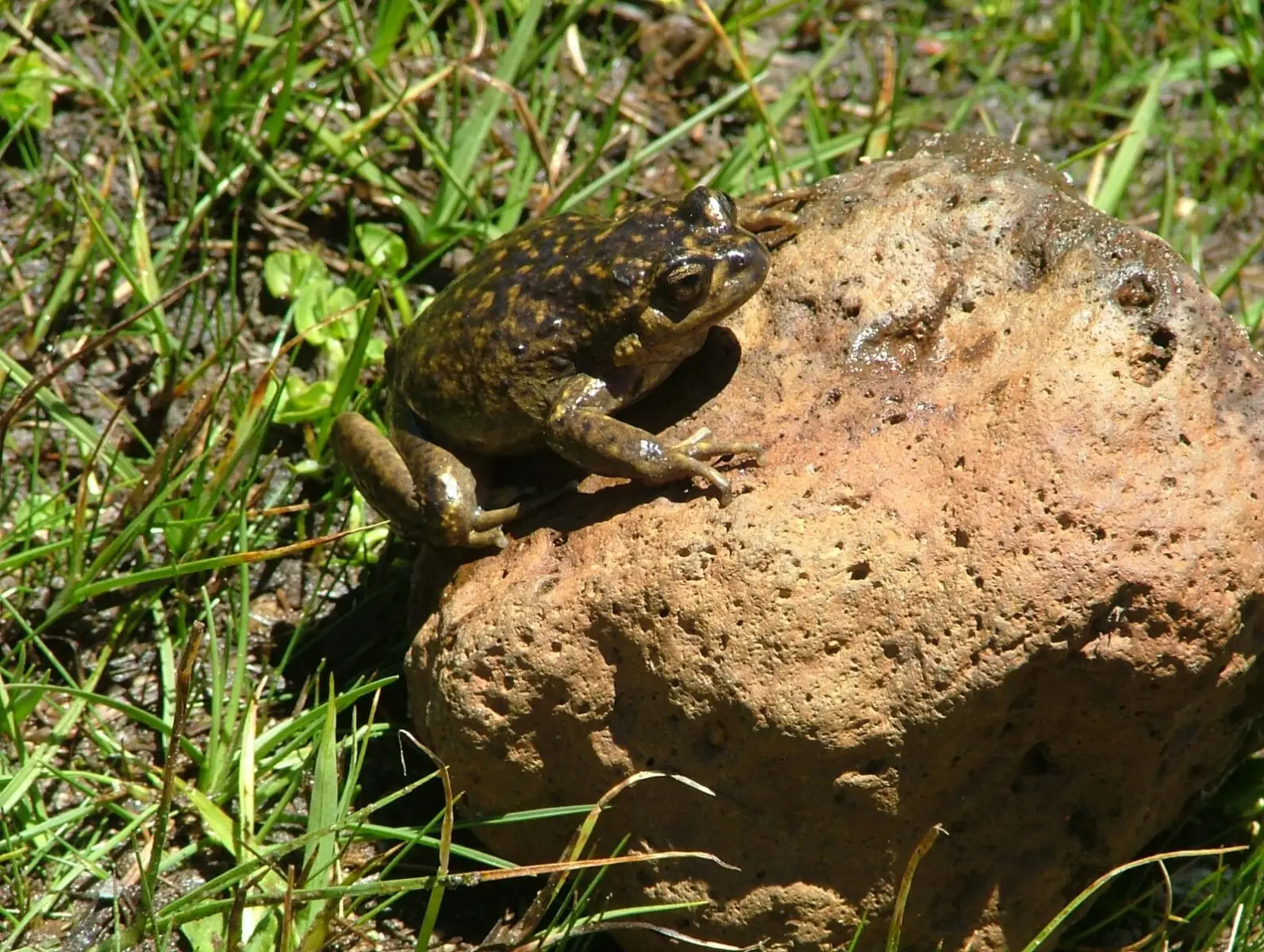
Main threats
The Head of the Wildlife Department of Mendoza, Adrián Gorrindo, explained that the frog is very sensitive to habitat loss, climate change, and human activities such as tourism, livestock farming, and road infrastructure.
Researcher Vanesa Pellegrini, from the Bio Pehuenche organization, emphasized that scientific work seeks to understand the dynamics of the high-altitude ecosystem where the species lives.
Currently, the frog occupies just 9 km² in the central Andes region, both in Argentina and Chile, making it a highly vulnerable species.
Ecological importance
The Pehuenche frog fulfills essential functions:
- Ecological indicator: its presence alerts about the health of mountain aquatic ecosystems.
- Trophic role: controls insect populations and serves as food for other species.
- Unique natural heritage: exclusive to the Pehuenche Pass, it is a symbol of biodiversity and environmental education.
Its complete life cycle is estimated at four years, and it depends on meltwater streams at over 2,000 meters of altitude, making it especially sensitive to drought and climate change.
The Pehuenche frog is much more than a tiny amphibian: it is an indicator of environmental health and an emblem of Andean biodiversity. Its conservation requires a joint effort between governments, scientists, and local communities, as protecting its habitat also means preserving the ecological balance of the Central Andes.


