



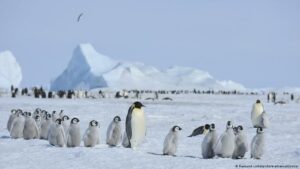
The emperor penguin faces a critical scenario in Antarctica due to the accelerated melting. Sea ice, essential for their reproduction, breaks up prematurely and compromises their survival.
As a result, the chicks, which have not yet developed waterproof plumage, die from hypothermia when they fall into the water. This phenomenon directly impacts the reproductive success of the species.
Furthermore, the situation has led to their reclassification as an endangered species on the IUCN Red List. This change reflects the sustained deterioration of their populations.
Population decline and warning signs in the ecosystem
Scientific studies show a decrease of about 10% between 2009 and 2018. This equates to more than 20,000 adult individuals lost in just over a decade.
Likewise, analyses in specific regions show even more pronounced declines. In the Weddell Sea and the Ross Sea, the declines reach 22% and 23% respectively.
Therefore, even in remote areas less exposed to human activity, losses are recorded. This data reinforces the severity of climate change on the continent.
The impact on other species: the case of the Antarctic fur seal
The Antarctic fur seal also shows a significant deterioration. From 1995 to 2025, its population has decreased by more than 50%.
In this case, the decline in krill directly affects their diet. This key resource is moving to deeper waters due to the temperature increase.
Additionally, factors such as predation by orcas and competition with whales intensify the pressure. Consequently, the survival of the pups decreases.

The ecological role of krill in the Southern Ocean
Krill is a fundamental species in the Antarctic food web. Firstly, it constitutes the dietary base for numerous animals, from fish to large mammals.
Likewise, its abundance supports predators such as penguins, fur seals, and whales. Therefore, any alteration in its population impacts the entire ecological chain.
On the other hand, krill plays a role in the carbon cycle. By feeding on phytoplankton, it contributes to carbon capture and its transport to the marine depths.
Consequently, its decline not only affects biodiversity but also global processes linked to climate.
Melting, reproduction, and conservation challenges
The life of the emperor penguin is closely dependent on sea ice. This environment allows for the incubation and growth of chicks in safe conditions.
However, the advance of melting disrupts this natural cycle. As a result, many chicks do not survive until their independence.
Finally, the situation presents the need for urgent measures. The reduction of emissions and the protection of marine areas appear as key actions to preserve the Antarctic ecosystem.


