



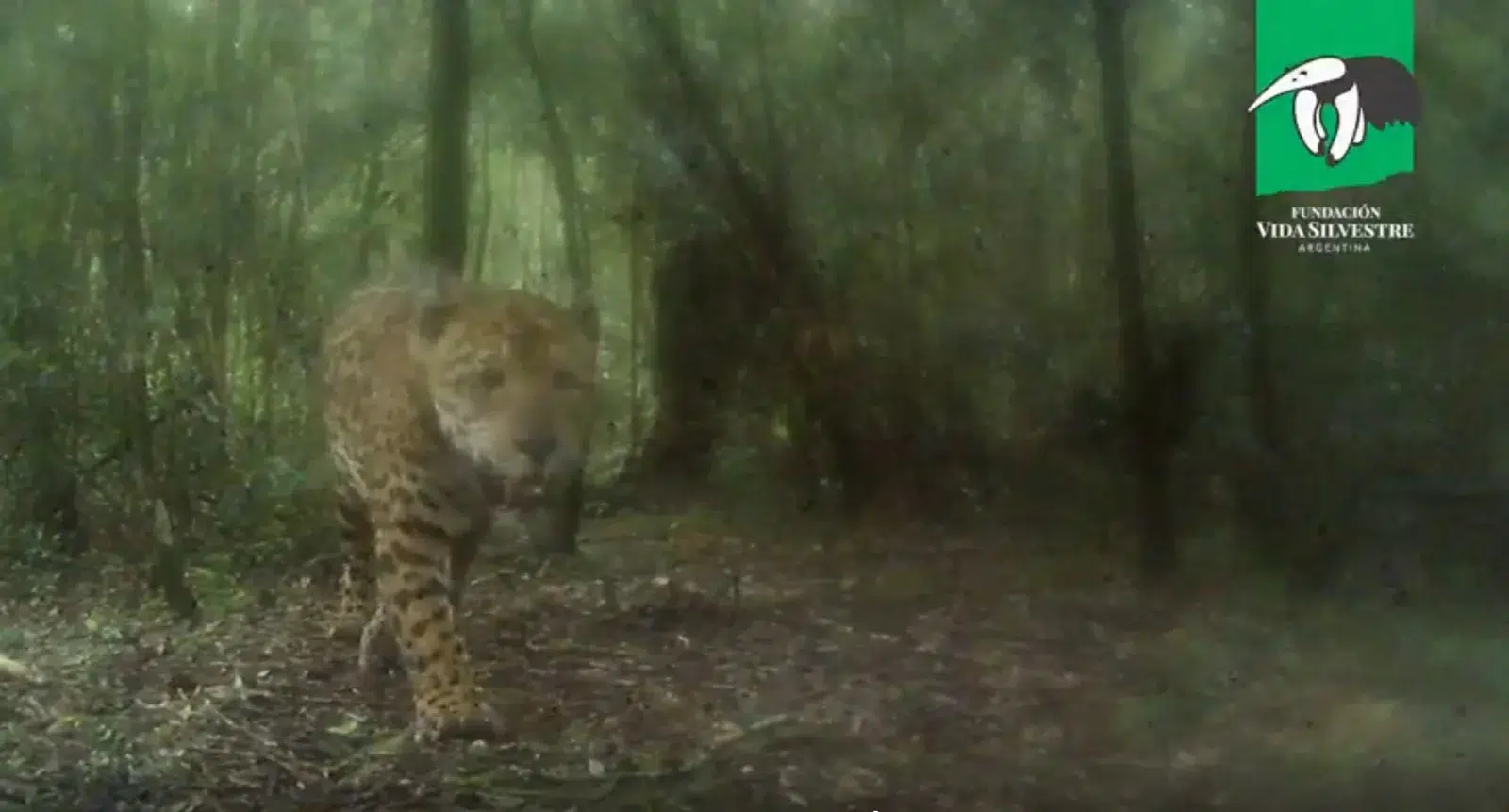
The **Urugua-í Wildlife Reserve**, located in the heart of the **Misiones Jungle**, has just added a new chapter to its [conservation history](https://noticiasambientales.com/animales/flamencos-en-recuperacion-un-zoologico-de-espana-apuesta-a-su-conservacion-y-enfrenta-los-retos-globales-de-la-especie/): the sighting of **Sami**, an **adult male jaguar**.
Sami had already been photographed in **Brazil and Argentina**, and now he appears for the first time in this protected area of **3,243 hectares**.
“This finding reaffirms the value of the efforts we have been developing since 1997,” highlighted **Karina Schiaffino**, the reserve’s administrator, when confirming the news.
## A feline that crosses borders: transnational tracking of Sami
The information was cross-referenced with the database of the **Jaguar Project (CeIBA-CONICET)**, confirming that it is indeed **Sami**. An individual regularly monitored by the **Onças do Iguaçu** team in the **Iguazu National Park**, Brazil.
In **2022**, Sami crossed the **Iguazú River** and was photographed in the [**Iguazú National Park**](https://noticiasambientales.com/turismo/el-parque-nacional-iguazu-mejora-la-accesibilidad-con-nuevas-incorporaciones/), Argentina. In **2024**, he was recorded in **Campo Los Palmitos**, and now, in 2025, he appears for the first time in **Urugua-í**.
This movement pattern reflects the **need for large connected jungle extensions** in good conservation status to ensure the **species’ survival**.
## The Green Corridor: key to the mobility of large species
Sami’s presence reinforces the value of the **Green Corridor**, a continuous block of jungle that allows the **mobility of species like the jaguar**, emphasizing the urgency to **combat poaching** and **restore degraded patches** of the Atlantic Forest.
Each jaguar sighting is a **sign of hope** and a reminder that **ecological restoration** and **territorial protection** are essential to preserve the region’s biodiversity.
## Urugua-í: a model reserve in conservation and restoration
Established in **1997**, the Urugua-í Reserve protects a key stretch of the **homonymous stream**, which supplies local communities, supports agricultural production, and contributes to energy generation. Additionally, it houses a **Biological Station** dedicated to research and training in conservation.
Since **2008**, the **Andrés Johnson Native Species Nursery** has been operating there, producing thousands of seedlings for **jungle restoration projects**, in coordination with **Arauco Argentina S.A.** and the [**Wildlife Foundation Argentina**](https://www.vidasilvestre.org.ar/), which manages the area to this day.
## Science, territory, and commitment: a formula that yields results
Sami’s appearance in Urugua-í not only represents a technical achievement but also a **validation of the coordinated work between institutions, communities, and scientists**.
It is a concrete example that **conservation is possible when knowledge, willingness, and territorial action are combined**.


