



In the icy waters of the Norwegian fjords, a group of wild orcas was recorded in an unusual scene: two adult specimens shared a prolonged mouth-to-mouth contact, similar to a “French kiss”. This finding offers a new perspective on the social complexity of these cetaceans.
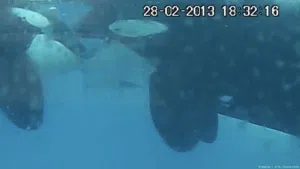
The unusual behavior was documented during an underwater expedition and represents the first time it has been observed in the wild. Until now, “tongue-biting” had only been recorded in orcas under human care, making this recording an exceptional event.
The interaction lasted almost two minutes and included three episodes of gentle, face-to-face contact. Far from a mere anecdote, researchers consider it an indication of advanced social bonds and a behavior possibly related to communication or play.
An underwater language still in code
Oral contact behaviors among animals are often linked to strengthening bonds, expressing trust, or even social learning. In the case of orcas, highly intelligent and social, this gesture could serve multiple ecological and evolutionary functions simultaneously.
The documented scene in Norway provides new clues on how orcas communicate and relate to each other outside the predatory context for which they are known. It also reinforces the idea that their behavior in the wild is as complex as that exhibited in captivity.
This finding adds to other recent records of orcas performing unusual actions, such as placing objects on their heads. Some theories suggest that certain behaviors could spread within social groups, like a sort of animal “trend”.
Rethinking our relationship with large cetaceans
Beyond the amazement generated by these types of interactions, the recording also highlights the importance of conserving the marine environments where these species thrive. Orcas face multiple threats, from noise pollution to food loss.
Understanding their behavior in the wild is key to ensuring more effective protection policies. In this sense, each documented sighting is a fundamental piece to better understand these marine mammals and promote their preservation from an empathetic and environmentally respectful perspective.
The gesture of two orcas in the Norwegian Arctic fjords is much more than a rarity. It is an invitation to look at underwater life with new eyes and to recognize that, even in the coldest depths of the planet, emotional bonds can also flourish.
Animals with unusual behaviors
Orcas, also known as “killer whales,” are actually the largest dolphins on the planet and stand out for their remarkable intelligence and complex social life. They live in family groups called pods, where they form strong bonds, learn from each other, and cooperate to hunt strategically. Each group can have their own vocalizations, like a cultural dialect passed down through generations.
Their behavior includes games, shared calf care, sophisticated sound communication, and social rituals, demonstrating a relationship structure similar to that of primates. Orcas have been observed teaching their young to hunt, sharing food, and displaying mourning behaviors when a group member dies, reinforcing the idea of a complex emotional consciousness.
In addition, certain unusual behaviors, such as carrying fish on their heads or the recent “tongue-biting”, suggest that some actions could be learned and replicated as part of a social culture. These observations continue to expand our knowledge of underwater life and emphasize the need to protect natural habitats where these mammals develop their bonds and skills.


