



This Wednesday, like every July 23rd, the World Whale and Dolphin Day will be celebrated to commemorate a historic achievement for marine conservation: the global moratorium on commercial whaling. This agreement, reached in 1982, marked a before and after in the protection of these oceanic giants.
However, more than four decades later, the threats persist. While massive killing has decreased, the pressure from some countries and new environmental issues demand maintaining vigilance and strengthening international commitments.
The greatest advancement was the recognition of the ecological and economic value of live whales. Responsible whale watching became a source of income for coastal communities and a key tool for promoting environmental education.
But the global outlook remains complex. Maneuvers by certain countries to evade regulations and a lack of political will jeopardize decades of conservation work.
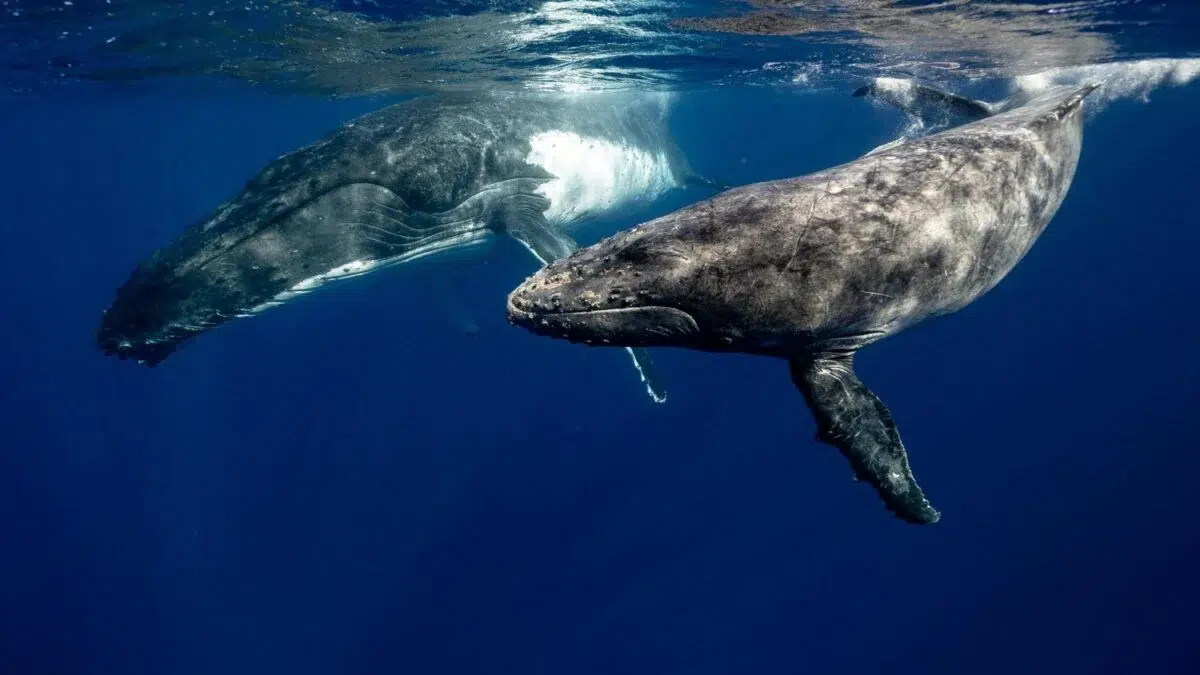 Humpback whales.
The moratorium that changed history but faces new challenges
The International Whaling Commission (IWC), founded in 1946 to regulate whaling in a context where the activity was considered a legitimate industry, implemented the moratorium as a brake on overexploitation, after populations were on the brink of collapse.
The decision laid the groundwork for creating marine sanctuaries, promoting responsible tourism, and working on reducing non-lethal threats such as collisions or entanglements.
However, countries like Norway and Iceland continued whaling under formal reservations, while Japan used the concept of “scientific whaling” to justify captures that actually supplied the domestic market.
Despite international rulings against it, Japan withdrew from the IWC in 2019 and resumed commercial whaling in its waters. Currently, the pressure from these nations and their allies within the commission threatens to weaken the moratorium, even though the commercial demand for whale meat continues to decline significantly.
The ecological role of whales and the danger of their hunting
Whales are vital for the health of the oceans. As they move, they fertilize the waters and promote plankton proliferation, which captures large amounts of carbon and sustains the marine food chain.
Their presence enhances biodiversity and helps mitigate the effects of climate change. Hunting them not only reduces their numbers, but also disrupts the marine balance and jeopardizes entire ecosystems.
Moreover, commercial whaling is an unsustainable practice from any perspective. Far from being a necessity, it is maintained for political or cultural interests, despite its devastating ecological impact and the virtually non-existent market.
 The longevity of whales and marine animals. (Photo: WCS).
Increasing threats and the need for collective action
The future of whales faces multiple dangers: ship collisions, plastic pollution, underwater noise, climate change, and fishing nets are just some. Conservation must go beyond avoiding hunting, working on comprehensive strategies for their protection.
The role of Latin American countries was crucial within the IWC, leading conservation initiatives and resisting pressures to relax measures. Civil society and scientific organizations play a fundamental role in bringing citizen voices to international forums.
The next IWC meeting will be a decisive opportunity to reaffirm the defense of the moratorium and consolidate an approach based on the real and effective conservation of cetaceans. Collective commitment remains the greatest tool to protect whales and the balance of the oceans.
Source: Roxana Schteinbarg, co-founder of the Whale Conservation Institute.



