



Argentina is experiencing a growth phase in its clean energy matrix, with 40% of national electricity consumption in 2025 coming from renewable sources such as hydro, wind, solar, and bioenergy. This performance marks a profound change compared to previous years when clean generation barely reached single-digit figures.
The Argentine Chamber of Generators and the Renewable Energy Value Chain highlighted that hydro energy maintains a dominant role, followed by wind and solar photovoltaic. This progress reduces the dependence on fossil fuels and improves the trade balance by reducing imports of energy liquids.
Figures and expansion of renewables
According to a survey by AmCham Argentina, the total installed capacity reaches 43,930 MW, of which 17,076 MW correspond to renewables.
- 22% hydro.
- 10% wind.
- 5% solar.
- 1% biomass and biogas.
Renewable generation grew by an average of 5.5%, with notable increases in solar (24.1%) and biomass (78.1%).
Obstacles and challenges
Despite the progress, the expansion faces structural challenges:
- Insufficient transmission infrastructure: wind and solar parks are often located in remote regions, and the lack of high-voltage lines limits integration into the system.
- Sustainable financing: more stable regulatory frameworks and long-term financial mechanisms are needed to reduce investment risks. The absence of new bidding rounds (such as the RenovAr program) creates uncertainty.
- Storage and thermal backup: the variability of wind and solar production requires storage systems and firm energy to ensure supply security.
AmCham emphasizes the need to strengthen the national electrical grid and coordinate efforts between the Nation, provinces, and the private sector.
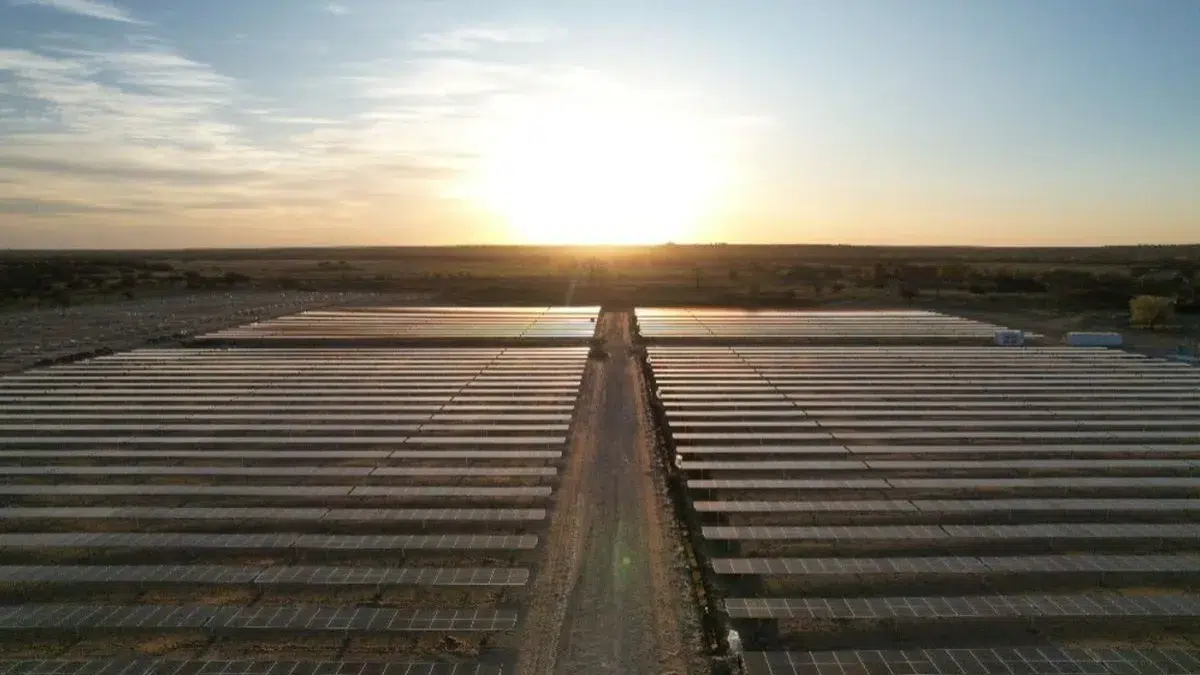
Sustainable solar parks: replicable solutions
In this context, sustainable solar parks are emerging as a concrete alternative for companies and large consumers seeking to reduce their carbon footprint.
These photovoltaic installations generate clean electricity and are strategically integrated into industrial and logistics plants, providing energy resilience and reducing dependence on conventional supply.
Miron Case: self-sustaining industry
The Buenos Aires company Miron installed a solar park at its industrial plant, becoming the first self-sustaining transformer factory in the country.
- 297 photovoltaic modules of 580 W.
- Installed capacity: 172.26 kWp.
- Emission reduction: 67.89 tons of CO₂ per year.
- Return on investment: 4 years.
The design of the park, arranged in the shape of the company’s logo, symbolizes its environmental and financial commitment. Miron has already replicated similar projects in industries such as Danone, Maxiconsumo, and AOTA, as well as institutional installations.
A strategic opportunity
The global energy transition is redefining energy production and consumption. Argentina, with world-class resources, has the opportunity to articulate its conventional energy with the growth of renewables in an environment that promotes investment, development, and infrastructure.
AmCham reaffirms that moving towards a competitive and predictable framework, with strong public-private coordination, will be key to consolidating a sustainable and long-term energy transition.
Renewable energy in Argentina already covers 40% of electricity consumption and is advancing with emblematic projects such as sustainable solar parks. However, the country faces challenges in infrastructure, financing, and storage. Overcoming them will be essential to consolidate a cleaner, more resilient, and competitive energy matrix.



