



A recent expedition to Antarctica once again highlighted the strategic board of the global south. Foreign ambassadors accredited in Chile visited King George Island, in the Chilean Antarctic Territory, in an unprecedented experience.
However, the absence of Argentina was notable. The delegation included representatives from Australia, New Zealand, and South Africa. The first two maintain territorial claims in Antarctica, as do Chile and Argentina, with overlapping areas with Great Britain.
Additionally, there was participation from the United Kingdom. The trip had a strong political and symbolic charge. The expedition was organized by the Chilean Antarctic Institute and accompanied by local authorities. For three days, the diplomats toured scientific facilities and strategic points.
Thus, Chile reinforced its active role in the white continent. The initiative took place in parallel with British-Chilean military exercises.
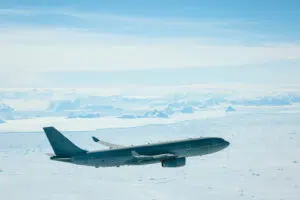
How the expedition was and what its objective is
The visit combined logistics, diplomacy, and international cooperation. The ambassadors accessed bases, learned about scientific projects, and observed the functioning of the Antarctic system. The main objective was to strengthen ties and make presence visible. It also sought to reaffirm commitments to the Antarctic Treaty.
These actions are part of a broader strategy. Chile promotes a state policy that integrates science, defense, and environmental sustainability. Antarctica is seen as a platform for cooperation. But also as a key space for geopolitical projection.
In this context, the expedition served as a diplomatic message. It demonstrated operational capability, active alliances, and institutional continuity. At the same time, it left out relevant actors. Argentina’s absence raised questions about its regional positioning.
Science, environment, and sovereignty
Antarctica plays a central ecological role for the planet. It regulates the global climate, stores a large portion of fresh water, and hosts unique ecosystems. Therefore, scientific research is key. Presence in the territory allows for the production of strategic knowledge.
Chile advanced with the Antarctic Strategic Plan 2026–2030. This roadmap articulates research, logistics, and environmental protection. It also strengthens infrastructure on King George Island. The construction of a dock in Fildes Bay improves connectivity.
Meanwhile, Argentina faces internal difficulties. The National Antarctic Directorate has lost institutional weight and strategic definition. Logistic projects in Ushuaia are progressing slowly. This weakens its capacity for action in the white continent.

A scenario that demands definitions
The Chilean-British cooperation generates concern in specialized sectors. Especially due to the overlap of claims and the link with the South Atlantic islands. In this context, the official Argentine silence is significant.
Antarctica once again occupies a central place in global geopolitics. Climate change, natural resources, and strategic routes reconfigure interests. In this scenario, sustained presence is key.
The expedition to King George Island was not just a protocol trip. It functioned as a political and environmental signal. The white continent demands long-term policies. And coherent decisions between discourse, territory, and future.


