



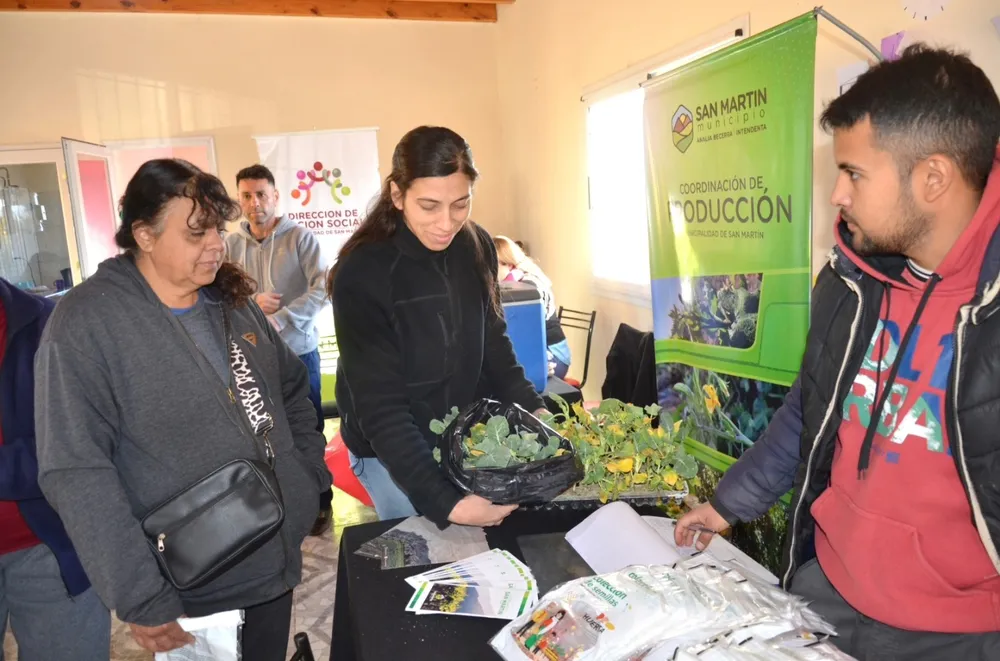
The municipality of San Martín, in the province of Mendoza, has launched a new stage of the free seasonal seed distribution program, an initiative aimed at strengthening domestic production and promoting more sustainable habits among the residents of the department.
Through the Production Coordination, the operation will tour different points of the territory with the aim of bringing seeds and seedlings to families interested in developing family gardens in yards, gardens, and small urban spaces.
The proposal seeks to consolidate a local production model based on self-consumption, healthy eating, and the responsible use of natural resources.
Family gardens to reduce costs and promote healthy foods
The program aims for more families to produce part of their own food through low environmental impact cultivation practices. In addition to providing economic relief for many households, gardens allow access to fresh, agrochemical-free vegetables.
The municipality highlighted that the initiative also seeks to encourage the culture of community work and food self-management. In this sense, domestic production appears as a concrete tool in the face of the rising costs of the basic basket.
Furthermore, urban gardens help recover traditional knowledge related to sowing and the care of seasonal crops, promoting a closer relationship between people and the environment.
Along with the seed distribution, residents receive basic guidance on sowing, maintenance, and the use of small productive spaces.
Itinerant schedule in different points of the department
With the aim of facilitating access for the entire community, the municipality organized a distribution schedule in different neighborhoods and public spaces in the department of San Martín.
On Monday, May 18, the distribution will take place from 1:30 PM to 3 PM at the Municipal Camping. Then, on Wednesday, May 20, it will continue from 8 to 9:30 AM at the Production Office, from 10 to 11:30 AM at the Bartolomé Mitre Neighborhood Union, and from 12 to 1:30 PM at the CIC Dos Acequias.
On the other hand, on Thursday, May 21, the operation will reach the Marta Orellano Stadium between 8 and 9:30 AM. Later, it will continue in the Capilla de Andacollo hall, in Boca de Tigre, from 10 to 11:30 AM, and will conclude at Capilla San Isidro Labrador from 12 to 1:30 PM.
The municipality recommended attending on time to facilitate the organization of the distribution and to take advantage of the technical advice available for those starting their first gardens.
The environmental and social benefits of these types of policies
Urban agriculture specialists argue that public policies related to family gardens generate positive impacts both on the environment and the quality of life of communities. Small-scale food production helps reduce the environmental footprint associated with the transport and distribution of products.
Additionally, domestic cultivation promotes the reduction of organic waste through composting and stimulates more responsible consumption practices. It also allows diversifying daily diets by incorporating fresh and seasonal products.
Another relevant aspect is the strengthening of food sovereignty, as families gain greater autonomy to produce part of their own food. At the same time, these initiatives foster spaces for neighborhood gatherings, seed exchanges, and the construction of community networks related to environmental care.
In urban contexts, gardens also fulfill an important ecological function. Productive green spaces help improve air quality, promote biodiversity, and contribute to reducing temperatures in highly urbanized areas.


