



Modern cities have begun to rethink the environmental impact of their urban lighting. In a suburb near Copenhagen, Denmark, an ecological initiative seeks to balance road safety with the protection of wildlife by installing red lights in strategic areas.
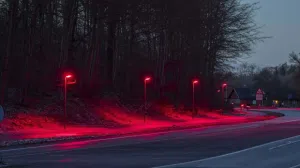
The project is being developed in Gladsaxe, where the traditional white LED lights were replaced with red lighting in a corridor frequented by bats. The measure aims to reduce light pollution without eliminating public lighting.
Although the visual change seems minor, the initiative represents a profound transformation in the way of designing urban spaces. Local authorities believe that lighting can be adapted to environmental needs without affecting the movement of pedestrians, cyclists, and motorists.
Additionally, the system has begun to spark interest in other cities facing similar challenges related to urban growth and the conservation of nocturnal species.
A lit route to preserve biological corridors
The modification of lighting focuses on a section of Frederiksborgvej and areas near a bike path where several species of bats have been detected.
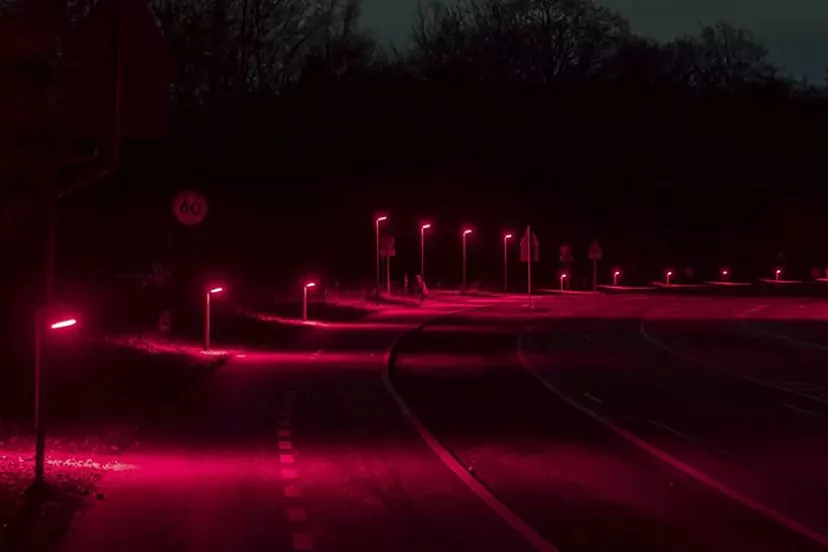
Instead of using large columns of intense light, the project incorporated about 30 low bollards distributed along approximately 600 meters. The distance between each light point was designed to create alternating sectors of light and darkness.
This scheme allows animals to continue moving along their natural routes without being fully exposed. The intention is to reduce the habitat fragmentation caused by roads and urbanized areas.
Furthermore, the red color serves a symbolic function for residents, as it indicates the presence of a natural environment that requires protection and conservation.
Light pollution and its effects on wildlife
The expansion of artificial lighting has altered nocturnal ecosystems for decades. Light pollution modifies the natural behaviors of birds, insects, and mammals that depend on darkness to feed, orient themselves, or reproduce.
In the case of bats, the presence of intense white lights can become a barrier that limits their movements between refuges and feeding areas.
Specialists have pointed out that some species are especially sensitive to illuminated roads and reduce their activity when the environment loses natural darkness.
Moreover, conventional lighting with a high content of blue light tends to scatter more in the atmosphere and attracts larger numbers of insects, altering nocturnal ecological chains.
The advantages of red lights over traditional luminaires
The red lights offer multiple environmental benefits compared to conventional white luminaires. One of their main advantages is that they cause less disruption to nocturnal wildlife, especially in species sensitive to artificial light.
Scientific studies conducted in Europe have shown that bats maintain similar levels of activity to those observed in dark conditions when red lighting is used, something that does not occur with white or green lights.
Additionally, this type of luminaire attracts fewer insects, helping to preserve the natural balance of nocturnal ecosystems and reducing disruptions in the food chain.
Another relevant aspect is the reduction of light dispersion in the sky, which helps to reduce visual pollution and promotes the recovery of more natural nocturnal environments.
In turn, the project is part of a broader modernization of the urban lighting system with energy-efficient LED technology, allowing for reduced emissions, maintenance costs, and electricity consumption.
The experience of Gladsaxe thus demonstrates that urban planning can incorporate innovative environmental solutions to protect biodiversity without sacrificing the safety and functionality of public spaces.


