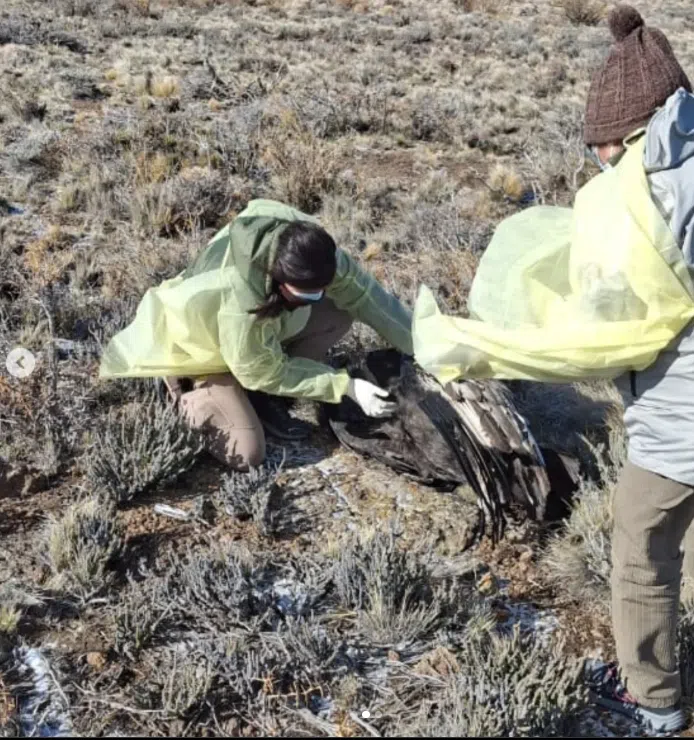
The scientific community mourns a new death of an Andean condor due to poisoned bait with an illegal product.
This concerns Huasi, a specimen that had been released in 2022 in the Sierra Pailemán area and died in recent days in the El Caín area, in the south of the province of Río Negro.
The bird’s death was confirmed through toxicological studies carried out by the National Service of Agri-Food Health and Quality (Senasa), which identified the presence of carbofuran in the animal’s body.
The illegal poison consumed by the Andean condor: a complaint has already been filed
It is worth noting that this agrotoxic is prohibited in Argentina since 2018 due to its high toxicity (Resolution SENASA 263/2018).
Following the discovery, a formal complaint was filed with the national environmental authorities, the provincial government, the Federal Council for the Environment (Cofema), the Fiscal Unit for the Investigation of Crimes against the Environment (UFIMA), and Senasa itself.
Now, these institutions are working together to investigate the case and determine the corresponding responsibilities.
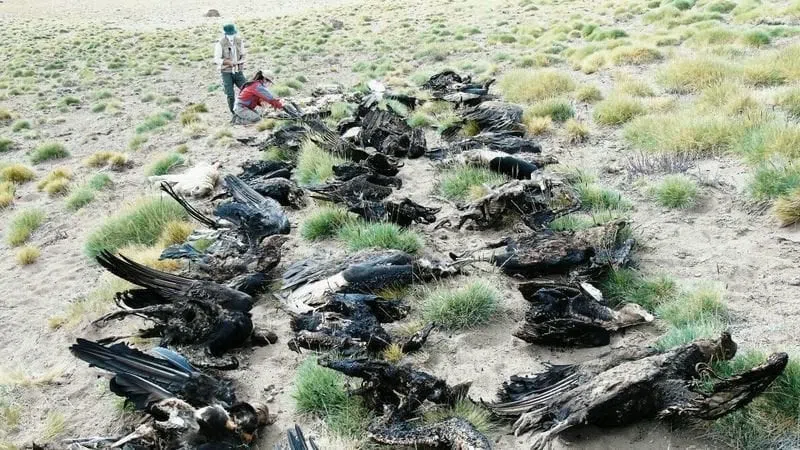
After this sad event, the Argentine Bioandina Foundation and the Andean Condor Conservation Program reminded that there are provincial and national laws that prohibit the lethal control of predators through toxic baits.
This is because poisoning is currently the main cause of extinction of this species, also impacting the environment and human health.
Despite its prohibition, however, carbofuran continues to be used clandestinely in rural areas to eliminate predators such as pumas, foxes, and dogs. Specialists warn about its serious consequences on ecosystems and protected species.
This case is not isolated. In 2023, another Andean condor named Yastay also died due to toxic baits. Both events highlight the threat that this illegal practice poses to the survival of the Andean condor in the Patagonia.
Conservation organizations insist on enacting national laws for traceability and prescription of these substances, as well as reforms to the penal code to properly punish this environmental crime.
What Andean condors are like and why their species is endangered
The Andean condor (Vultur gryphus) is one of the largest flying birds in the world. It reaches up to 3.3 meters of wingspan and weighs between 11 and 15 kilograms. Its plumage is predominantly black with a collar of white feathers on the neck and white spots on the wings. Males have a fleshy crest on the head.
They are scavenger birds that play a crucial role in the natural cycle. They clean the environment by consuming dead animals, preventing the spread of diseases and maintaining healthy ecosystems.
They live over 50 years in the wild and take between 6 and 8 years to reach sexual maturity. Their reproductive rate is very low: each pair raises only one chick every two years approximately.

The Andean condor is endangered due to multiple threats:
- Intentional poisoning: The illegal use of toxic baits like carbofuran is the main cause of death and extinction. These poisons placed to eliminate predators severely affect condors that feed on poisoned carrion.
- Habitat loss: The expansion of human activities reduces natural spaces for their feeding and reproduction.
- Low reproductive rate: Their slow reproductive cycle hinders the recovery of affected populations.
- Electrocution and collisions: Electric power lines and human structures pose additional risks.
- Hunting and persecution: Although illegal, erroneous beliefs persist leading some residents to chase these birds.