



The second green lung of South America is in Argentine territory and faces a critical threat: it is El Impenetrable, in Chaco.
This extensive forest located in the north of the country has lost more than 165,000 hectares in the last five years due to illegal deforestation.
Thus, its unique biodiversity is at risk and extreme climate events are accelerated.
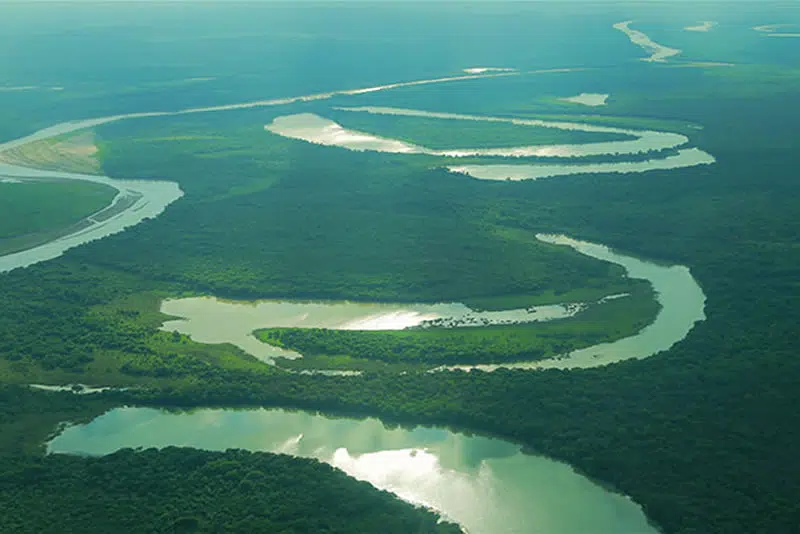
This vast territory is part of the Gran Chaco Americano, the largest forested ecoregion in South America after the Amazon.
With one million square kilometers spread across Argentina, Paraguay, Bolivia, and Brazil, it functions as a key continental regulator to contain the rise in temperatures.

Illegal logging advances unchecked in El Impenetrable
A recent study by Greenpeace using satellite images revealed that between November 2020 and July 2025, illegal deforestation affected 167,684 hectares in the province of Chaco.
The expansion of agriculture and livestock drives this indiscriminate logging, with serious consequences for local wildlife.
“I have been working in the protected area for three years, and in this short time, I have seen great changes,” warned Matías Almeida, a park ranger at El Impenetrable National Park.
He added: “The passage of logging trucks is constant.”
Moreover, patrols also reveal large burned forest areas: “Everything is done quickly, in anonymity”, Almeida denounced.
Additionally, the park ranger noted that the problem of deforestation is compounded by the advance of soybean crops.
“This generates wealth for a few in a short time, but it does not equate to the ecosystem benefits this forest has with its biodiversity,” Almeida denounced.

Uncontrolled livestock farming worsens the crisis
The other major threat to El Impenetrable is the cattle raised “in the wild”, a practice that involves releasing them into forest areas without boundaries.
These animals consume the scarce water reserves available for wildlife.
“Cattle create a water competition. Cows and horses consume a large amount of water per day, which quickly dries up the ponds,” Almeida warned.
This situation directly affects tapirs, peccaries, and the growing repopulation of jaguars promoted by Rewilding Argentina.
Sustainable alternatives to protect El Impenetrable
“Humans are responsible for this destruction of the Chaco forest, but we can also actively participate in its recovery,” stated Débora Abregú, a member of the Rewilding Foundation.
The organization works to raise awareness among the population about the benefits of protecting and “producing nature” as opposed to the logging and livestock business.
In this scenario, many locals have begun adapting their homes to offer accommodation to tourists who come to observe the wildlife.
Sustainable tourism emerges as a promising alternative, although it faces obstacles due to difficult accessibility and lack of infrastructure investment.
Experts warn that if deforestation continues in El Impenetrable, not only will the effects of climate change intensify.
Additionally, there will also be a direct impact on the regional economy.
Today, the proliferation of heatwaves, droughts, and fires already shows the consequences of the loss of this vital ecosystem.



