



The thawing and, therefore, retreat of glaciers in Río Negro has reached a worrying level.
Researchers from the Argentine Institute of Snow, Ice, and Environmental Sciences (IANIGLA) raised an alarm about this issue. The ice giants of the province are retreating rapidly, which could lead to serious water shortages in key sectors.
The phenomenon, attributed to climate change and the increase in global temperature, threatens not only mountain ecosystems but also communities that depend on glacier meltwater for consumption, production, and irrigation.
Alert for the glaciers in Río Negro: how global warming has affected them
According to studies presented by IANIGLA, notable decreases in glacier volume have been recorded in the Río Negro mountain region over the last decade.
 Glaciers in danger.
In particular, glaciers located in areas like Mount Tronador (natural boundary between Río Negro and Chubut) show a strong retreat and loss of mass.
This process, increasingly evident in satellite images and field monitoring, compromises the availability of water in dry seasons. This is because glaciers act as natural reservoirs that release water progressively during the summer.
Hydrological risk in key areas of the province
Glacial retreat in Río Negro could affect the water supply in cities like Bariloche, as well as impact productive activities dependent on irrigation in the Alto Valle, where fruit growing is concentrated.
In addition to this, there are indirect effects on high-altitude wetlands and the biodiversity associated with glacier-fed watercourses.
Given this scenario, scientists insist on the need to implement public policies to mitigate climate change. The aim is to promote responsible water use and protect high mountain environments.
Furthermore, they demand greater support for the Glacier Law, essential for regulating human activities in periglacial areas and ensuring continuous monitoring of these sensitive ecosystems.
The situation of glaciers in Río Negro is an urgent call. To rethink the development model, reinforce environmental education, and prioritize sustainable water management in a context of increasing water stress.
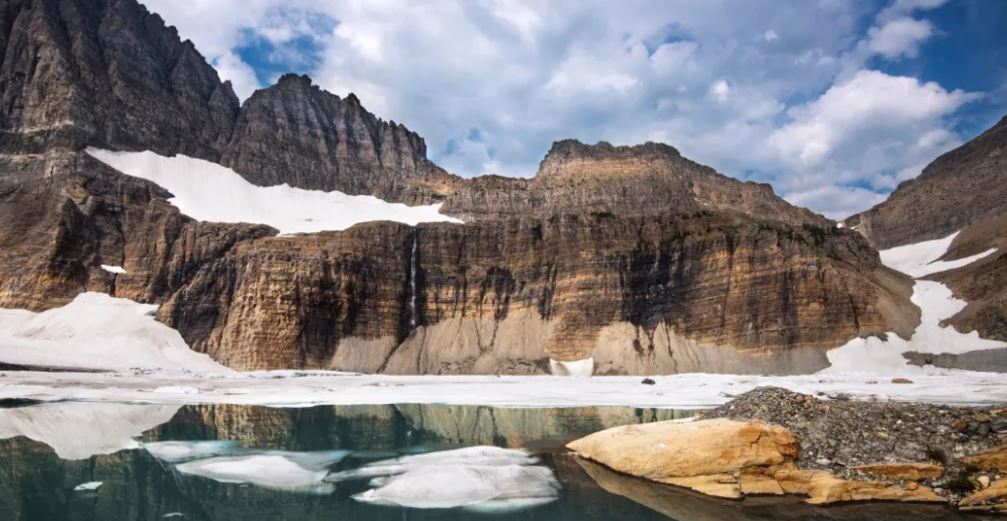 Glaciers receding worldwide. (Photo: CNN)
2025 is the International Year of Glacier Conservation
To address the issue and raise awareness, the United Nations (UN) officially declared 2025 as the “International Year of Glacier Conservation.”
Additionally, they proclaimed March 21 of each year as World Glacier Day from now on.
The goal is to raise awareness worldwide about the fundamental role of glaciers, snow, and ice in the climate system and hydrological cycle. Moreover, to inform about the relevance of this in economies, socially, and environmentally.



