



The presence of arsenic in drinking water affects 66 municipalities in the province of Buenos Aires.
This was revealed by the latest update of the survey conducted by the Buenos Aires Institute of Technology (ITBA).
The study showed a considerable increase in cases over the past year.
Of the 135 districts in Buenos Aires, 41 district heads have levels of arsenic in the water that place them in precautionary or critical alert categories.
Among them, 14 are mostly in red, which means that it is not suitable for direct consumption or food cooking.
The most recent tests warn of a delicate situation regarding the quality of vital water in much of the provincial territory.
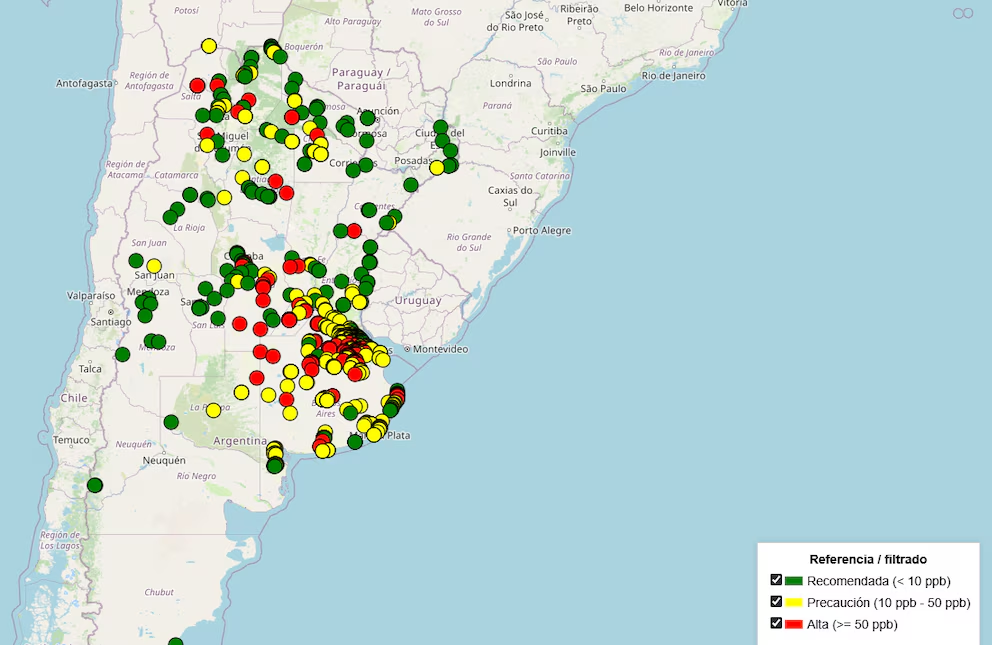
The most affected municipalities by arsenic in the water
The Aguas Foundation, in collaboration with ITBA, has been developing the “Water Map” project since 2016, which identified quality problems in 1,369 points across the country.
In rural areas, 25% of groundwater samples exceed the established limits for safe consumption.
Among the Buenos Aires districts most affected are:
- Cañuelas
- Chivilcoy
- Ezeiza
- Junín
- Lobos
- Mercedes
- Monte
- Navarro
- San Vicente
- Suipacha
- Tres Arroyos
Several of these geographical points are located near lagoons or large water bodies.
“The most affected geographical areas by this phenomenon are the Route 5 corridor and areas adjacent to Mar del Plata,” indicated Jorge Daniel Stripeikis, a Chemistry PhD from UBA and director of the ITBA project.

Four million people at risk
Thus, the specialist identified that about four million people in Argentina could potentially be exposed to arsenic through vital water or food.
The ITBA uses two classification ranges. Between 10 and 50 ppb (parts per billion) is considered a yellow precautionary level.
In this, “the consumer must complete studies to decide if consuming water with these values increases the possibility of developing disease conditions,” states the study’s nomenclature.
When the result exceeds 50 ppb, it enters a critical phase.
This implies “not consuming for direct ingestion and food cooking. Replace with another safe water source,” warns the ITBA report.
Historical and current cases of arsenic in the water
The survey includes samples from the last year and cases dating back more than a decade.
In July 2016, the district of Balcarce recorded a case of high arsenic level (68.5 ppb) extracted from the drinking water network.
Currently, the area shows lower levels (30 ppb), within the national standard of 50 ppb.
However, this sample highlighted a high index of sodium (212 mg/l over 200 mg/l), something common in the analyzed interior Buenos Aires areas.
AYSA stated that “the water distributed throughout the concession area meets the established parameters and poses no health risk.”
The company assured that the concentrations of arsenic are “below the allowed value by current regulations.”



