



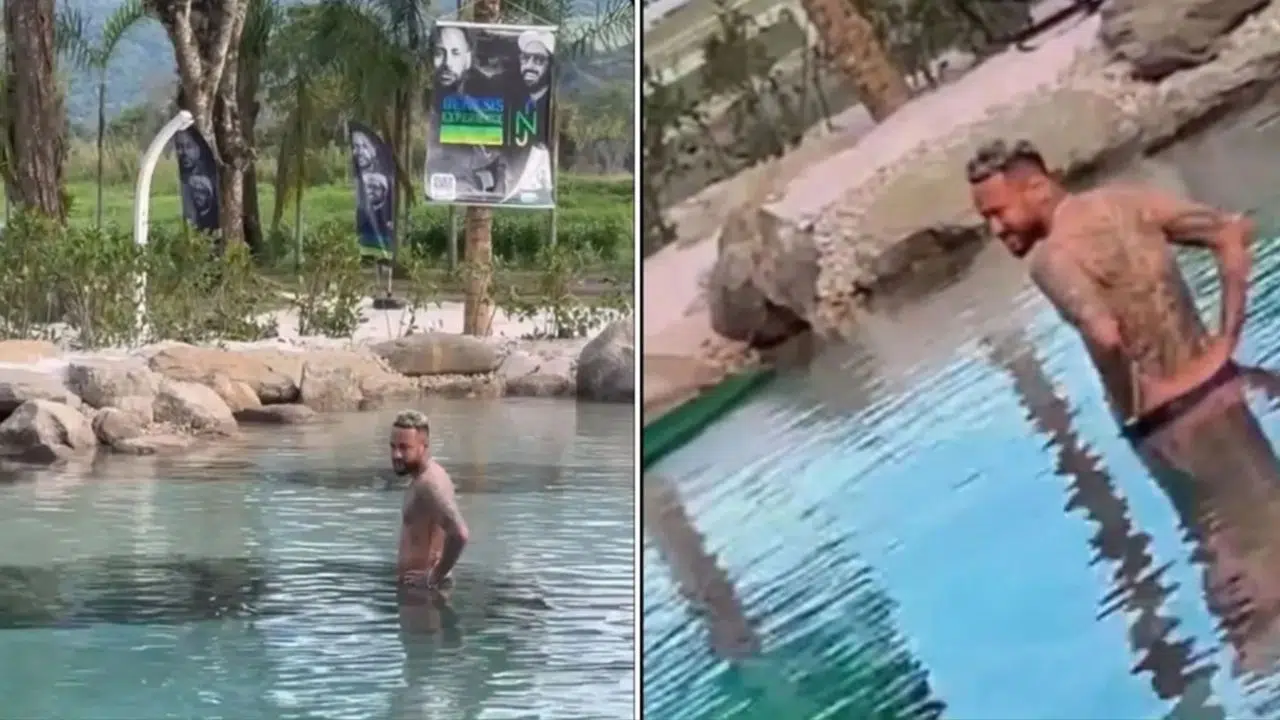
A court in the state of Rio de Janeiro annulled an environmental fine of more than three million dollars against the footballer Neymar, accused of causing pollution in two bays by dumping construction waste from an artificial lake at his mansion in Mangaratiba, 130 km from Rio.
The sanction had been imposed in July 2023 by the local city hall, but the court determined that it should be declared null due to flaws in the investigation. According to the ruling, the infraction was based solely on photographs and videos sent by an anonymous complaint in 2019, without official confirmation from environmental authorities.
The player’s defense presented a technical report indicating that the water quality at the time of the alleged dumping was within tolerated values. The legal team argued that the case was initiated due to the media frenzy generated by the involvement of a world-renowned athlete.
The fine, equivalent to 16 million reais, had been suspended since 2024 and is now definitively annulled.
Similar Cases of Public Figures
In Brazil, environmental conflicts involving celebrities or large corporations are often linked to the construction of mansions in protected areas or industrial disasters.
- Anitta: faced legal controversies over her house in the Tinguá Biological Reserve.
- Leonardo DiCaprio: although not a judicial process, Jair Bolsonaro accused him without evidence of financing NGOs that supposedly caused fires in the Amazon.
These episodes show how media exposure can influence the perception and management of environmental conflicts.
Structural Environmental Problems in Brazil
Beyond individual cases, Brazil faces critical challenges:
- Water and beach pollution: more than 70% of tourist beaches may not meet sanitary standards after heavy rains.
- Amazon deforestation: responsible for 74% of the country’s greenhouse gas emissions.
- Agribusiness and agrochemicals: intensive use of toxic pesticides affecting air, soil, and biodiversity.
- Waste management: Brazil is the Latin American country that dumps the most plastics into the ocean, with 1.3 million tons annually.
Implications of the Ruling
The annulment of the fine against Neymar opens a debate about the effectiveness of environmental oversight mechanisms in Brazil. The reliance on anonymous complaints and weak evidence highlights the need to strengthen the institutions responsible for monitoring and sanctioning ecological damage.
Moreover, the case reflects the tension between environmental justice and media pressure: when it comes to public figures, the processes gain greater visibility but can also be influenced by the fame of the accused.
The ruling that exempts Neymar from paying a multimillion-dollar environmental fine does not eliminate concern over the structural problems of pollution and deforestation facing Brazil. Meanwhile, the country remains one of the largest emitters of plastics into the ocean and a focus of Amazon deforestation.
The judicial resolution underscores the need for stronger institutions, rigorous investigations, and coherent environmental policies to address sustainability challenges.



