



The National Meteorological Service (SMN) published its forecast for the next quarter, and there is already concern about a hotter summer with less rain.
The report published by the entity anticipated a summer with higher than normal temperatures and reduced precipitation in much of the country.
Thus, the quarterly forecast for November, December, and January indicates conditions that could impact from tourism to public health.
Less rain in large areas of the country
The SMN’s climate report indicates that the northeast, the Pampas region, and the west of Patagonia will record the highest probabilities of below-average precipitation.
Meteorologist Cindy Fernández explained: “What the quarterly climate forecast says is that in the entire northeast, the Pampas region, and the west of Patagonia, it is more likely that the quarter will have below-normal precipitation.”
Only the northwest of Argentina (NOA) shows signs of above-average rainfall. Meanwhile, Cuyo and the east and south of Patagonia would maintain records within historical margins.
However, the SMN warned that “the occurrence of locally intense events over the center and northeast of the country at the beginning of the period cannot be ruled out.”
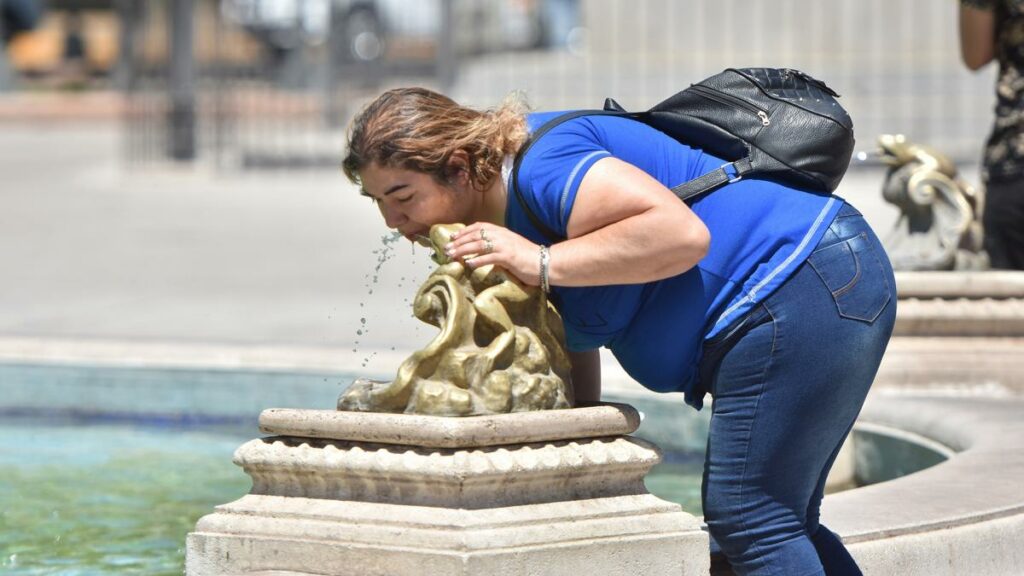
A hotter summer is coming, with above-average temperatures
The forecast outlines a scenario of normal to above-normal temperatures across much of the national territory. The SMN assigns up to a 50% probability of above-average temperatures in the province of Buenos Aires, Mesopotamia, and the northeast of Argentina.
Fernández emphasized: “It is expected that much of Argentina will have normal to above-normal temperature values.” The only areas where thermal values would remain within the average are the northwest of the country and the south of Patagonia.
The report highlights that after the thermal decline experienced towards the end of October, a rebound towards the warm trend pattern is projected. This pattern had already been recorded.
What to expect on the Atlantic Coast
For the Atlantic coast, the trend indicates that “it will rain less than usual for the season.” This condition could lead to a reduction in the suitable habitat for the proliferation of mosquitoes and, thus, affect the dynamics of dengue.
Additionally, in some Buenos Aires resorts, as well as in the rest of the central area of the country, hotter days than usual could be recorded. This will favor tourist activities due to the reduction of rainy days.
The expected lower availability of rain for the coast and the Atlantic coast can benefit tourists. This is thanks to the reduction of rainy days and the possible decrease in mosquitoes.
According to the report, this change is relevant in the face of the recurring threat of dengue in the warm season.
In the productive sphere, the Pampas region starts from a “scenario of water excess” in several areas.
However, there are already warnings about the possibility that the coming months may not be as abundant in terms of rain for agriculture.
The SMN recommended closely following the daily and weekly forecasts. It is also important to consult the early warning system, as high-impact meteorological phenomena cannot be anticipated on the seasonal scale of the climate forecast.



