



In the coming days, more than 40,000 families in the province of Córdoba will begin to receive seeds for the autumn-winter season. This initiative is part of the program “The Garden in Your Home”, aimed at promoting food production in domestic spaces.
In this regard, the kits have already been distributed at various points in the 26 provincial departments. Likewise, the beneficiaries will be progressively informed through the Digital Citizen Platform, which will allow for an orderly distribution.
In this way, the public policy seeks to consolidate sustainable habits. Additionally, it aims to improve access to fresh and healthy food throughout the province.

Territorial distribution and equitable access to supplies
The delivery operation covers municipalities, zonal agencies, and community spaces. Therefore, it ensures that the kits reach different regions, including urban and rural areas.
On the other hand, the notifications will include details about days, times, and pick-up locations. This facilitates participation and avoids unnecessary gatherings at distribution points.
In total, the program will reach 40,278 people registered voluntarily. Thus, it is consolidated as one of the broadest initiatives in the field of family agriculture.
What do the seed kits include?
The individual and collective kits contain species adapted to the autumn-winter season. Among them are parsley, arugula, chard, spinach, beetroot, and cabbage.
Additionally, community kits are included for areas of 50, 100, and 200 square meters. In these cases, crops such as peas, broad beans, carrots, and onions are added, expanding the productive diversity.
In parallel, beneficiaries have access to virtual technical assistance. This resource includes educational materials that strengthen learning and autonomy in cultivation.
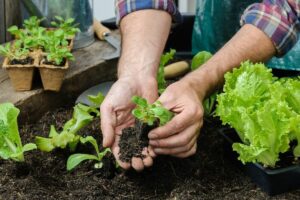
The environmental and social benefits of having a home garden
Developing a home garden significantly reduces the generation of waste. Indeed, organic waste can be reused as compost, closing the nutrient cycle.
At the same time, local food production reduces the need for transportation. This reduces the carbon footprint associated with daily consumption.
On the other hand, gardens promote urban biodiversity. The presence of plants attracts pollinators and contributes to the ecological balance in urban environments.
Moreover, growing food strengthens environmental education. Families acquire knowledge about natural cycles, seasonality, and soil care.
A public policy that promotes sustainability
The program “Harvesting for my Family, the Garden in Your Home” is promoted by the Ministry of Bioagroindustry. In turn, it is implemented alongside specific areas of family agriculture and agricultural innovation.
Consequently, the initiative not only provides supplies but also promotes a cultural change. Home food production becomes a tool of autonomy and resilience.
Finally, this policy strengthens the link between community and environment. Thus, Córdoba moves towards more sustainable models, where each home can become a small space of ecological production.


