



Due to the cyclogenesis, the orange alert for intense precipitation, issued by the National Meteorological Service, has generated a state of maximum attention.
Tuesday started with heavy rainfall in a large portion of the central and northern regions of the country, in the context of a weather phenomenon involving cyclogenesis, which has already accumulated up to 65 millimeters in the AMBA in less than a day.
This weather event is considered unusual for this time of year, and the meteorological situation has not yet stabilized: the wind will become the next predominant factor.
According to the records of the National Meteorological Service (SMN), in just half a day, the amount of water recorded is equivalent to the usual rainfall for the entire month of August.
In Buenos Aires City, where the monthly average is 70.3 mm, some measurement stations were already reporting up to 65 mm shortly after noon on Tuesday.
The situation becomes more complex when considering that the weather event has not yet ended. The SMN announced that, although the intensity of the rainfall will decrease during the night, the precipitation will continue until Wednesday morning, especially affecting areas in the central and northern regions of the country.
 August rainfall
The orange category represents one of the most severe levels in the alert scale of the SMN. This implies the occurrence of weather phenomena that pose a danger to society, people’s lives, properties, and the environment.
On this occasion, the warning extends to areas in the central and northern regions of Buenos Aires, CABA, Santa Fe, and Entre Ríos, where accumulations between 70 and 80 mm are anticipated, with the possibility of these values being locally exceeded.
Simultaneously, other provinces such as Corrientes, Misiones, and Formosa are also under storm alerts, albeit at a lower level (yellow), with estimated accumulated rainfall between 50 and 70 mm.
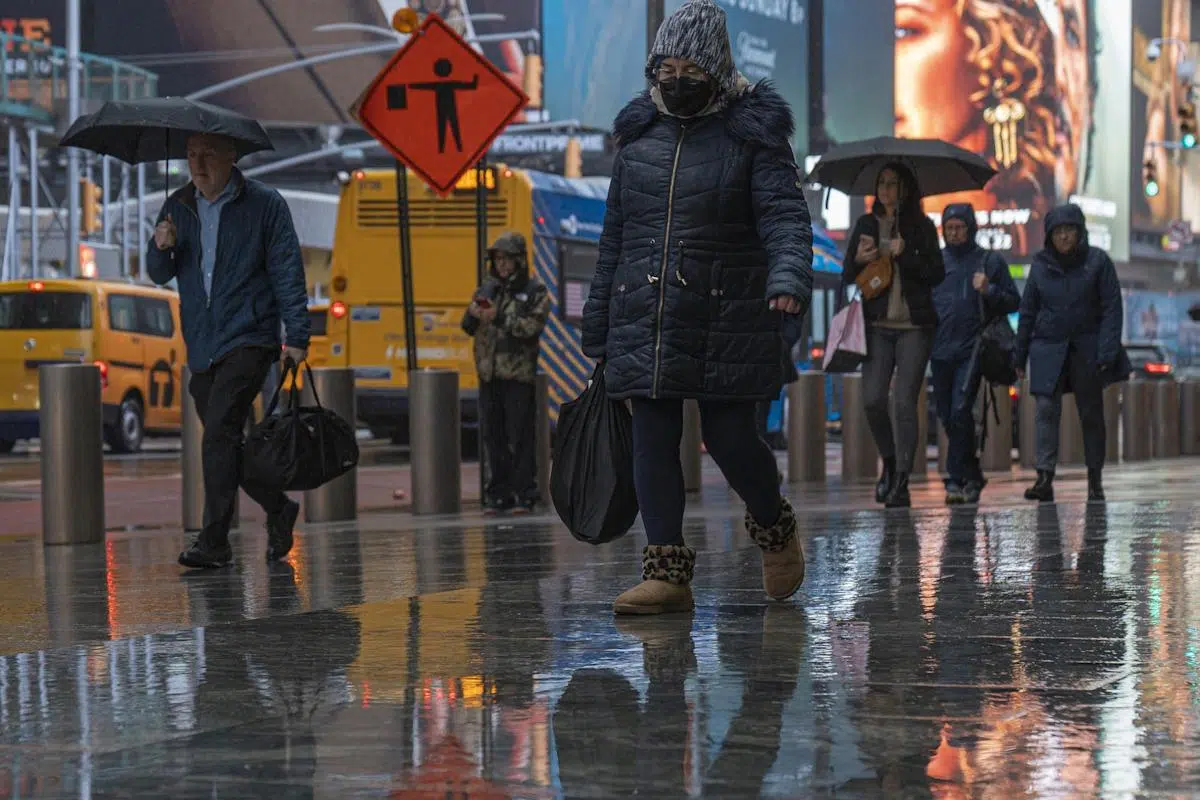 Extreme rainfall
The phenomenon behind the storm: cyclogenesis
The meteorological explanation for this storm lies in a process called cyclogenesis, which involves the development or intensification of a low-pressure system. According to specialists, this phenomenon was enhanced by the presence of an atmosphere with high moisture levels at its lower levels and the entry of warm air from the north.
This combination of factors created the conditions for the generation of persistent rainfall, thunderstorms, and a marked decrease in atmospheric pressure, leading to the current situation.
Among the most affected areas are:
- The Metropolitan Area of Buenos Aires (AMBA).
- The central and northern regions of the Province of Buenos Aires.
- Sections of Entre Ríos and Santa Fe.
During Tuesday morning, the situation was particularly complicated in locations like San Nicolás, San Pedro, Zárate, and Chacabuco. In these places, flooded streets, fallen trees, and power outages were reported as a result of rainfall exceeding historical averages.
The SMN has forecasted that Wednesday will start with isolated showers, but with an improving trend in the afternoon. However, the wind will play a leading role during that day. In CABA, it is expected that the wind will shift to the west sector, with gusts ranging between 51 and 59 km/h, reaching up to 60 km/h in some areas.
These winds will help clear the sky, but could also pose an additional risk, especially in areas with weakened trees, unstable structures, or flooded streets.
On Thursday, there will be a significant change in the weather conditions. A partly cloudy sky is expected, with no chance of precipitation and lower minimum temperatures, which could drop to 9°C. The maximum, on the other hand, is estimated to reach 19°C.
Friday will remain with variable cloudiness and a very low chance of rain (only 10%). For the weekend, a somewhat cloudy sky is anticipated, with temperatures ranging between 7°C and 15°C, and no rainfall forecasted.
Precautions to take during an orange alert
Authorities advise taking the following precautions during an event of this magnitude:
- Avoid traveling on flooded streets or near large trees.
- Do not touch wet or fallen electrical cables.
- Remove any objects from balconies or terraces that could be carried away by the wind.
- Stay alert for possible power outages or disruptions in public transportation services.
- Check the official channels of the SMN for real-time updates.



