



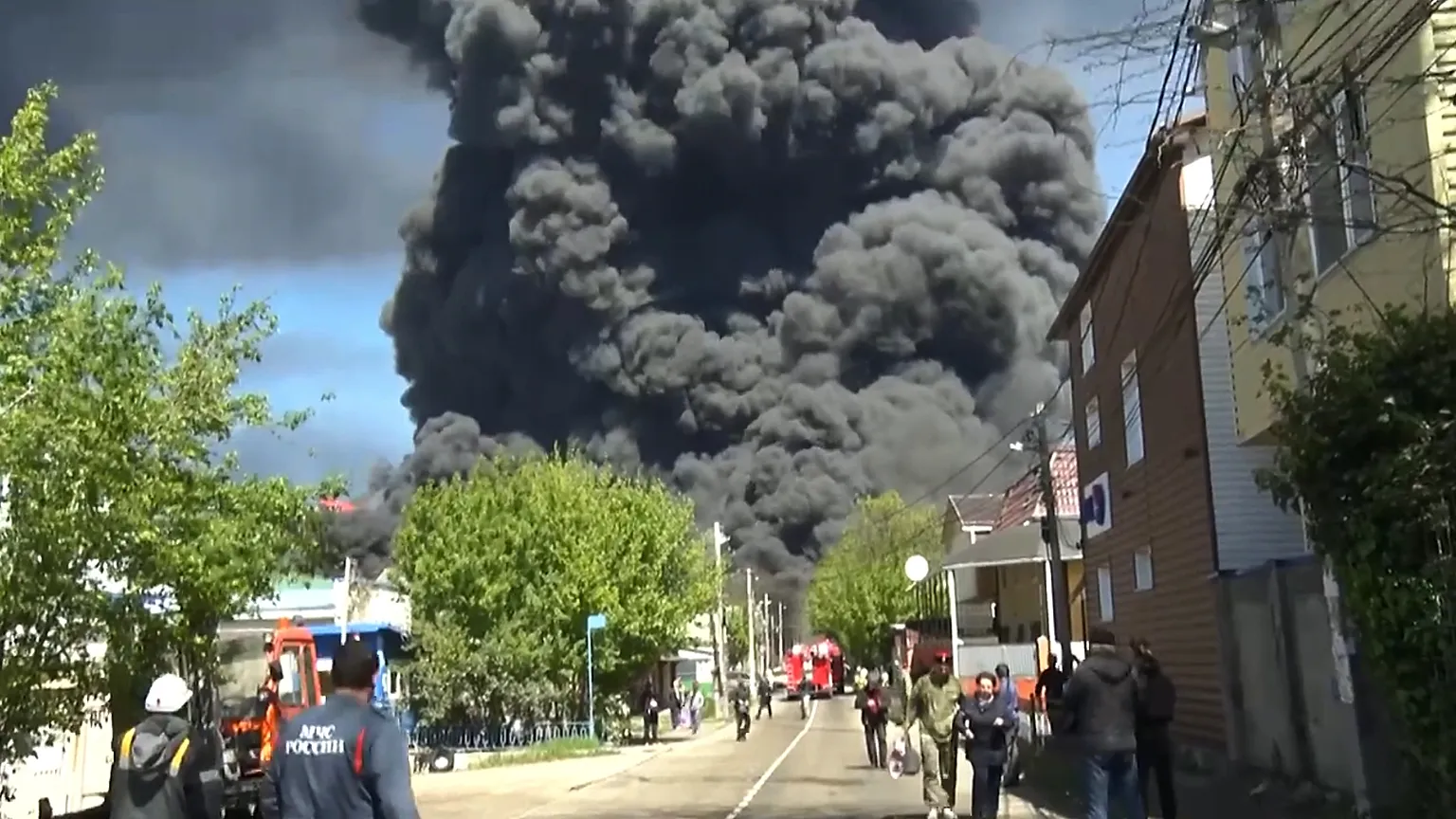
A series of Ukrainian drone attacks on a refinery and a maritime terminal in the Russian city of Tuapse triggered a major environmental crisis. The result: smoke visible from space, rivers of oil on the roads, and fuel stains in the Black Sea. Authorities described the situation as an “ecological catastrophe”.
The state of emergency was declared only after the third attack, on April 28. The fire even reached a residential block, forcing the evacuation of about 60 people. Meanwhile, school and daycare closures were reported, water shortages in some neighborhoods, and a persistent smell of burning.
Environmental Impact
- Affected coast: about 50 kilometers of the Black Sea coastline contaminated.
- Waste removed: nearly 10,000 m³ of a mixture of water, fuel, and soil.
- Detected pollutants: elevated levels of benzene and xylene, with recommendations to stay indoors and wear masks.
The previous attacks, on April 16 and 20, had already caused fuel rains over the city and large oil stains off the coast.
Russian President Vladimir Putin broke his silence after two weeks, warning about the environmental consequences of the attacks, although he assured that “there are no serious risks to the population.”
Ukrainian Strategy
Experts point out that Ukraine targets oil infrastructures for three reasons:
- Reduce Russia’s energy revenues, the main source of foreign currency to finance the war.
- Hinder Russian military logistics, affecting fuel supply at the front.
- Prioritize economic and military targets, avoiding civilian casualties as much as possible.
According to estimates, up to 40% of Russia’s crude export capacity would be out of service due to the attacks and international sanctions.
Expansion of the Attacks
Ukrainian drones have reached facilities more than 2,000 km from the front:
- Orsknefteorgsintez refinery in Orenburg.
- Transneft pumping station in Perm.
- Incidents in Yekaterinburg and Chelyabinsk, with damage to residential buildings.
The Russian Ministry of Defense reported the interception of 98 drones in a single night.
Conflict Context
The war, which escalated on February 24, 2022, has its roots in the 2014 crisis when Russia annexed Crimea. Today it is considered the largest military conflict in Europe since World War II, with more than 7 million Ukrainian refugees and a significant impact on global food and fuel prices.
The drone attacks have opened a new front: the environmental one. The pollution in Tuapse and the Black Sea shows that the war not only destroys infrastructures and economies but also fragile ecosystems. Pressure on Russia is increasing, while Ukraine seeks to weaken Moscow’s energy revenue sources in a context of global crisis.



