



Colombia became the first country to declare its entire Amazon region free of oil and large-scale mining.
The announcement was made a few days ago during the COP30 held in Belem, Brazil, where Amazonian countries were key.
In this way, Colombia sets a historic precedent for the Amazon region.
This is especially relevant due to the lack of mention of fossil fuels in the final document of the climate summit.
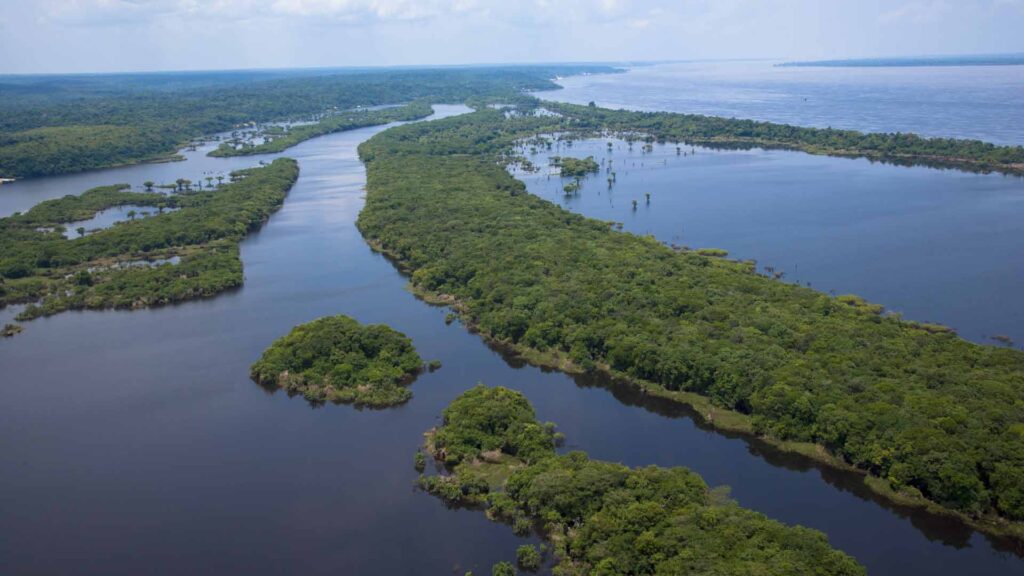
Colombia’s Unprecedented Protection of the Amazon
The Minister of Environment and Sustainable Development of Colombia, Irene Vélez Torres, announced the measure a few days ago.
She did so during a meeting of the Amazon Cooperation Treaty Organization (ACTO) within the framework of COP30.
The decision establishes the entire Amazon of Colombia as a “renewable natural resources reserve zone.”
In this way, it seeks to protect more than 48 million hectares from oil and mining exploitation.
This territory represents 42% of the continental area of Colombia and 7% of the entire South American Amazon.
The protection completely covers six departments:
- Amazonas
- Caquetá
- Putumayo
- Guaviare
- Guainía
- Vaupés
These regions faced threats from 43 active oil blocks and nearly 300 unauthorized mining requests, in addition to illegal roads and land grabbing.
A Regional Call to Climate Action
Vélez Torres defined the measure as “an act of environmental sovereignty” and proposed creating a “Amazon Alliance for Life” among the nine ACTO countries.
“Rivers have no borders, and neither does life. Protecting the Amazon is not an economic sacrifice, it is an ethical and scientific decision,” stated the Colombian minister.
The official emphasized that treating the forest as “the heart of climate action and environmental justice” is fundamental for the future of Amazonian nations.

The new policy seeks to curb deforestation and violence associated with illegal mining and criminal networks operating in the jungle.
The legal framework prevents the granting of new licenses for oil or mineral extraction on a large scale in these protected areas.
Thus, this measure represents an integration of policies on biodiversity, climate, water and the fight against environmental crimes in the Amazon region.
The Contrast of Colombia with Regional Policies for the Amazon
The announcement comes weeks after Brazil authorized Petrobras to drill in Block 59, at the mouth of the Amazon River.
The Brazilian minister Marina Silva supported Colombia’s stance and reiterated President Lula Da Silva’s proposal to establish a global roadmap towards the end of fossil fuels.
Despite this, Silva also acknowledged “the contradictions of the national energy sector” of Brazil.
Therefore, she considered it urgent to abandon the dependence on oil programmatically.
The Colombian decision reinforces the commitment to the Paris Agreement and the National Plan to Contain the country’s Deforestation.
This stance is expected to increase political pressure on other Amazonian countries and transform the regional debate on climate and sustainable development.


